题目内容
She asks me if it________tomorrow.If it________tomorrow,she will go camping with me.
A.will rain;won’t rain
B.will rain;doesn’t rain
C.rains;doesn’t rain
D.rains;won’t rain

 开心蛙状元测试卷系列答案
假设你是李华,上周末你参加了一次郊游(outing)。请根据下面表格中的提示信息写一篇题为“A Pleasant Outing”的英语短文,参加某英文报纸的征文比赛。
A Pleasant Outing | |
时间 | 上周末 |
参加者 | 你和…… |
地点 | 北山公园(the North Hill Park) |
活动 | 骑自行车、爬山、野餐、做游戏…… |
感受 | |
要求:
(1)不要逐条翻译表格中的信息,可适当增减内容;
(2)短文中不得出现真实的地名、人名和校名;
(3)词数:80~110。
参考词汇:go for an outing;climb the hill;have a picnic
_______________________________________________________________________________
_______________________________________________________________________________
_______________________________________________________________________________
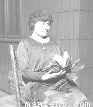
Helen Keller was an American educator and journalist, who became one of the leading humanitarians in the history of the United States. Born on June 27, 1880 in Tuscumbia, a small town in Alabama, Keller was stricken with a childhood disease that left her deaf, and blind. The illness Keller suffered (遭受) is a mystery to this day. Unable to see, or hear, Keller became difficult to deal with as her behaviour was described as wild by her family and friends.
Soon Keller and her family developed their own type of sign language that allowed them to communicate with each other. Helen’s mother needed help for her anguished (痛苦的) child, which eventually led to Anne Sullivan, who was a recent graduate (毕业生) of the Perkins Institute for the Blind. The school had been successful in the past in educating blind students, and Sullivan was one of its star graduates. Once Sullivan and Keller got through the difficult beginnings, their friendship, and association (合作) lasted for 49 years.
Keller was determined to become educated, and to teach herself to communicate. After attending several schools, she became the first deaf and blind person to earn a college degree. She became very well-known, and began a lecture tour where she made speeches on social and political issues, including women’s suffrage (选举权), and birth control. Also she required the government to raise awareness to the situation of the blind. She devoted much of her later life to raising funds for the American Foundation for the Blind.
On September 14, 1964, President Lyndon B. Johnson awarded her the Presidential Medal of Freedom, one of the United States’ two highest civilian honours. In 1999, Keller was listed in Gallup’s Most Widely Admired People of the 20th century.
Helen Keller—Overcoming Disability | |
Childhood | Keller was made deaf and blind by an 1. illness. Her family and friends 2. her as wild because of her disabilities. |
3. | The Keller family 4. their own type of sign language to make their communication possible. Anne Sullivan 5. Keller’s life and gave her a lot of help. Keller made up her 6. to teach herself to communicate. Keller earned a college degree after 7. several schools. |
Social Activities | While travelling around the country, Keller made a series of 8.on social and political issues. Keller 9. much of her later life in raising funds for the American Foundation for the Blind. |
Awards | In 1964, Keller was awarded the Presidential Medal of Freedom. In 1999, her name was on the 10. in Gallup’s Most Widely Admired People of the 20th century. |