题目内容
Hello, I’m Jack. I live in Sydney, Australia. And I want an e-friend in China. I think China is a very interesting place. I am 14 years old and my birthday is in October. I can speak English and some French. I have a brother, Paul, and a sister, Sarah. They have e-friends in England and America. I like going shopping with my friends and doing exercises. My favourite subject is Art. It’s funny. But I don’t like Maths. It’s too difficult.
【小题1】. Jack is from __________.
| A.England | B.America |
| C.London | D.Australia |
| A.English | B.Art |
| C.Maths | D.French |
| A.Two. | B.Three. |
| C.Four. | D.Five. |
| A.To go shopping. | B.A pen friend. |
| C.To play football. | D.An e-friend. |
A.difficult. B. funny
D. easy D. hard (难)
【小题1】D
【小题2】B
【小题3】B
【小题4】D
【小题5】B
解析试题分析:这篇短文主要介绍了杰克想找一个中国的网上朋友,因为他认为中国是个有趣的地方。他介绍了自己的家庭情况和自己的个人学习情况。
【小题1】细节理解题。根据短文I live in Sydney, Australia可知他来自澳大利亚,故选D。
【小题2】细节理解题。根据短文My favourite subject is Art.可知美术是他最喜欢的科目,故选B。
【小题3】推理判断题。根据短文I have a brother, Paul, and a sister, Sarah.可知杰克有一个弟弟,一个妹妹,加上他自己可知他家有三个孩子。故选B
【小题4】细节理解题。根据短文And I want an e-friend in China.故选D。
【小题5】细节理解题。根据短文My favourite subject is Art. It’s funny.可知,故选B
考点:人物介绍类短文阅读。

Dear Peter,
I know that you are coming to Hefei next week. Welcome to my home. Let me tell you the way to my house. You will live in Changjiang Hotel on Changjiang Street, won’t you? OK! Changjiang Street is a famous and busy street in our city. You can start from your hotel and go straight along Tongcheng Street. You pass two small streets: Hongxing Street and Lujinag Street. When you see an overbridge(天桥),please turn right and go along Huangcheng Street. It’s an old street, but it’s clean. There’s a big park on the street. It’s beautiful and clean. When you get to Jinzhai Street, please turn left and go along it. You will pass Wuhu Street and Tunxi Street. Then you can see a KFC on your right. There’s a supermarket across from the KFC and my house is near the supermarket. There’s a pay phone in front of the KFC. You can call me there and I will go to meet you.
I hope you will have a good trip.
Yours, Li Li
【小题1】Where will Peter live after arriving?
| A.Li Li’s room | B.Changjiang Hotel |
| C.His friend’s house. | D.Anhui Hotel. |
| A.It’s beautiful. | B.It’s famous. |
| C.It’s old. | D.It’s famous and busy. |
| A.6. | B.7. | C.8 | D.9 |
| A.It’s old but it’s clean. | B.It’s on Tongcheng Street. |
| C.It’s beautiful and clean. | D.It’s quiet and dirty. |
| A.It’s near Li Li’s home. |
| B.It’s across from the pay phone. |
| C.It’s across from the supermarket. |
| D.It’s between the supermarket and the pay phone. |
Li Lei, Beijing
I found the summer vacation was not so interesting as I imagined(想象). It was very hot, so I had to spend most of the time staying at home, watching TV, listening to the radio and playing with my dog. Sometimes, I went to visit my relatives(亲戚).
Gina, New York
I went to the countryside with my family and stayed there for about two weeks. The air there was nice and clean. Every day, we fed the chickens, milked the cows, played with the dogs and went fishing. We enjoyed ourselves very much. We wished to go there again.
Alice, London
My summer vacation was great. I went to Switzerland(瑞士) with my friends and stayed there for a week. It wasn’t very hot there. We went to a climb the Alps(阿尔卑斯山). We felt very tired but excited. We also saw some beautiful lakes, went boating and took many photos.
【小题1】Li Lei did NOT ______ during the summer vacation.
| A.watch TV | B.go fishing |
| C.play with his dog | D.listen to the radio |
| A.At home | B.In the countryside. |
| C.In Switzerland. | D.the Alps |
| A.her friends | B.her family |
| C.her relatives | D.her teachers |
| A.Li Lei didn’t enjoy his vacation. |
| B.It was not very hot in the countryside. |
| C.Gina went boating during her vacation. |
| D.Alice went fishing on her vacation. |
| A.Activities you can do on vacation. |
| B.Trips to different countries. |
| C.Three people’s summer vacations. |
| D.Good habits about going for a vacation. |
We are learning English, but how can we learn English well? A student can know a lot about English, but maybe he can not speak English.
If you want to know how to swim, you must get into the river. And if you want to be a piano player, you must play the piano. So, you see, you can learn English only by using it. You listen to your teacher in class. You must read your lessons every day. You must speak English to your classmates and also you must write in English. Then one day, you may find your English very good.
【小题1】You know a lot about English but maybe you ______.
| A.can’t speak it | B.can study it |
| C.can’t study it | D.can’t use it |
| A.to play with water | B.to go boating |
| C.to learn how to swim | D.to catch a fish |
| A.put your piano away | B.buy a good piano |
| C.play the piano | D.watch others play the piano |
| A.We must have a good English book. |
| B.We must have a good English teacher. |
| C.We must see more English films. |
| D.We must use it often. |
| A.Only my classmates. |
| B.My English teacher and classmates. |
| C.My father and mother. |
| D.All my friends |
There are many wetlands in China and some of them have become the world’s important wetlands. The Chinese Yellow Sea Wetlands are among them. They are in Yancheng, Jiangsu Province. They are home for many different kinds of animals. The world’s largest Milu Deer Nature Reserve is in them. More than 700 Milu deer live freely there. There are not many red-crowned cranes in the world, but every winter you can see some in the Red-crowned Crane Nature Reserve in the Yellow Sea Wetlands.
The temperature in the wetlands is usually neither too high nor (既不…也不…) too low. There is a lot of rain and sunshine, too. They are really good places for wildlife. Offering(提供) food and home for some special kinds of animals is not the only reason why we need to protect wetlands. Wetlands are important because they also prevent flood (洪水). But some people want to change the wetlands to make more space for farms and less space for wildlife.
Luckily, more and more people are beginning to understand the importance of wetlands and wildlife. Every year, on February 2nd, many activities are held to tell people more about wetlands.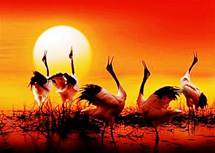
【小题1】The Chinese Yellow Sea Wetlands are in the ___________of China.
| A.east | B.south | C.west | D.north |
| A.hot | B.pleasant | C.cold | D.dry |
| A.they are home for wildlife |
| B.they can offer food to animals |
| C.they can prevent flood |
| D.all of the above |
Hunan TV's new program, Dad,Where Are We Going? has become very popular since last year. The show tells us that fathers should take part in their children's growing-up. In fact, this topic was always mentioned by Zeng Guofan (1811-1872). a famous official(官员)during the late Daoguang Period of the Qing Dynasty (1644-1912).
Although Zeng spent most of his time away from his family, his letters back home to his children and younger brothers have become famous. In these letters, there are many helpful suggestions on proper behavior(行为). Many of his ways on child education are popular among today's Chinese parents, including reading classical books and so on. His child-raising methods are useful for today's busy fathers. Like Zeng, they also spend most of their time away from home.
According to Zeng, the purpose of education was to learn wisdom(智慧)from books, rather than getting an official position. Children should know that the most important purpose of studies is to get more knowledge about nature and life.
"But now ,parents just want their children to be rich and powerful. " Mr. Tang, a writer in China, said.
Some teachers say that parents need to build a good relationship with their children. Parents shouldn't force (强迫)their children to realize their wishes.
In Zeng's letters, he asked his young children to do housework as part of their daily life, even though his children had many helpers. He believed that doing housework would make his children more confident and independent(独立的).
【小题1】When was Zeng Guofan born?
| A.In 1811. | B.In 1644. |
| C.In 1872. | D.In 1912. |
| A.Zeng Guofan was a great writer during the late Guangxu Period. |
| B.Zeng Guofan is one of the fathers in the program, Dad,Where Are We Going? |
| C.Many of Zeng Guofan's ideas on educati'on are not accepted by modern people. |
| D.Zeng Guofan was very busy and spent most of his time away from his family. |
| A.get an official position |
| B.learn wisdom from books |
| C.get high scores in exams |
| D.make a lot of money in the future |
| A.Fathers Influence Their Children's Growing-up |
| B.Zeng Guofan and His Children |
| C.How to Raise a Child |
| D.Dad, Where Are We Going? |