题目内容

Although Nanjing is not so ______ as Shanghai, it is the second ______ city in East China.

A. largest; largest B. large; largest C. largest; large D. large; large

B 【解析】句意:尽管南京不如上海大,但是它在华东是第二大城市。根据as---as和---一样,中间用原级;the+序数词+最高级 表示第几(大/长等);故选B
练习册系列答案
相关题目
Tim Berners-Lee is not the most famous inventor in the world. However, his invention has changed

our lives.

He was born in London, England in 1955. When he was a small boy, Tim was interested in

playing with electrical things. He studied science at Oxford University. He made his first computer

from an old television at the age of 21.

Tim started working on early computers. At that time, they were much bigger than now. He worked in England then Switzerland. Tim was really interested in two things, computers and how the brain

works. How could the brain connect so many facts so quickly? He had to work with people all

over the world. They shared information about computers. It was hard to manage all the information. He answered the same questions again and again. took a lot of time. It was even difficult for computers in the same office in Switzerland to share information. Tim also forgot things easily. Could a computer work like a brain? Could it “talk” to other computers?

There was an Internet already but it was difficult to use. In 1989, Tim Berners-Lee invented the World Wide Web (WWW) all by himself. This had a special language that helped computers talk to each other on the Internet. When people wanted to share information with others, they used the World Wide Web. The Internet grew quickly after that.

Tim Berners-Lee doesn’t think he did anything special. He says that all of the ideas about the Internet were already there. All he did was to put them together. He says that many other people worked together to make the Internet what it is today.

Most inventors want to become rich. But Tim gave away the World Wide Web for nothing. He now works in America. He helps people share technology and wants the Internet to be free for everyone to use. Maybe he is the most important but least famous inventor in the world today!

1.What was Tim Berners-Lee interested in?

A. Looking for jobs in different cities. B. Talking to people around the world.

C. Studying how to connect computers. D. Exploring how to improve memory.

2.The underlined word “It” in Paragraph 3 refers to “__________”.

A. Working on early computers B. Connecting different facts together

C. Travelling to the office in Switzerland D. Repeating the answers to the same questions

3.Why is Tim Berners-Lee one of the most important men in the world?

A. He made information sharing on the Internet possible.

B. He made the first computer when he was 21 years old.

C. He helped people understand better how the brain works.

D. He invented the Internet and made it free for everyone to use.

4.In what order did the following events take place?

a. Tim worked in England. b. Tim worked in Switzerland. c. Tim made his first computer.

d. Tim invented the World Wide Web. e. Tim studied science at Oxford University.

A. c – e – d – a - b B. e – b – a – c - d C. c – d – a – e - b D. e – c – a – b - d

5.What does the writer think of Tim Berners-Lee?

A. He is not famous because he is not rich. B. He has changed our lives and he is great.

C. He did nothing special but make people a good life. D. He has made great achievements in memory research.

1.C 2.D 3.A 4.D 5.B 【解析】试题分析:主要介绍发明万维网的应该发明家TimBernersLee.他在21岁时制作了第一台电脑,1989年发明了万维网,有助于计算机在互联网上交流.他还免费把这个技术分享给其他人,免费供大家使用.也许他是当今世界上最重要但最不出名的发明家! 1. playing with electrical things...

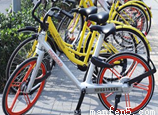
About thirty years ago, China was known as “the Bicycle Kingdom”. But now with the d1. of economy(经济) and technology, more and more families have had their own cars. It seems that bicycles are not u2. any more. Recently, a bike-sharing project has been introduced by some start-ups(新兴公司) like Ofo and Mobike. As a result, a large number of people choose cycling i3. of driving to schools, to workplaces or to do sightseeing.

What is the bike-sharing project? It means people can unlock the shared bikes by simply u4. their smartphones. And the bikes are equipped(装备) with GPS so that they can be left a5. in public for the next user.

Now the shared bikes are very p6. among Chinese people. They speak highly of the project because it helps s7. the “last mile” problem. Moreover, bike-sharing is not only a greener way of transportation(交通方式) but also brings a user-friendly e8. to people.

Just as an old saying goes, “Every coin has two sides. ” This project also l9. to a lot of problems such as illegal parking, vandalism(故意破坏) and theft. To deal with these problems, the companies have come up with some ideas. For example, the users will be rewarded free time for their n10. rides if he returns the bicycles to the stations .

We believe the project will go better and better if everyone can obey the rules.

1.development 2.useful(used) 3.instead 4.using 5.anywhere 6.popular 7.solve 8.experience 9.leads 10.next 【解析】本文主要讲述了共享单车的利与弊。大约30年前,中国被称为“自行车王国”。随着经济和技术的发展,越来越多的家庭拥有自己的汽车...

Many kids do housework such as doing the dishes, making the bed, and folding the clothes. In exchange, they get some money or other computer time.

Paying kids for housework is one of the most popular topics, especially at a time when everyone is more careful about money. Some parents think since adults are paid to do their jobs, we should pay kids for everyday housework.

But some people don't think kids should get rewards(报酬) for doing housework. Susie Walton, an expert, believe that by rewarding kids, parents are sending a message that work isn't worth doing unless you get something in return. “Running any kind of housework is a team effort,” Walton said. “A home is a living space for everyone in the family. It's important for kids to see that we all have responsibilities in the house, and families decide how they want their home to look, and how they are going to keep it looking like what they want.”

Other people believe that getting a reward encourages kids to do housework, and it also teaches them real world lessons about how we need to work to get money. There are also apps(程序) that gives kids points and digital gifts that can be redeemed(兑现) either online or in the real world. “Our goal is to give kids lawful power so they can get rewards,” says Chris Bergman. “And kids need rewards to help encourage them. ”

1.Which of the following housework is NOT mentioned in Paragraph 1?

A. Washing the dishes. B. Cooking meals.

C. Folding the clothes. D. Making the bed.

2.The underlined phrase “in return” in Paragraph 3 has the same meaning as “_____”.

A. as a reward B. for punishment C. on sale D. under control

3.What's Walton's idea in the passage?

A. Running exercise is a kind of team work.

B. People work to get some rewards.

C. Kids have responsibilities in the house.

D. Doing the housework in only the parents' job.

4.According to Chris Bergman, kids should be encouraged to ______.

A. do housework without rewards B. do more housework

C. stay away from housework D. do housework by getting rewards

5.Which is the best title for the passage?

A. Kids Should Study as Well as Doing Housework

B. Let Children Do Some Housework

C. Should Kids Be Rewarded for Doing Housework

D. Doing Housework Is Good for Children's Study

1.B 2.A 3.C 4.D 5.C 【解析】文章讲诉了一些家长认为孩子做家务应该给报酬,而另一些人为不应该给报酬。 1.根据Many kids do housework such as doing the dishes, making the bed, and folding the clothes.故选B 2.根据parents are sendin...

违法和不良信息举报电话:027-86699610 举报邮箱:58377363@163.com

精英家教网