题目内容
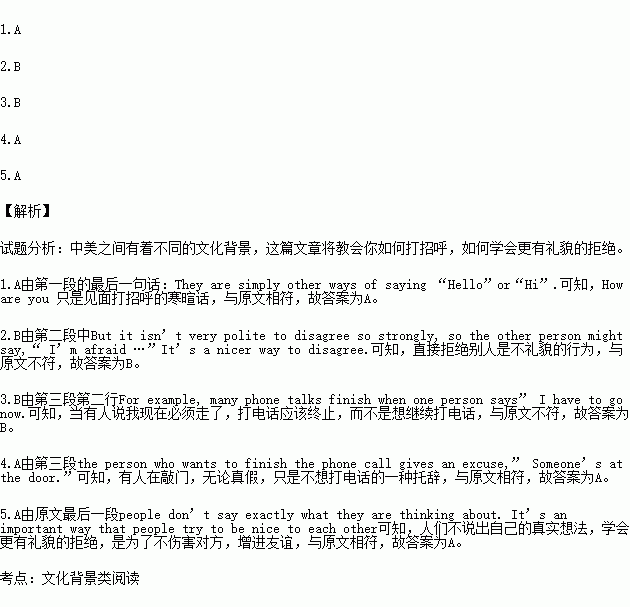
“How are you?” is a nice question. It’s a friendly way for Americans to greet each other. But “ How are you?”is also a very unusual question. It often doesn’t need an answer. The person who asks” How are you?” hopes to hear the answer“Fine”even if the person’s friend isn’t fine. In fact, they are not really a question or an answer. They are simply other ways of saying “Hello”or“Hi”.
Sometimes people also don’t say exactly what they mean, For example, when someone asks “ Do you agree?”the other person might think,“No,I disagree. I think you’re wrong.” But it isn’t very polite to disagree so strongly, so the other person might say,“ I’m afraid …”It’s a nicer way to disagree.
People also don’t say exactly what they are thinking when they finish talking with other people. For example, many phone talks finish when one person says” I have to go now.” Often, the person who wants to finish the phone call gives an excuse,” Someone’s at the door.” The excuse might be real, or not. Perhaps the person who wants to finish the phone call simply doesn’t want to talk anymore, but it isn’t polite to say that. The excuse is more polite, and it doesn’t hurt the other person.
When they are greeting each other, talking about an idea, thinking of finishing a talk, people don’t say exactly what they are thinking about. It’s an important way that people try to be nice to each other, and it is part of the game of language.
1.“How are you?”is another way of saying “Hello” or “Hi”.
2.It is polite to say” No,I disagree. I think you are wrong” if you don’t agree with others.
3.When someone says” I have to go now” on the phone, it means he wants to go on talking.
4.“Someone is at the door ”may be an excuse for finishing a phone call.
5.Sometimes, people don’t say exactly what they are thinking about just because they try to be nice to each other.

书面表达
中学生普遍面临着很多烦恼,请用英语描述下面表格中列出的问题,并提出自己的建议。
烦恼1 | 整天有做不完的作业,经常熬夜学习,无暇顾及个人爱好; |
烦恼2 | 父母太忙,没有时间陪自己; |
烦恼3 | 几乎没有亲密的朋友可以交流,经常感到孤独; |
烦恼4 | 对自己的体重不满意,不知如何改变; |
烦恼5 | … … |
建议 | … … |
要求:1、条理清楚,语句通顺;
2、100词左右。开头已给出,不计入总词数。