题目内容
【题目】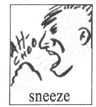
When you cough or sneeze, you’d better turn your head away from others and cover your mouth with the full part of your hand. And then, you should say, “Excuse me.”
This seems so simple, but it is surprising how many kids have never been told to do this. Actually, I notice adults all the time who cough and sneeze in public without placing a hand over the mouth. One important thing I point out to the kids is that after they sneeze or cough on their hands, they should wash their hands as soon as possible. If not, they will be passing those germs (细菌) along to everything and everyone they touch.
If you come to a door and someone is following you, hold the door. If the door opens by pulling, pull it open, stand to the side, and allow the other person to pass through first, then you can walk through. If the door opens by pushing, hold the door after you pass through.
After a few weeks of seeing kids try to get through doors in the school and watching them enter restaurants as the door hit other people, I knew I had to discuss the problem with my students. Teaching them small acts of kindness, such as letting someone else go through a door first as they hold it open, may seem unimportant, but it can go a long way toward helping students realize how to be polite and thank others. Once they’ve been told, they’re halfway there.
When we have to go up moving stairs, we will stand to the right. That will give others who are in a hurry a choice of walking up the left-hand side of the moving stairs. When we are going to enter a lift, the underground, or a doorway, we will wait for others to exit before we enter.
After college when I moved to London, I was surprised at how polite everyone was in the subways. I was even more touched when I traveled to Japan. In both places, people made efforts to make way for others. On moving stairs, everyone stood to the right and walked to the left. On lifts, everyone would stand over to the side and allow others to exit before they would begin to enter.
【1】If you come to a door and someone is following you, you’d better .
A.hold the doorB.pass throughC.close the doorD.stand to the side
【2】Why should we stand to the right of moving stairs?
A.Because it’s dangerous to stand to the left.
B.Because it’s a traffic rule which we must follow.
C.Because we must wait for others to move first.
D.Because we should make way for people in a hurry.
【3】From the passage we can know the writer is a .
A.doctorB.travelerC.parentD.teacher
【4】The passage is mainly about .
A.the rules of acts in publicB.the ways of communication
C.the problems of meeting peopleD.the knowledge of social life
【答案】
【1】A
【2】D
【3】D
【4】A
【解析】
短文大意:短文关注的是公共行为准则,主要介绍了在公共场合咳嗽和打喷嚏时的礼貌问题,进门时让别人先通过,在移动楼梯上站在右边给赶时间的人让路以及进入电梯、地铁或门口时的礼貌问题。
【1】题意:如果你走到一扇门前,有人跟在你后面,你最好扶住门。
考查细节理解。hold the door扶住门;pass through通过;close the door关上门;stand to the side站在一边。根据“If you come to a door and someone is following you, hold the door如果你来到一扇门前,有人跟着你,扶住门”,可知选A。
【2】题意:为什么我们要站在移动楼梯的右边?
考查细节判断。A. 因为站在左边很危险。B. 因为这是我们必须遵守的交通规则。C. 因为我们必须等待别人先行动。D. 因为我们应该给赶时间的人让路。根据“That will give others who are in a hurry a choice of walking up the left-hand side of the moving stairs将给那些匆匆忙忙的人一个选择的余地,他们可以从电梯的左手边走上去”,可知Because we should make way for people in a hurry符合题意,故选D。
【3】题意:从这篇文章我们可以知道作者是一位老师。
考查细节判断。doctor医生;traveler游客;parent父母;teacher教师。根据“I knew I had to discuss the problem with my students我知道我必须和我的学生们讨论这个问题”,可知作者是老师,故选D。
【4】题意:这篇文章主要是关于公共行为的规则。
考查主旨大意。the rules of acts in public公共行为的规则;the ways of沟通方式;problems of meeting people与人交往的问题;the knowledge of social life社会生活知识。根据短文内容,介绍的是在公共场合咳嗽和打喷嚏时的礼貌问题,进门时让别人先通过,在移动楼梯上站在右边给赶时间的人让路以及进入电梯、地铁或门口时的礼貌问题,可知都是些公共行为准则,故选A。
本文关注的是公共行为规则。题目涉及细节理解、主旨大意等知识点,考生认真阅读原文,注意细节对照,即可选出正确答案。例如小题3,问作者的身份,考查细节判断;根据第四段句子“I knew I had to discuss the problem with my students我知道我必须和我的学生们讨论这个问题”,可知作者是教师,故选D。

 核心素养学练评系列答案
 单元期中期末卷系列答案