题目内容

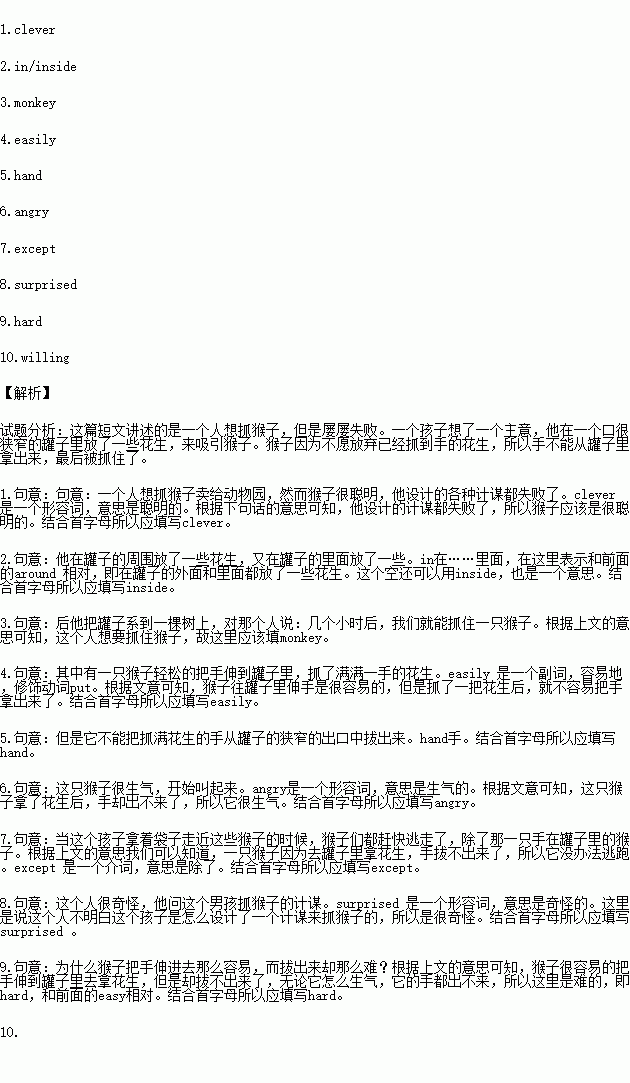
首字母填空A man tried to catch monkeys to sell them to zoos. The monkeys, however, were very c 1. and every kind of trap(计谋) that he set failed.

A young boy watched the man’s efforts and then took a pot (壶) with a narrow neck(瓶颈). He placed a few peanuts around the pot and put lots of peanuts i 2. it. He then tied the pot to a tree and he told the man, “We should have a m 3. in a few hours.”

Some monkeys soon found the peanuts and the pot. One put his hand into the pot e 4. and got a handful of peanuts, but he couldn’t pull his h 5. with peanuts out of the narrow neck of the pot. The monkey was a 6. and began to cry. Some of the other monkeys tried unsuccessfully to pull the pot off his hand.

The boy and the man heard the noise. As the boy came near to the monkeys with a bag, the monkeys all ran away e 7. the one with its hand in the pot. The boy packed the monkey and the pot into the bag. The man was s 8. and asked the boy the secret of his monkey trap. “Why was it so easy for the monkey to get his hand in but so h 9. to get it out?”

The boy laughed and said, “The monkey could get his hand back out if he let go of the peanuts in the pot, but he just wasn’t w 10. to let go. They never are.
练习册系列答案
相关题目

Almost every Chinese person can recite(背诵) the two lines of the famous poem, “Every grain on the plate comes from hard work ”. But sadly, many of us don’t actually get the real meaning of these lines: Don’t waste food.

A CCTV program reported that the food Chinese people throw away every year is enough to feed 200 million people for a year. Do we have too much food? Absolutely not. According to the UN World Food Program, there were 925 million hungry people around the world in 2011, especially in developing countries. Six million children die of hunger every year.

Chinese people are well-known for being friendly and generous. Many even feel that they lose face if their guests have eaten all the food on the table. Luckily, a number of people have realized the importance of saving food. What should we do in our daily lives to waste less food?

1. Don’t order too much in a restaurant. Only order as much as you want to eat. If you cannot eat all the food you ordered, take the rest of it home.

2.Don’t leave any food in your bowls, while having meals.

3. Keep an eye on what food you have at home. Don’t buy too much, especially for vegetables and fruit.

1. What’s the real meaning of the underlined sentence?

A.春种一粒粟,秋收万颗籽。

B.谁知盘中餐,粒粒皆辛苦。

C.吏禄三百石,岁晏有余粮。

D.足蒸暑土气,背灼炎天光。

2.According to the UN report, how many hungry people were there in 2011?

A. 6 million. B.925 million.

C.200 million. D.725 million.

3. What should we do to waste less food?

A. Order more food in a restaurant.

B. Every time you eat, leave some food in your bowls.

C.Take all the food you ordered home.

D.Don’t store too much food like vegetables and fruit.

4. Which of the following is NOT true?

A.A number of people have realized the importance of saving food.

B.The food Chinese people throw away a year is enough to feed 200 million people for a year.

C.200 million children die of hunger every year.

D.Many Chinese feel that they lose face if guests have eaten all the food on the table.

5. What’s the main idea of this passage?

A.Don’t waste food.

B.Chinese people are friendly and generous.

C.We can’t die of hunger.

D.Every grain is grown by farmers.

违法和不良信息举报电话:027-86699610 举报邮箱:58377363@163.com

精英家教网