请仔细阅读下面短文,从A到F的六个选项中选出符合各段主题的句子,完成文中各题。(其中一项为多余项)

How many of you feel that you really should be working harder? At the same time, how many of you wish you had more time to have fun and enjoy yourself? So how can you solve this paradox (悖论)?

1.Sometimes a tight schedule can leave you feeling burnt out. On the other hand, spending most of your time on leisure (休闲) often means you don’t end up getting anything done. So how can you achieve a balance between work and leisure?

The first step is to improve the quality of the activities you currently do for both work and leisure.

2.By doing this, you can get a lot more out of the activities using less time. Focusing on what is really important will allow you to put your time into things that are truly productive or enjoyable (or both).

3.Having the time to do things simply isn’t enough ,Certain tasks require a lot of your focus and energy. By trying to increase your energy levels, through proper diet and exercise, it is easier to focus on these tasks rather than waste time.The third step is to separate your work from leisure time.

4.When you have a project that demands much of your time, you have to spend time to continue working. In this case you’ll feel burnt out. It’s better to guarantee yourself certain time to leisure and relax yourself.

5.But it is both nice and necessary for your productivity and enjoyment. Understanding that is most important. If you do,it is a piece of cake to deal with both.

A. Hopefully, you can now strike a balance between work and leisure.

B.Separate your work from leisure time.

C.Solving this problem can be difficult for you.

D.Solving energy problem is also necessary.

E.Improve the quality of the activities your recently do for both work and leisure.

F.Achieving the balance between work and leisure can be difficult.

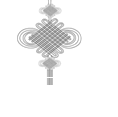
Chinese Fancy Knots

Chinese Fancy Knot

Chinese fancy knots, also called Chinese knots, refer to the traditional decorative knots in Chinese culture. They began as a form of traditional art in the Tang and Song Dynasties in China, and became popular in the Ming Dynasty. Long ago, they found their way to Japan and other Southeast Asian countries, and were well received there. Now they are taken as one of the most classic symbols (标志) of Chinese culture.

As for the name itself, it is surely meaningful. The Chinese word for “knot”, jie, means “connection”. It is related to lots of cultural ideas – marriage, brotherhood, reunion, etc. Meanwhile, the pronunciation of the Chinese word jie is very close to that of ji, “good luck”. As a result, Chinese knots perfectly serve as a way to express people’s strong wishes for good things like joy, love and good luck.

Besides, the knots, widely existing in the everyday life of the Chinese culture, come in different sizes. Small ones are connected to jewellery (珠宝), clothes, gift-packages and furniture in order to attract people’s attention, while large ones are used to decorate a living room or study. Whether large or small, there are over a dozen basic knot patterns ( 图 案 ), named according to their shapes, usages or origins. For example, Double Coin Knots are called shuangqian Jie because they are in the shape of two ancient Chinese coins, meaning “good things come in pairs”. However, almost all the main styles of Chinese fancy knots are made up of two exactly similar parts, and the patterns on the front and the back sides are also similar in every detail.

In addition, Chinese knots are famous for their bright colours. Each of the Chinese knots is made of a single string of cotton, silk, gold or silver. But the colours of the strings are rich and have different traditional cultural meanings. Among the most commonly used base colours, red means good luck and happiness, green means health, and yellow, which was once known as a emperor’s colour, may means wealth and honour.

In brief, the famous Chinese fancy knots fully reflect (反映) the depth of Chinese culture. These brightly coloured knots of different patterns, with their endless chains of knots, mean that life on earth will continue forever.

1.When did Chinese fancy knots become popular?

_______________________________________________________________________

2.What does the Chinese character for “knot” mean?

_______________________________________________________________________

3.Why do people express strong wishes with Chinese knots?

_______________________________________________________________________

4.What are the main points about Chinese knots in Paragraph 3?

_______________________________________________________________________

5.What do Chinese fancy knots fully reflect?

_______________________________________________________________________

违法和不良信息举报电话:027-86699610 举报邮箱:58377363@163.com

精英家教网