题目内容

What a lovely present the old lady has received for her ______ birthday!

A. eighteen          B. eighty            C. eighteenth         D. eightieth


【答案】

D

【解析】根据前文的意思,可知答案为再CD中进行选择,要用序数词,而又根据the old lady,故选答案为D


练习册系列答案
相关题目

I was in line waiting to pay. In line there were two people before me. A little boy was buying some rather strange clothes. He chatted with anyone who was interested in the clothes and soon we learnt that he was going to a kindergarten(幼儿园) party. He had done a great job of putting together interesting costumes.

I noticed that the little boy was paying mostly with change(零钱). It seemed that he had robbed his pig bank(猪形储蓄罐) to do this shopping. However, the cashier told him he was short after counting all the money. The boy thought for a moment and said, “Please keep the shirt and I will come back with more money. “

It was clear that he had already used all the money he had and he was $ 8.00 short. The lady in front of me said, “Well, I could pay half of that. “I told the boy that I could pay the other half. We dug into our handbags. However, both of us only had ten-dollar bills(纸币) and we needed the cashier to get the change for us. Other shoppers began digging into their pockets to find some change. It was amazing and touching as all these strangers seemed to react(反应) with the same mind. All wanted to be of help. Within minutes the cashier said, “I have too much money.” The cashier didn’t need our ten-dollar bills. Then the lady in front of me, who had been the first to offer help, said, “Wait! I didn’t even get a chance to give anything!”

I smiled at her and said, “You did your share, because it was your idea and you started all this. “ The little boy smiled and thanked us. We wished him the best and he left. I was left with a good feeling. I had seen the love and goodness of others all around me. The woman in front of me smiled and said, “It sure feels good to give, doesn’t it?” I smiled back and said, “Yes !”

1.What is this passage mainly about?

A.Love and goodness.

B.Culture and tradition.

C.Friendship and honesty.

D.Communication and understanding.

2.Why did the writer and the woman both feel glad?

A.Because the boy had saved some money.

B.Because they both didn’t need to give anything.

C.Because the cashier didn’t look down on the boy.

D.Because all the shoppers around were willing to help the boy.

3.What’s the correct order of the following events?

a. The cashier got enough money for the boy’s shirt.

b. The cashier counted the boy’s money.

c. The shoppers looked for some change in their pockets.

d. The boy went to the line to pay.

A.b, a, c, d

B.b, c, a, d

C.d, b, c, a

D.d, c, a, b


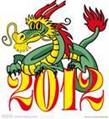
2012 is the Year of the Dragon in China. It began on January 23 but not on January 1st. The dragon is a symbol* of power and wealth in Chinese culture. And it is also the sign of the Emperor of China. People born in the Year of the Dragon are active-minded. They show a strong interest in the world around them, and will try their best to make their dreams come true all their lives.

    Dragon people are talented while these people enjoy being the center of attention. They will stop at nothing to get what they want. Dragon people are very friendly and if their friends face a problem, they will be there to offer help at once. There are some famous people who were born in the Year of the Dragon, such as the premier* of the Russian Putin and the famous Argentine soccer player Messi. In China, the CEO of Alibaba Group Mayun and movie star Zhouxun are dragon, too.

    There are some big events in the Year of the Dragon. In China, the 11th National People's Congress (NPC) * will be held in Beijing in March. The 9th National University Games in Tianjin will happen in September. And soccer fans, they can meet at the 2012 European Cup in June in Poland. And In Britain, the 30th Olympic Games is being held in London on July 27.

1.What does “Dragon” stand for in Chinese culture?

  A. power    B. wealth   C. the emperor   D. all of the above

2.When does the Year of Dragon begin?

  A. January 1st.   B. January 23rd    C. January 2nd.   D. January 22nd.

3.What will happen in July in London?

  A. National People's Congress    B. National University Games  

C. 2012 European Cup          D. the Olympic Games

4.Which of the following is NOT TRUE acorrding to the passage?

A. People born in the Year of the Dragon are active-minded.

B. People born in the Year of the Dragon enjoy being the center of attention.

C. If they face a problem, People born in the Year of the Dragon will give up.

D. If their friends face a problem, people born in the Year of the Dragon will offer help at once.


When I was growing up in America, I was ashamed of my mother’s Chinese English. Because of her English, she was often treated unfairly. People in department stores, at banks, and at restaurants did not take her seriously, pretended not to understand her, or even acted as if they did not hear her.

My mother has realized the disadvantages of her English as well. When I was fifteen, she used to have me call people on phone to pretend I was she. I was forced to ask for information or even to yell at people who had been rude to her. One time I had to call her stockbroker. I said in a voice that was not very convincing, “This is Mrs. Tan.” And my mother was standing beside me, whispering loudly, “Why he doesn’t send me the cheek. It’s already two weeks late.”

And then, in perfect English I said: “I’m getting rather anxious .You agreed to send the check two weeks ago, but it hasn’t arrived.” Then she talked more loudly. “What does he want? I’ll come to New York and say it in front of his boss.” And so I turned to the stockbroker again, “I can’t accept any more excuses. If I don’t receive the check immediately, I have to speak to your manager when I am in New York next week.”

The next week we ended up in New York. While I was sitting there red-faced, my mother, the real Mrs. Tan, was shouting to his boss in her broken English. When I was a teenager, my mother’s broken English embarrassed me. But now, I see it differently. To me, my mother’s English is perfectly clear, perfectly natural. It is my mother tongue. Her language, as I hear it, is clear and direct. It was the language that helped me form the way I saw things, expressed ideas, and made sense of the world.

1.Why was the author’s mother poorly treated?

A. She couldn’t speak English well.

B. Her English was very good.

C. She was not clearly heard.

D. She was not very polite.

2.From Paragraph 2, what can we know about the author?

A. She was good at pretending.

B. She was rude to the stockbroker.

C. She was ready to help her mother.

D. She was unwilling to phone for her mother

3.What does the author think of her mother’s English now?

A. It confuses her.

B. It embarrasses her.

C. It helps her understand the world.

D. It helps her forgive rude people.

4.What can we infer from the passage?

A. Chinese English is clear and natural to native speakers.

B. Chinese English may bring inconvenience in America.

C. Chinese English has a very bad name in America.

D. Chinese English is impolite to native speakers.

5.What is the best title of the passage?

A. Great Mother   B. A Chance 

C. Mother’s Chinese English  D. Perfect English


违法和不良信息举报电话:027-86699610 举报邮箱:58377363@163.com

精英家教网