题目内容
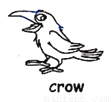
He was pleased to learn that Chibi knew all the places where the wild grapes and wild potatoes grew. He was amazed to ______how much Chibi knew about all the flowers in our class garden. He liked Chibi’s black and white drawings and put them up on the wall to be _____. He liked Chibi's own handwriting, which no one but Chibi could read, and he put that up on the wall.
But, when Chibi appeared on the stage at the talent show of that year, no one could _____his
eyes.“ Who is that?”“ What can that stupid do up there?”
Until Mr Isobe announced that Chibi was going to imitate(模仿)the voices of crows. “ Voices?”“ Voices of crows?”
________he imitated the voices of newly hatched crows. And he made the mother crow's voice. He showed how crows cry early in the morning. He showed how crows cry when the village people have some unhappy accident. He showed how crows _______when they are happy and cheerful. Everybody's mind was taken to the________mountainside from which Chibi probably came to school.
Chibi made very special _______deep down in his throat(喉咙)to imitate a crow in an old tree
in the end. Now everybody could imagine________the far and lonely place where Chibi lived with his family.
Then Mr Isobe explained ______ Chibi had learned those calls--leaving his home for school at sunrise, and arriving home at sunset, every day for six long years.
Every one of us cried, thinking how much we had been ______ to Chibi all those long years.
He was a boy beyond our usual imagination!
1.A. complain B. count C. find D. refuse
2.A. admired B. printed C. punished D. avoided
3.A. check B. hurt C. open D. believe
4.A. Later B. Next C. Last D. First
5.A. jump B. call C. fly D. dance
6.A. far B. crowded C. near D. modern
7.A. scripts B. reports C. speeches D. sounds
8.A. hardly B. happily C. exactly D. peacefully
9.A. what B. how C. whether D. who
10.A. wrong B. kind C. honest D. generous

 一诺书业暑假作业快乐假期云南美术出版社系列答案
Studying abroad(国外)is an amazing experience, especially when you come to Australia as an overseas(海外的)high school student. You can have a lot of fun here,especially on holidays.
There are many festivals in Australia. The most important one is obviously Christmas. Each year, the summer holidays at every high school last about two months from the beginning of December to February, which covers the Christmas time. Since it is a long holiday,most overseas students love to fly back to their countries to spend the time with their families and friends, but a few students still stay in Australia during the holiday to get part-time jobs. It is quite easy to find a part-time job at Christmas. Students often take part in another major social activity. They go to the beach to have fun in the sunshine. The summer in Australia is from December to February, so going to the beach in December is very popular among Australians.
Easter in March is another important holiday in the year. It actually combines(使结合) “Good Friday” and “Easter Monday". Almost every shop closes on Good Friday. And people usually go to see Easter Show.
The Chinese New Year is not a public holiday in Australia, so every Chinese student still has to go to school to study and do his or her normal things.
1. in Australia | |
Which month does summer begin in Australia? | In2. . |
Which season is Christmas in Australia? | In 3. |
What're 4.activities in December in Australia? | 5. to the beach and 6.sunshine. |
What do people do on Good Friday and Easter? | People7. go shopping, but8. go to see Easter show. |
9.do Chinese students do during the Spring Festival in Australia? | They continue to do their10.things. |
请认真阅读下列短文,并根据所读内容在文章后表格中第56-65小题的空格里填入一个最恰当的单词。
注意:每个空格只填1个单词。请将答案填写在答题卡标号为56-65的相应横线上。
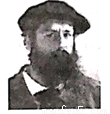
Claude Monet's paintings were quite different from the art styles that were popular in the 1870s France. Traditional artists always did their artwork in a studio and their paintings were realistic-they looked exactly like the real world. Claude Monet was part of a group of painters who were called Impressionists(印象派画家). Their paintings were light and a bit fuzzy-they gave an impression of what the real world looked like. Sometimes Impressionists worked outside, which was a very unusual thought in their time. Impressionism received its name from an early painting by Claude Monet titled impression, Sunrise.
Knowing that trains were interesting subjects and represented modern progress, Claude Monet
crated a series of Impressionist paintings of trains from January to March of 1877. He worked on
his paintings right on the train platform at the Gare Saint-Lazare, the train station on Saint Lazare
Street. Although there were many train stations in Paris, this was the first train station built in Paris so it had historical significance(意义).
Monet’s friend, Impressionist painter Pierre Auguste Renoir, told the following story to his sons about Claude Monet and painting the trains. Monet needed permission(允许)to spend time on the train platform and paint what he saw in his impressionistic style. One day Monet dressed himself in his very best suit along with a fine top hat, a good linen shirt and a silk tie. He appeared to be a wealthy gentleman while he really was a poor painter.
When he went towards the clerk at the train office, he presented his calling card which introduced him as Claude Monet, Painter. He asked to see the station master. The clerk quickly allowed this fine gentleman to enter the station master's office. The station master was also impressed and gave Monet permission to paint on the train platform. The station master even kept trains from leaving on time so Monet could complete a scene even though passengers complained.
Was it all worthwhile(值得)? Monet’s train scenes turned his career into a success and for the station master, made his train station famous until even now.
Claude Monet
Introduction | ◆Claude Monet was one of the Impressionist painters whose paintings were not the 1.as the popular art styles in the 1870s France. ◆Impressionist paintings gave an impression of2.the real world looked. ◆He helped Impressionism get its 3.by his painting Impression, Sunrise. |
A 4.of painting trains | ◆At that time trains were subjects that could keep people’s 5.and represented modern progress. ◆He created paintings of trains 6.January and March in 1877, at the train station with the longest 7.in Paris. ◆He dressed himself as a wealthy gentleman to win the station master’s 8.. ◆In order to help Monet complete a scene, the station master even made trains leave 9.than they should do. |
Result | ◆His train scenes made not only his career 10.but also the train station famous. |