题目内容
If you had billions of dollars, would you donate almost all of it to charity? Well, that’s what Mark Zuckerburg, CEO and founder of Facebook, just said he would do.
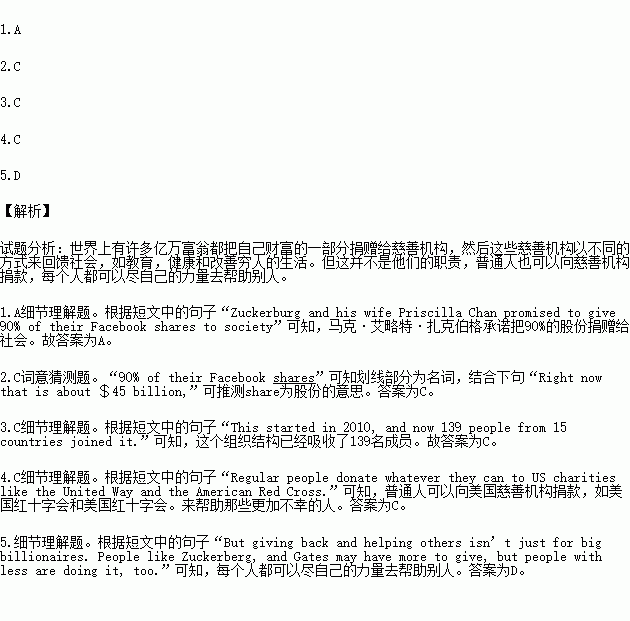
Zuckerburg and his wife Priscilla Chan promised to give 90% of their Facebook shares to society. Right now that is about $45 billion, and they plan to donate the money to things like science and education.
Many billionaires have done similar things. Bill Gates, creator of Microsoft, made The Giving Pledge, an activity in which billionaires promise donate more than half of their wealth to charities. This started in 2010, and now 139 people from 15 countries joined it.
But giving back and helping others isn’t just for big billionaires. People like Zuckerberg, and Gates may have more to give, but people with less are doing it, too.
Especially around the holidays, people want to do their part and give back to people who are less lucky than them. Schools may have food collections where people bring a few food items*, and together they can make a big donation to places like homeless people’s homes.
People also host special events like concerts of runs to be creative while raising money. Regular people donate whatever they can to US charities like the United Way and the American Red Cross.
Then these charities are able to help US communities in different ways like education, health and improving the lives of the poor. These individual* donations come together to make a big difference.
1.Mark Zuckerburg promised to donate______________________ .
A. 90% of their Facebook shares to society.
B. half of his wealth to the charities.
C. all of his money to charities
D. 45 billion yuan to society.
2.What does the underline word “share” mean?
A.分享 B.给予 C.股份 D.参与
3.According to Paragraph 3, The Giving Pledge___________
A. started just ten years ago B. is a charity to raise money
C. has attracted 139 people D. is only for US people
4.According to this passage, regular people ___________
A. get help from rich people.
B. hold special events to celebrate holidays
C. help the people who is less lucky.
D. collect food in homeless people’s home.
5.What can we learn from the story?
A. It’s rich people’s duty to give more money
B. There are more charities in the US than in China
C. The poor should work hard to make a living
D. Everyone can do their part to help others.

 阅读快车系列答案