题目内容
【题目】 Every day there is less and less space on Earth for rubbish. Yet every day we make more and more rubbish. What can we do? We can recycle some of our rubbish. Recycling means that the rubbish will be made into something that can be used again.
Recycling helps Earth. And it saves space in rubbish dumps. Half of everything that we put into landfills could be recycled instead. In fact, most things made of paper, metal, glass and plastic can be recycled.
Paper can be broken into small pieces and made into new paper. Steel and aluminum cans(金属雄)can be melted down(熔化)and made into new cans. The same is true of glass bottles. This can be done aver and over again. Recycling doesn't take as much energy as making these things the first time. So we can use less of Earth's fuel resources.
Plastic can be melted down, too. Then it can be formed into park benches, playgrounds and so on. Some people call plastic the "wood" of the future. Things made of plastic will last about 400 years-even if they stay outside in the weather. No wood can do that!
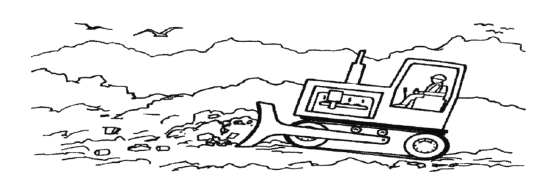
【1】The underlined word "landfills" in Paragraph 2 probably means _____________.
A. bench factoriesB. places for rubbish
C. green mountainsD. recycling centres
【2】According to the passage, what happens last to the can?
A. The can is put into a recycling bin.B. The can is melted down and reused.
C. A steel can gets filled with corn.D. A person uses the corn in the can.
【3】What is the main idea of the passage?
A. Cans should be melted down.
B. Old newspapers can be reused.
C. We can build benches that last 400 years.
D. We should recycle everything that we can.
【答案】
【1】B
【2】B
【3】D
【解析】
短文大意:本文关注的是地球污染问题,呼吁人们对垃圾进行回收再利用,保护地球。
【1】题意:第2段下划线的单词“landfills”意思可能是_____________。考查词义理解。put into投入/倾倒;根据上文And it saves space in rubbish dumps.和下文could be recycled instead.可知landfills是填埋垃圾的地方,places for rubbish符合句意,故选B。
【2】题意:根据这篇文章,罐子最后发生了什么?考查细节推断。根据Steel and aluminum cans can be melted down and made into new cans.可知可以熔化制成新罐,故选B。
【3】题意:这篇文章的主旨是什么?考查主旨理解。A. 罐头应该熔化。B. 旧报纸可以重复使用。C.我们可以建造使用400年的长椅。D. 我们应该回收我们能回收的一切。根据开头We can recycle some of our rubbish. Recycling means that the rubbish will be made into something that can be used again.可知短文介绍的是垃圾的回收再利用,故选D。

 天天向上一本好卷系列答案
 小学生10分钟应用题系列答案
【题目】
| June 8,2020 Dear Betty, We are planning a dinner party to celebrate our baby Jim's birth and we would like you and your son Nick to come. It's at 6:00 p.m. next Sunday, June 14, at Moonlight Hotel. We do hope you can make it, as we are looking forward with great pleasure to seeing you. Sincerely yours Mary |

【1】The material might be a (an) .
A.ticketB.advertisementC.invitationD.poster
【2】Whose birthday is it?
A.Betty’s.B.Jim’s.C.Nick’s.D.Mary’s.
【3】What day is it today according to the card?
A.Monday.B.Tuesday.C.Saturday.D.Sunday.

【题目】 Seeing someone who seems to be walking on a cloud sounds like a dream. But this scene indeed exists --- and it isn't just in your head. It's a popular attraction in the South American country of Bolivia called the Salar de Uyuni. The area covers a large amount of white, glistening salt and runs across 10,582 kilometers of the Altiplano and you can even see it from space.
What's special about the Salar? This salt flat can create an endless natural mirror (镜子), which gives you an amazing experience. On a still day, a thin layer of water covering the salt changes the salt flat into "The World's Largest Mirror" reflecting the sky. Those who are lucky enough to see this natural wonder will tell you how difficult it is to find out the dividing line between the sky and land.
Some 40,000 years ago, water from the surrounding mountains gathered here and there were no outlets (出口) where the rainfall could flow out. So a huge lake was formed with natural salt inside. Over time, about 25,000 years ago, a rise in temperatures reduced the amount of rainfall in the area. The climate from wet to dry caused the water to slowly evaporate (蒸发). About 10,000 years ago, the body of water dried up and a deep layer of salt flat was left behind.
With about 10 billion tons of salt lying around it, it's no surprise that salt production in the Salar is a big business. But the real treasure lies under the surface of the salt flat, where around 70% of the world's lithium (锂) reserves can be found. The lithium is used for powering mobile phones, laptops, electric cars and this resource could be of great value.
What is the Salar de Uyuni | ●It's a place of 【1】 in the South American country of Bolivia. ●It is an area 【2】 with white and glistening salt. ●It runs across about 10,582 kilometers and can even be 【3】 from space. |
What's special about the Salar de Uyuni? | ●On a still day, the salt flat will 【4】 into "The World's Largest Mirror", which gives you a wonderful experience. ●If you are lucky enough to see it, you may find it difficult to tell 【5】 The sky ends and the land begins. |
How did the Salar de Uyuni 【6】 ? | ●40,000 years ago, the surrounding mountains 【7】 the water from flowing out and it became a huge lake. ●25,000 years ago, the climate changes 【8】 to the evaporation of the lake. ●10,000 years ago, the lake dried up, 【9】 behind a deep layer of salt. |
What's under the Salar de Uyuni? | ●70% of the world's lithium lies under the salt flat. ●Lithium can be used to power things 【10】 mobile phones, laptops and electric cars. |