题目内容
【题目】 The teacher told us that light _____ much faster than sound.
A.travels B. travelled
C.would travel D. had travelled
【答案】A
【解析】
试题分析:句意: 老师告诉我们光比声音的传播速度要快。句中缺的是宾语从句的动词,当宾语从句是一个客观真理时,其动词用一般现在时,不受主句时态的影响,故此题选A。

 期末好成绩系列答案
 99加1领先期末特训卷系列答案
 百强名校期末冲刺100分系列答案
 好成绩1加1期末冲刺100分系列答案
 金状元绩优好卷系列答案


【题目】
Science for Kids This month's most popular books | |
1. Women in Science by Rachel Ignotofsky Price $25 We all know the story of Marie Curie and her many scientific achievements. But many other brilliant female scientists are far less well known. This book is a great introduction to the lives and works of some of the most important and up-to-now unknown women in science. Recommended for Ages: 12-15 Order Now | Special Offer For this month, only all Bestbooks Book Club members will pay 20% less for every book ordered. Join our club for free and save big money! Delivery |
2. First Big Book of How by Jill Esbaum Price $15 An excellent book about sea life for young children. The book is divided into 4 parts, one for each of the Pacific, Atlantic, Indian and Arctic oceans. It focuses on the different animals found in each of these seas, along with interesting facts and amazing pictures. Ages: 5-10 Order Now | We bring every book you order right to your door within three days. For Bestbooks Book Club members, this is free. Non-members must pay an extra $2 per book. |
3. A Really Short History of Nearly Everything by Bill Bryson Price $15 Bill Bryson takes readers on a very funny and educational trip through the history of modern science — from its unexpected successes to its great failures and everything in between. Ages: 14 and over Order Now | |
4. National Geographic's First Big Books of the World by Jan Carn Price $20 This book is the perfect introduction to the seven continents. It tells young readers about the different animals that live on each of these lands and gives a simple description of the people's history and culture. Ages: 5-12 Order Now | |


【1】How are the books on this webpage listed?
A. By price.
B. By popularity.
C. By reader’s age.
D. By writer’ s name.
【2】What is true about the book Women in Science?
A. It is mainly about Marie Curie's history.
B. It lists all the important scientific achievements.
C. It includes women scientists that aren’t famous.
D. It is mostly about the development of modern science.
【3】How much will a Bestbooks Book Club member pay in total if he orders First Big Book of How and A Really Short History of Nearly Everything today?
A. $34.
B. $30.
C. $26.
D. $24.
【4】A primary school student who needs to write a science report about African elephants should choose .
A. Women in Science
B. First Big Book of How
C. A Really Short History of Nearly Everything
D. National Geographic's First Big Book of the World
【5】What is the main purpose of this webpage?
A. To sell books to young readers.
B. To attract new book club members.
C. To encourage students' interest in science.
D. To review books young readers might like.
【题目】The Four Smallest Countries in the World
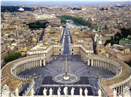
The world’s smallest country is the Vatican, also known as the Holy See. This country lies in the Italian capital city of Rome. It is also home to one of the biggest churches(教堂) in the world—St. Peter’s Basilica, and holds some of the most important art works. |
Lying on the French Rivera, Monaco is home to the largest number of rich people per capita (人均) in the world. With a population of over 16,000. People there are mostly French-speaking. The most popular event is the Formula 1 race, held there every year. |
To the east of Australia, Nauru is the smallest island country in the world. It is also a country with the most overweight people per capita in the world, with 97% of its men and 93% of its women being overweight. |
It is in the Pacific Ocean, to the east of Australia. There are over 10,000 people, with 8 km of roads, and only one hospital on the main island. Since it’s a difficult place to get to, in 2010, only about 2,000 visitors came to Tuvalu. |


【1】Which country is the smallest of the four?
A. Naura B. Tuvalu C. The Vatican D. Monaco
【2】Monaco has the largest number of _______ people per capita in the world.
A. fat B. thin C. poor D. rich
【3】Where can we most probably find the article?
A. In a storybook. B. In a travel magazine.
C. In a health report. D. In a P.
E. magazine.