A year ago, I paid no attention to English idioms(习语), though my teacher told us the importance again and again. But soon, the importance of English idioms was shown in an amusing experience.
One day, I happened to meet an Englishman on the road, and soon we began to talk. As I was talking about how I was studying English, the foreigner seemed to be surprised. Gently shaking his head,shrugging his shoulders, he said,“You don’t say!” “You don’t say!” I was puzzled. I thought, perhaps this is not a right topic. “Well, I’d better change the topic.” So I said to him. “Well, shall we talk about the Great Wall? By the way, have you ever been there?” “Certainly, everyone back home will laugh at me if I leave China without seeing it. It was wonderful.” He was deep in thought when I began to talk like a tourist guide. “The Great Wall is one of the wonders in the world. We are very proud of it.” Soon I was interrupted(打断)again by his words: “You don’t say!” I couldn’t help asking, “Why do you ask me not to talk about it?” “Well, I didn’t ask you to do so,” he answered, greatly surprised. I said, “Didn’t you say ‘you don’t say’?” Hearing this, the Englishman laughed to tears. He began to explain, “ ‘You don’t say’ actually means ‘really!’ It is an expression of surprise. Perhaps you don’t pay attention to English idioms.” I realized I had made a fool of myself. Since then I have been more careful with idiomatic expressions. Remember: what the English teachers said is always right to us students.
【小题1】A year ago, I paid no attention to English idioms because       .

A.I had no interest in them
B.English idioms were very difficult
C.I did not realize the importance of them
D.my teacher didn’t tell us the importance of them
【小题2】At first, on hearing “You don’t say,” I thought the foreigner meant       .
A.I had talked too muchB.I had to stop talking
C.he was not interested in the topicD.he was only interested in the Great Wall
【小题3】“…was shown in an amusing experience.” The word “amusing” probably means     .
A.interestingB.importantC.terribleD.unlucky
【小题4】Which of the following is TRUE according to the passage?
A.The Englishman wanted me to act as his guide.
B.The Englishman left China without seeing the Great Wall.
C.The Englishman wanted to see the Great Wall after I talked about it.
D.The Englishman visited the Great Wall and thought it worth visiting.
【小题5】After the Englishman explained the idiom, ___________.
A.I felt very sillyB.the Englishman became a real fool
C.I became more careful in everything D.I thought the Englishman had made me a fool

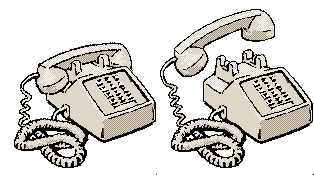
Here are four messages on Alan Marshall’s answer phone.

Monday  9:21

   Alan? Alan, if you’re at home, please answer the phone. Are you really not there? Well, I’d just like to say that I’m really annoyed with you—and your father is too. You know how much he loves our monthly family lunches. This is the fifth one you’ve missed. I hope you’ve got a really good reason this time. Oh, umm, this is your mother speaking.

Monday 10:02

Mr Marshall, this is Rose, Mr Smith’s assistant. I’m calling to make sure tomorrow’s lunch with Mr Smith of Rising Sun Computer Games. Mr Smith wants you to know that this meeting is very important. Please remember to bring the designs with you. He says that he is ready to pay for your new game! The restaurant is The Four Stars in Gower Street and I’ve booked a table for a quarter past one. Be there on time—please!

Monday 11:23

My name is Karen Miller. I’m manager at Superstar Computer Games, Australia. I saw your game “Kill the Enemy!” at the International Computer Game Fair. I think your work is great and I’d like to talk with you about buying your new game. Perhaps we can interact over lunch and know more about each other. I’m in London until Wednesday. My mobile number is 6130800.

1.Alan Marshall is a ________ according to these telephone messages.

A. psychologist    B. veterinarian    C. movie director   D. computer game designer

2.Alan’s mother was _________ when she called her son.

A. angry         B. patient            C. terrified     D. excited

3.________are going to buy Allan’s new game.

A. Mr Smith and Mr Marshall           B. Alan and Rose 

C. Mr Miller and Mr Smith             D. Alan and Karen

4.The underlined word “interact” means “_______” here.

A. discuss      B. play games     C. eat     D. fight


A year ago,I paid no attention to English idioms (习语), though my teacher told us the importance again and again. But soon, the importance of English idioms was shown in an amusing experience.

One day, I happened to meet an Englishman on the road, and soon we began to talk. As I was talking about how I was studying English, the foreigner seemed to be surprised. Gently shaking his head,shrugging his shoulders, he said,“You don’t say!” “You don’t say!” I was puzzled. I thought , perhaps this is not a right topic. “Well, I’d better change the topic.” So I said to him. “Well, shall we talk about the Great Wall? By the way, have you ever been there?” “Certainly, everyone back home will laugh at me if I leave China without seeing it. It was wonderful.” He was deep in thought when I began to talk like a tourist guide. “The Great Wall is one of the wonders in the world. We are very proud of it.” Soon I was interrupted (打断) again by his words: “You don’t say!” I couldn’t help asking, “Why do you ask me not to talk about it?” “Well, I didn’t ask you to do so,” he answered, greatly surprised. I said, “Didn’t you say ‘you don’t say’?” Hearing this, the Englishman laughed to tears. He began to explain, “ ‘You don’t say’ actually means ‘really!’ It is an expression of surprise. Perhaps you don’t pay attention to English idioms.” I realized I had made a fool of myself. Since then I have been more careful with idiomatic expressions. Remember: what the English teachers said is always right to us students.

1.A year ago, I paid no attention to English idioms because       .

A.I had no interest in them

B.English idioms were very difficult

C.I did not realize the importance of them

D.my teacher didn’t tell us the importance of them

2.At first, on hearing “You don’t say,” I thought the foreigner meant       .

A.I had talked too much

B.I had to stop talking

C.he was not interested in the topic

D.he was only interested in the Great Wall

3.“… was shown in an amusing experience.” The word “amusing” probably means       .

A.interesting        B.important         C.terrible           D.unlucky

4.Which of the following is TRUE according to the passage?

A.The Englishman wanted me to act as his guide.

B.The Englishman left China without seeing the Great Wall.

C.The Englishman wanted to see the Great Wall after I talked about it.

D.The Englishman visited the Great Wall and thought it worth visiting.

5.After the Englishman explained the idiom, ___________.

A.I felt very silly

B.the Englishman became a real fool

C.I became more carefully in everything

D.I thought the Englishman had made me a fool


违法和不良信息举报电话:027-86699610 举报邮箱:58377363@163.com

精英家教网