题目内容
Edith Cavell was born in a little English village. She was a clever; hard-working girl and did well at school; especially in music and French. After she left school; her first job was to take care of the children of a rich family in Belgium(比利时). The language they spoke was French; so she found that her school studies were useful. She could understand them easily; at the same time she taught the children to speak English and play the piano.
After hearing that her father was seriously ill; Edith returned home to look after him. She then decided to become a nurse. Afterwards for five years she worked in an English hospital where she proved to be highly professional(专业的)at her job. A Belgian doctor was so impressed(印象深的)that he invited her to his country to organize a training school for nurses. The First World War (第一次世界大战) broke out in 1914 and Edith Cavell’s school of nursing became a hospital. She stayed there to look after the sick and wounded soldiers (伤员). Edith treated them with kindness. Between November 1914 and August 1915 she secretly helped about 200 wounded soldiers and prisoners (囚犯) escape from the Germans. Later the German army found out what Edith had done and they arrested her. Finally; the Germans killed her; but they could not kill her memory. A tall statue(雕塑)has been built in Trafalgar Square; London; in honor(纪念)of the brave English nurse.
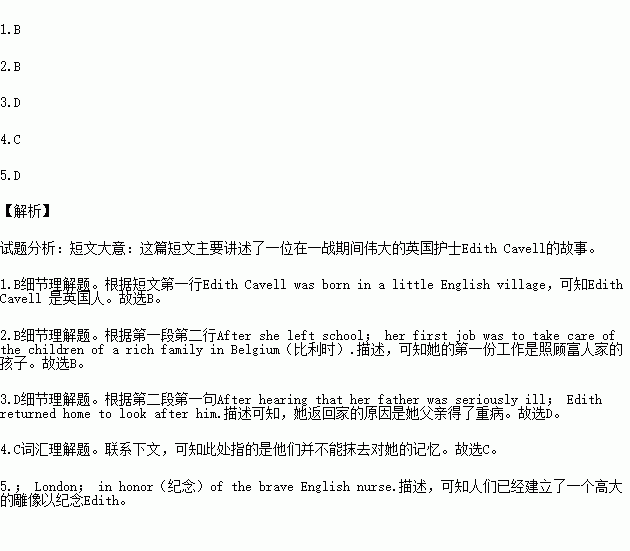
1.Edith Cavell was from __________.
A. France B. England
C. Belgium D. Germany
2. Edith Cavell’s first job was to __________.
A. teach French
B. look after the children of a rich family
C. teach English
D. look after the sick and wounded soldiers
3. Why did Edith return home from Belgium?
A. Because she found work in an English hospital.
B. Because she organized a training school for nurses.
C. Because the First World War broke out.
D. Because her father was seriously ill.
4. What’s the Chinese meaning of “kill her memory” in this passage?
A. 杀死她 B. 使她失去记忆
C. 抹去对她的记忆 D. 摧残她
5.According to the passage; which of the following is TRUE?
A. Edith was good at music and German at school.
B. Edith was a highly professional doctor.
C. Edith was invited to her country to organize a training school for nurses.
D. People have built a tall statue in honor of Edith.

 名校课堂系列答案
假如你是初四(二)班班长王明,你收到了学生会发来的邀请卡,请你根据卡片的内容向班级同学说明该项活动的情况并鼓励大家踊跃参加。(字数要求:30-40词)
School-leavers' Party Invitation Time: 6 p.m., 30th June Place: the Student Hall Activity: Enjoy traditional dishes, music and dancing |
___________________________________________________________________________________________
___________________________________________________________________________________________
___________________________________________________________________________________________
___________________________________________________________________________________________
____________________________________________________________________________