题目内容
还原句子
阅读短文,将下列所给的五个句子还原到短文中,使短文意思通顺、结构完整。
As Cheerful as Cheerful Can Be
Miss Dinsmore lived alone in a little gray house. “It’s a nice little house,” she said. “But I wish it looked more cheerful. Maybe I should paint it bright, pretty color. 1. . She saw lots of cheerful colors there, but she didn’t know which color to choose.
Finally she got an idea. “I’ll paint picture after picture of my house with all these colorful colors. Then I’ll choose the one I like best.” Miss Dinsmore bought all the colors home. She painted a pink house. 2. . She painted a red one and a yellow one. She painted one with flower boxes under the windows, and she painted...
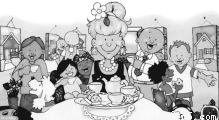
She hung each picture she painted on the wall. 3. . She still couldn’t decide which color to choose. One day, a neighbor came by while Miss Dinsmore was painting. Her neighbor liked the pictures of the houses so much that he told the whole town. 4. . “What pretty pictures,” everyone said. “And what a nice house you have.”
Now the little house was often full of people looking at the pictures, drinking tea, talking, laughing and having fun. Miss Dinsmore smiled and said, “It’s a nice little house. 5. , too---especially when good friends came to see me. It’s as cheerful as can be.”
A. So she went to the paint store B. All of her pictures were pretty C. Lots of people came to the little house D. It’s a cheerful little house E. She painted a blue one |

 小学同步三练核心密卷系列答案
任务型阅读:每空填一个单词
Dr. Albert Schweitzer was a jungle doctor in Africa. He was born in France. He had learned to play the piano since he was five and he was a very good musician. He decided to be a doctor when he was 30 years old. Then he studied medicine for eight years. After that, he asked to be sent to Africa in 1913.
Dr. Schweitzer took big boxes of medicine with him to Africa. He had to go through a lot of dangerous places. At first the new white doctor was not welcome, but soon the people of Africa understood that he was their friend and they helped him build his first small hospital near a river. Many people came to the hospital. Dr. Schweitzer worked day and night.
When he ran out of money and needed more medicine, he would go back to Europe to play music to make money. Then he would return to Africa. Later he built a bigger hospital. He spent most of his life in Africa, not only helping sick people but also teaching the people how to help each other.
During World War I, he was sent to prison. He found that war was more terrible than diseases (疾病 ). When the war was over, he made a speech everywhere to propose (提倡) peace and respect (尊敬) for lives. In 1952, he was named winner of the Nobel Peace Prize.
Occupation | Jungle _____ 1.______ |
Birthplace | ______2.___ |
Education | He learnt to play the piano for many years and then he studied ____3.____ for 8 years. |
Career | He was sent to Africa in 1913. He was ____4.____ at first because people there didn’t understand him. He worked day and night in his first small hospital to treat the sick people in Africa. He made money for his hospital by ___5.__ music in Europe. He devoted most of his life to helping __6._____and teaching the people how to help each other. |
He was put into __7.____ during World War I. After the war, he gave ___8.___ around the world to make people realize the _____9._ of peace and ask people to respect lives. | |
Honour | In 1952, he was given the Nobel ____10.__Prize. |