题目内容
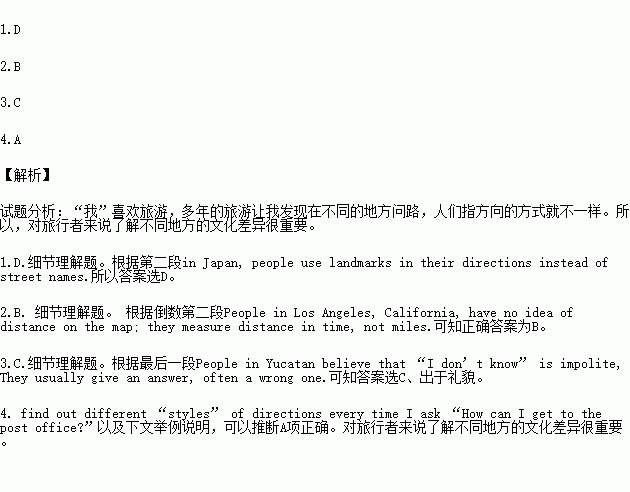
I travel a lot, and I find out different “style” of directions every time I ask “How can I get to the post office?”
Foreign tourists are often puzzled in Japan because most streets there don’t have names; in Japan, people use landmarks (地标) in their directions instead of street names. For examples, the Japanese will say to travelers, “Go straight down to the corner. Turn left at the big hotel and go past a fruit market. The post office is across from the bus stop.”
In the countryside of the American Midwest, there are not usually many landmarks. There are no mountains, so the land is very flat; in many places there are no towns or buildings within miles. Instead of landmarks, people will tell you directions and distances. In Kansas or Iowa, for example, people will say, “Go north two miles. Turn east, and then go another mile.”
People in Los Angeles, California, have no idea of distance on the map; they measure (估量) distance in time, not miles. “How far away is the post office?” you ask. “Oh,” they answer, “it’s about five minutes from here.” You say, “Yes, but how many miles away is it?” They don’t know.
It’s true that a person doesn’t know the answer to your question sometimes. What happens in such a situation? A New Yorker might say, “Sorry, I have no idea.” but in Yucatan, Mexico, no one answers “I don’t know.” people in Yucatan believe that “I don’t know” is impolite. They usually give an answer, often a wrong one. A tourist can get very, very lost in Yucatan!
1.When a tourist asks the Japanese the way to a place, they usually _________.
A. tell him the names of the streets
B. show him a map of the place
C. describe the place carefully
D. refer to (意指)clear buildings and places
2.What is the place where people show distance in time?
A. New York. B. Los Angeles. C. Kansas. D. Iowa.
3.Usually, People in Yucatan give a tourist a wrong answer _________ instead of saying “I don’t know”.
A. to save time B. as a test
C. to be polite D. for fun
4.What can we learn from the text?
A. It’s important for travelers to understand cultural differences.
B. It’s useful for travelers to know how to ask the way properly.
C. People have similar understandings of politeness.
D. New Yorkers are generally friendly to visitors.

 星级口算天天练系列答案
 芒果教辅达标测试卷系列答案


