Each of us makes mistakes from time to time. In fact, we can a lot from our mistakes.

Donnie was a student and never answered questions in class. He was to make mistakes. He never finished his homework he didn’t want to make any mistakes. Nothing changed Marry Anne, a teacher, came to our class.

One morning, Marry Anne asked Donnie to answer some questions. After a while Donnie was in tears (眼泪) because he made a mistake. Suddenly Marry Anne got a box full of erasers from the desk.

“Look, Donnie,” she said, standing him. “I've got something to show you.” She the erasers, one at a time, and put them on the desk.

“See these erasers, Donnie?” she continued. “Do you know the erasers become smaller and smaller? That's because we make mistakes. But we erase (清除) the mistakes and try again. That's what you must learn.”

“Here,” she said, “I’ll one eraser on your desk, so you will remember that may make mistakes.” Donnie looked at Marry Anne and smiled.

Donnie changed a lot from then on. He knew that everyone had the permission (允许) to make mistakes as long as you learned something from them and tried again.

1.A. take B. make C. learn D. bring

2.A. good B. shy C. clever D. small

3.A. glad B. excited C. surprised D. afraid

4.A. because B. so C. if D. but

5.A. after B. while C. before D. when

6.A. on B. with C. beside D. to

7.A. put out B. took away C. took out D. took off

8.A. when B. how C. what D. why

9.A. forget B. carry C. leave D. give

10.A. nobody B. somebody C. no one D. everybody

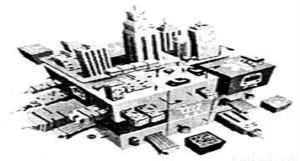
Have you noticed your life becoming a little easier? Now, when you go to a certain shopping mall, you can enjoy its free Wi-Fi there. When you want to take a taxi, you can book one with your phone. In fact, all these can be seen as the basic parts of a smart city.

The idea of a smart city was brought up by US company IBM in 2010. Generally, a smart city is a city that uses digital technologies such as the Internet to improve city planning, save money and resources, and make our life convenient. How smart can a city be? Here are great examples that we can learn from.

In 2009, Dubuque became the first smart city in the US. The city used smart water meters to take the place of traditional water meters. They can detect(探测〉water waste and leakage(泄漏)and send data to let the house owner know. The same system is used for other city resources like electricity and natural gas. This way, people know how they use their resources and are glad to help reduce waste.

Santander in Spain also gives us a look at the future. If people point a phone toward a nearby bus stop, the phone immediately shows all bus lines that serve the stop as well as their arrival times. The government organized a research team and provided an App(应用程序〉that collects data on almost everything: light, temperature, and the movements of cars and people. Opening the App near a supermarket provides immediate information on special

1.According to the passage, which of the following is RIGHT?

A. Digital technologies are used in smart cities.

B. An English company first raised the idea of a smart city.

C. A smart city is mainly made up of free Wi-Fi and phones.

D. A smart city is still an idea and hasn’t come into being.

2.The underlined word “convenient” is the closest in meaning to _____.

A. useful B. normal C. suitable D. easy

3.Compared to traditional water meters, smart water meters do better in .

A. cleaning water B. supplying water

C. saving water D. producing water

4.The example of Santander shows the use of smart systems in aspects(方面)EXCEPT _____.

A. business B. health care

C. traffic controlling D. public transportation

5.What’s the main idea of the passage?

A. Digital technologies help improve city planning.

B. Smart cities will make our future life better and smarter.

C. Smart cities are very common in both Dubuque and Santander.

D. Spain and the US take the leading position in building smart cities.

违法和不良信息举报电话:027-86699610 举报邮箱:58377363@163.com

精英家教网