题目内容
I will pay five yuan ______ the book.
A. on B. in C. to D. for

 每课必练系列答案
书面表达
Jenny的父母暑假后要来金华工作,她要来金华一所初中就读。你是王林,作为她的笔友,你对初中学校生活有一些感想和经验,请参考下表的提示词,给她写一封信,提出一些建议,并分别陈述理由,帮助她尽快适应初中生活。
Suggestions | Reasons | |
In class | listen carefully… | good habits… |
After school | do homework… | necessary… |
Hobby | reading , sports... | make .. more colourful |
Personality(性格) | … | ... |
注意: 1.词数100左右。开头可借鉴已给内容也可自己写;
2.不得出现具体的学校姓名和人名。
Dear Jenny,
As your pen friend, I’d like to share my experience in school life with you.
_________________________________________________________________________________________
_________________________________________________________________________________________
_________________________________________________________________________________________
_________________________________________________________________________________________
_________________________________________________________________________________________
_________________________________________________________________________________________
I hope you will enjoy your new school life.
Yours sincerely,
Wanglin
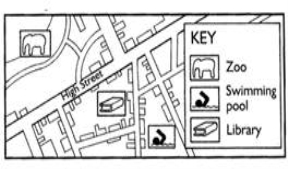
Different types of maps have different uses. Tourist maps, for example, have signs to show places of interest in an area. When tourists read these maps, it is easy for them to find where to go and what to see in a place and it is easy for them to go and find their ways to these places. |
|
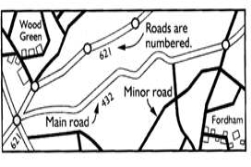
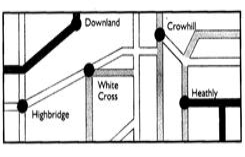
| Road maps show large areas so that people can plan long journeys. Different types of roads are given different numbers. For example, if you want to go to Wood Green, you just follow No. 621 Road and keep looking at the road signs. |
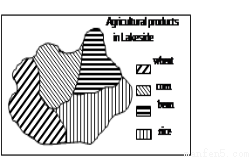
Distribution maps (分布图) use colors or signs to show facts about an area. For example, where different languages are spoken, how many people live in an area, how cold and hot some places are, or whether a place is short of water. |
|
| Some maps, such as railway maps, use straight lines to show everything. This is easy for people to read. Trains are fast. People don't have to think about small places they go past. They just need to know the two ends of their trips. |
1.Jim wants to visit some places of interest. Which map does he need most?
A. A road map. B. A tourist map.
C. A distribution map. D. A railway map.
2.How can you tell different roads on Road maps?
A. By finding the numbers.
B. By using different colors.
C. By using straight lines.
D. By looking at the road signs.
3.Which of the following can Distribution maps tell us?
A. How to get to Germany.
B. How to plan a long journey.
C. Which place is short of water.
D. Where a famous museum is.
4.Why do railway maps use straight lines?
A. Because railways are straight.
B. Because people like straight lines.
C. Because people can read them easily.
D. Because railways have only two ends.
5.Which is the best title for the passage?
A. Learn to Design Maps
B. Get to know Different Maps
C. Buy a Railway Map for yourself
D. Draw Maps for Geography Students