题目内容

【题目】

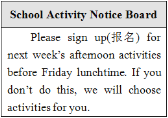
In Britain, people often invite friends for a meal, a party or just coffee. People who know each other very well close1, family or neighbors visit each other’s houses without an invitation (邀请), but usually an invitation is needed.2people invite someone to their homes, they often say: “Would you like3for dinner on Saturday?” Answers are: “Thanks. We’d love to. What time?” or “I’m sorry. We’d love to but we have tickets4the concert.” However,5is not polite to say “No, we wouldn’t!”

Sometimes, the British use expressions (表达) that sound like invitations but which are not invitations. For example: “You must come over for6drink sometime.” or “Let’s go out for a meal one of these days.” These are usually just polite7of ending a talk. They are not real invitations8they don’t mention an exact time or day. They just show that the person is9

to be friendly and the answers are: “Yes, that would be nice.” or “OK, yes, thanks.”

So next time you hear what sounds like an invitation, listen10. Is it a real invitation or is the person just being friendly?

【答案】

1friends

2When

3to come

4for

5it

6a

7ways

8because

9trying

10carefully

【解析】本文讲述了在英国,人们经常邀请朋友,邻居等来家里做客,但是也会出于礼貌发出一些假的邀请,我们可以通过文章了解有关“真假邀请”的事情,并能知道怎么去回应别人。

1句意:彼此非常了解的朋友家人或者邻居参观彼此的房子的时候不用发出邀请。根据句意选friends。Close friends关系密切的朋友。

2句意:当人们邀请某人去他们家的时候,他们经常说:“星期六来吃晚饭好吗?”根据句意选When当···时候。

3句意:星期六来吃晚饭好吗?Would you like_to do sth?你干什么好吗?用于发出邀请,would like to do 故填to come

4句意:对不起,我们非常愿意去,但是我有两张音乐会的票。For是介词,ticket for the concert.音乐会的票

5句意:然而,说“No, we wouldn’t!”是不礼貌的。句型:It is +形容词+(for sb)+to do sth.(对某人来说)做某事是···。It是形式主语。真正的主语是后面的动词不定式to say “No, we wouldn’t!”。故填it

6句意:你一定找个时候过来喝点东西come over 过来;顺便来访;for a drink喝一杯; drink在这里是一个名词。

7句意:这些通常仅仅是结束谈话的礼貌的方式。Polite是形容词修饰名词,“方式,方法”,又因为前面是These are故填复数形式ways。

8句意:他们并不是真正的邀请,因为没有确切的时间和日期。根据句意填because

9句意:他们只是表明这个人尽力表示是友好的。Trying to be friendly是动名词短语做表语。

10句意:因此下次再听到听起来像邀请的时候,仔细听。根据句意选careful,又因为该空修饰动词listen,故使用副词carefully。

练习册系列答案
相关题目

【题目】阅读短文,根据短文内容回答问题

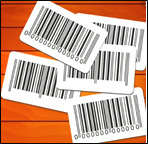
We see them everywhere — on boxes of food, on packages and on CDs. They, of course, are bar codes. The invention of bar codes has changed the way we shop and how companies learn where their products are.

It was two university students from America, Bernard Silver and Norman Woodland, who first got theidea of bar codes. In 1948, they heard that the president of a food company was looking for a way to easily get information about what was being sold to customers. They tried to help by using a code system. They invented a large electronic reader to read the codes. However, computers couldn’t easily record the data that was read.

Then, in the 1960s, David Collins made important developments in bar codes. He developed a system for recognizing train carriages. In order to develop the recognition system for other kinds of businesses, Collins started his own company. In 1969, Collins’s company put a bar code reading system in a car factory, showing that bar codes could be useful.

Shortly after Collins started his company, an American electronic company called RCA also saw the potential (潜力) of bar codes to help businesses. RCA’s

system, which recorded how much of a product was sold, was not perfect. Since bar codes were not common, not all products had them and different companies used different codes. Then, Woodland helped develop the Universal Product Code (UPC), which gave every product a code that included information about the manufacturer and the kind of product being sold. This made bar codes much more practical.

In addition to shops, hospitals use bar codes to recognize patients by giving them cards with bar codes on them. Libraries use bar codes to record which books have been lent, and airports use them to find out where bags are going. Bar codes have made life much easier and simpler.

1What changed the way we shop?

2Who first got the idea of bar codes?

3Why did Collins start his own company?

4What do hospitals use bar codes to do?

5What is the passage mainly about?

【题目】根据短文肉容.判断下列句子的正误。正确的用“T”.错误的用“F”(每小题1分.共5)

A long time ago. there was an emperor. He had a beautiful garden. In the garden, there was a little nightingale(夜莺) singing very beautifully.

One day the emperor heard about this little bird's beautiful voice. He asked his guards to bring her to him. As soon as the emperor heard the nightingale's voice, he said, "Put her in a golden cage, so she can stay and sing for me whenever I want to hear her. "

The little bird was so unhappy about being kept in the cage that she stopped singing one day. The emperor was very angry. He ordered the scientists in his palace to make a robot bird for him. The bird could sing very beautifully, too. The emperor was pleased.

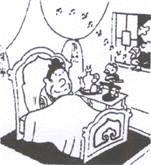
Soon the robot bird became old. It no longer sang beautiful songs. Just at that time, the emperor became very weak. One morning, while lying in bed, the emperor wanted it to sing once again. But the robot bird couldn't sing any more. Suddenly the nightingale landed on the window. She began to sing her most beautiful song. The emperor was very happy! He became better and better each day.

After the emperor was wellhe changed a lot and became kind to his people. From then on, all his people cherished(爱戴) him for his love and kindness.

1Both the nightingale and the robot bird had a beautiful voice.

2The emperor kept the nightingale in a golden cage in order to hear her sing at any time.

3The nightingale was very happy after she was kept in the golden cage.

4The emperor was not satisfied with the robot bird at first.

5The emperor learnt from the nightingale what love and kindness was.

违法和不良信息举报电话:027-86699610 举报邮箱:58377363@163.com

精英家教网