题目内容
书面表达
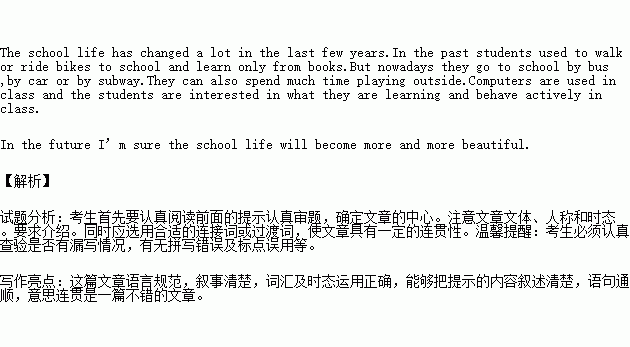
假如某中学生英文报纸开展关于生活变化的征文活动,请你根据下表的要点提示,以“Changes in the school life” 为题写一篇110词左右的英语文章,介绍过去和现在学校生活的变化,简单展望未来的学校生活。注:可以适当发挥,但不得出现真实人名、校名等相关信息。
Changes in the school life | In the past | 1. Walk or ride bikes to school |
2. Learn only from books | ||
3. Spend much time playing outside | ||
Nowadays | 1. Go to school by bus, by car or by subway. | |
2. Computers are used in class. … | ||
3. … | ||
In the future | ….. |

阅读短文,从方框中选择恰当的选项填入空白处,试短文内容完整、意思连贯
The customs in different countries are very different. If I have dinner with a Chinese host, (主人)he always puts more food onto my plate as soon as I have emptied it. 1. I have to eat the food even though I do not want to, because it is thought bad manners in the West to leave one’s food on the plate. I have also noticed that when a Chinese sits at an American’s dinner party, he often refuses the offer of food or drink though he’s in fact still hungry or thirsty. 2. In the U S A, it is impolite to keep asking someone again and again and always accepting (接受)something. 3. If they want something, they will ask for it. 4. When an American is served with beer (啤酒)by the host, for example, he might say, “ No, thanks. I’ll take some orange juice if you have it.” 5. So when you go to the USA, you’d better remember the famous saying, “When in Rome, do as the Romans do.
A.Americans have a direct way of speaking. B.If not, they will say, “No, thanks.” C.That often makes me uncomfortable. D.This might be good manners in China but it is not in the West at all. E.That is what an American will do. |
短文填空选择方框内合适的词,并用其正确形式完成短文, 使短文完整、通顺。(有两项多余)
have, learn, talk, practice, be, speak, surprise, go, think, give, say, glad |
My brother, John, is a college student. Last year he 1. to Italy and stayed for two months. I was 2. that John was able to have such a long holiday, because he never 3. any money.
"How did you manage it, John?" I asked. "I 4. you were going to stay for at most two weeks."
"It was easy." John answered." I got a job."
"A job?" I asked in surprise." What did you do?"
"I 5. English lessons to a shop manager." John answered.
"His name is Luigi. We have become good friends."
"But you're not a teacher." I said.
"I told Luigi I couldn't teach," John explained. But he insisted on(坚持) having conversation lessons. He wanted to 6. his English. He had a lot of American customers, so it 7. important for him 8. English. I spent three hours a day 9. to him. In return he gave me a room, three meals a day and a little pocket money.
"Did your student learn much English?" I asked.
"I don't know," John said, "but I 10. a lot of Italian."