题目内容
【题目】完形填空 阅读短文,从每题所给选项中选出可以填入空白处的最佳选项。(15分)
Students’ life in America
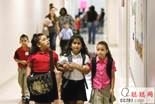
Students in America always have a busy but wonderful school day.
They have classes for five days each week. From____to Friday students usually get up at seven. Then they wash their faces and have____They usually have eggs, bacon(熏猪肉), bread, fruit and a glass of milk. After that they go to school on foot or by yellow school____Some students ride bikes. They get to school at about half past eight. Then they put their____in their lockers and____only one book, a notebook and a pencil to each class. In a middle school, students have____for six hours. Their classes are English, Writing, Maths, Music,____and so on(等等).
At noon students don’t go home for lunch. They____have lunch at school. They often have meat, fruit,____, bread and a drink____most students like pizza, hot dogs and hamburgers better. Students don’t have a short____They go back to have classes____lunch until three o’clock. Then they go home.
Students don’t do their homework after they get home. They usually play or watch TV before____They have____at six in the evening. The supper usually has soup, meat, vegetables, rice or pasta(面食). After supper they do their____Sometimes they play or talk with their parents at home.
【1】A. Monday B. Tuesday C. Wednesday D. Thursday
【2】A. dinner B. breakfast C. lunch D. supper
【3】A. car B. bike C. bus D. plane
【4】A. school bags B. clothes C. pencil boxes D. money
【5】A. lend B. carry C. borrow D. take
【6】A. meals B. a rest C. a talk D. classes
【7】A. Chatting B. Sleeping C. Drawing D. Eating
【8】A. really B. seldom C. usually D. never
【9】A. vegetables B. games C. books D. competitions
【10】A. So B. And C. Because D. But
【11】A. sleep B. talk C. drink D. holiday
【12】A. at B. before C. after D. in
【13】A. midnight B. supper C. rest D. work
【14】A. supper B. lunch C. breakfast D. nothing
【15】A. homework B. housework C. cleaning D. washing
【答案】
【1】A
【2】B
【3】C
【4】A
【5】D
【6】D
【7】C
【8】C
【9】A
【10】D
【11】A
【12】C
【13】B
【14】A
【15】A
【解析】试题分析:这篇短文主要介绍美国学校的学生生活情况。
【1】A考查美国学生在校学习的时间。根据文中They have classes for five days each week的描述,可知空格处的答案是A。
【2】B考查名词辨析。根据空格前:学生们7点起床,然后洗脸,接着应该吃早饭。结合前后文可知答案选B。
【3】C考查名词辨析。根据句意可知学生们去上学步行或者坐黄色的校车。故空格处选C。
【4】A考查名词辨析。A. school bags书包;B. Clothes衣服;C. pencil boxes铅笔盒;D. Money钱。
空格后句子意思“只带一本书,一个笔记本和一支铅笔去每个班里”,根据语境前句就是“把他们的书包放在柜子里”。故答案选A。
【5】D考查动词辨析。根据语意可知空格处的意思是“随身带上”,故答案选D。
【6】D考查名词辨析。根据语境可知“在中学,学生们6个小时上六节课。故空格处选D。
【7】C考查名词辨析。根据语境可知“他们的课是英语,写作,数学,音乐和画画等。A. Chatting 聊天;B. Sleeping睡觉;C. Drawing画画;D. Eating吃。根据语境可知答案选C。
【8】C考查副词辨析。句意:他们通常在学校吃午饭。A.really 真地;B.seldom很少;C.usually通常;D. Never从来不。根据语意和语境,答案选C。
【9】A考查名词辨析。句意:他们经常吃肉,水果,蔬菜和面包,喝饮料。A. Vegetables蔬菜;B. Games游戏;C. books 书;D. Competitions竞争。根据语意和语境,答案故选A。
【10】D考查连词辨析。空格前面:他们经常吃肉,水果,蔬菜和面包,喝饮料。空格后:大多数学生更喜欢皮萨,热狗和汉堡。前后有转折的意思,故答案选D。
【11】A考查动词辨析。句意:学生们不进行短暂的休息。A. sleep睡觉,B. talk谈话;C. drink喝;D. holiday假期。根据语意和语境,答案选A。
【12】C考查介词辨析。句意:他们午饭后回去上课,一直上到3点。A. at 在;B. before在……以前;C. after在……以后;D. in在……内。根据语意和语境,答案选C。
【13】B考查名词辨析。根据空格前:学生们下午放学回到家先不做作业。晚饭前,先玩或者看电视。A. midnight 午夜;B. supper晚饭;C. rest休息;D. work工作。根据语意和语境,答案选B。
【14】A考查名词辨析。根据语意可知:他们晚上吃完饭。答案故选A。
【15】A考查名词辨析。根据语意和语境可知:他们晚饭后做他们的家庭作业。答案故选A。

【题目】“Vocabulary” means the words of a language. To learn vocabulary, you need to check four things.
Spelling To learn a word, you need to how to spell it. You can try the LCWC(look, cover, write, check)method(方法). First, look at the word and read it out loud. Next, cover the word so it can’t be seen. Then, write the word down. Finally, uncover the word and check if you’ve spelt it correctly. |
Pronunciation How do you pronunciation a word? Do you pronounce it the same way as you spell it? If so, you may pronounce it wrong. For example, the pronunciation of “ough” is different in each of these words: “through”, “bough” and “rough”. You also need to know where the stress(the strong sound) is in a word. |
Meaning You need to keep in mind that words often have more than one meaning in English. Take the word “dust” for example. If you dust the bedroom, you are removing the dust. The first “dust” is a verb meaning “to clean”; the second “dust” is a noun meaning “the things being cleaned away”. |
Use How do you use a word? D o you know if it is formal? Do you know what other words it can use with and when? An example is “ yours”. You can use it to show possession(拥有), as in “ This book is yours.” And you can also use it at the end of a less formal letter, e.g. “ Yours, Peter Brown.” At the end of a formal letter you can use it with “Sincerely”, though generally in America the use is “Sincerely yours,” and in the UK, it is “Yours sincerely”. |
根据以上信息,选择最佳答案。
【1】Which of the following shows the right order of the LCWC method?
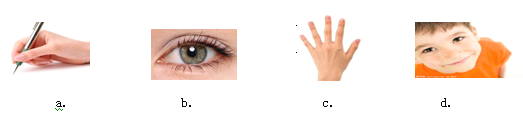
A. c→b→d→a B. d→b→c→a
C. b→c→a→d D.a→b→d→c
【2】What can we learn from the part “Pronunciation”?
A. We should pronounce a word the same way as we spell it.
B. We need to know the stress when we pronounce a word.
C. “Ough” has the same pronunciation in “through” and “rough”.
D. We don’t need to know the stress when we pronounce a word .
【3】The underlined word “removing” means “__________” in Chinese.
A. 回收 B. 搬家 C. 抛洒 D. 去除
【4】Englishmen like to use “___________” at the end of a formal letter.
A. Your B. Yours sincerely
C. Sincerely yours D. Yours
【5】From the passage, we know that ____________.
A. how to learn vocabulary
B. the importance of learning vocabulary.
C. why we like English
D. why we learn English