ÌâÄ¿ÄÚÈÝ

My father watched TV last night.

¡ª_____

A. So do I . B. So did I . C. Neither did I. D. Neithei do I.

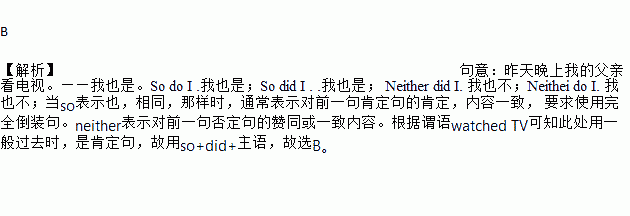
B ¡¾½âÎö¡¿¾äÒ⣺×òÌìÍíÉÏÎҵĸ¸Ç׿´µçÊÓ¡£¡ª¡ªÎÒÒ²ÊÇ¡£So do I .ÎÒÒ²ÊÇ£»So did I . .ÎÒÒ²ÊÇ£» Neither did I. ÎÒÒ²²»£»Neithei do I. ÎÒÒ²²»£»µ±so±íʾҲ£¬Ïàͬ£¬ÄÇÑùʱ£¬Í¨³£±íʾ¶Ôǰһ¾ä¿Ï¶¨¾äµÄ¿Ï¶¨£¬ÄÚÈÝÒ»Ö£¬ ÒªÇóʹÓÃÍêÈ«µ¹×°¾ä¡£neither±íʾ¶Ôǰһ¾ä·ñ¶¨¾äµÄÔÞͬ»òÒ»ÖÂÄÚÈÝ¡£¸ù¾ÝνÓïwatched TV¿ÉÖª´Ë´¦ÓÃÒ»°ã¹ýȥʱ£¬Êǿ϶¨¾ä£¬¹ÊÓÃs...
Á·Ï°²áϵÁдð°¸
Ïà¹ØÌâÄ¿

ÔĶÁ¶ÌÎÄ£¬È»ºóÔÚÎĺó±í¸ñÄÚÍê³ÉÄÚÈÝÕªÒª£¬Ã¿¿Õ²»³¬¹ýÈý¸ö´Ê£¬²¢½«´ð°¸Ð´ÔÚ´ðÌ⿨µÄÏàӦλÖá£

We can remember some important times in our lives. Some things have become good memories. The memories are always in the corner of our mind.

When I was in a kindergarten(Ó×¶ùÔ°), I had many toys and friends. They made me laugh and cry. The teachers taught us many songs and games. We played all day. Although we did not know what learning was at that time, we were learning every day.

When I was in a primary school, I was excited to learn school subjects. Nearly every subject caught my attention. However, my favorite subject was science. I remembered on the first day our science teacher told us the sun was like a big fire ball. We were quite surprised and kept our mouths open. We began to wonder at the secret of nature. Later many other things came to our ears. We began to learn carefully.

When I was ten years old, I began to read newspapers, keep a diary, visit museums and make many friends. Every day was something new, interesting and exciting.

Now I am in the middle school. Each day is new to me. I am still learning happily. It is like a journey to me. I have learned a lot, but there¡¯s still a long way for me to go. I hope to become a learned(ÓÐѧÎʵÄ) person some day.

Learning Is 1. a Journey

In a kindergarten

Although we know 2. about learning, we learned a lot

In a primary school

Among all the subjects, I like 3. most.

At the age of 4.

I began to keep a diary and visit museums.

In the middle school

I hope I won¡¯t stop 5..

1.Like 2.nothing 3.science 4.ten/10 5.learning ¡¾½âÎö¡¿ÎÄÕ´óÒ⣺ÔÚÎÒÃǵÄÉú»îÖУ¬ÎÒÃÇÄܼǵÃÐí¶àÖØÒªµÄʱ¹â¡£Ò»Ð©ÊÂÇéÒѾ­±ä³ÉÃÀºÃµÄ»ØÒ䣬ÕâЩ¼ÇÒäʱ³£³öÏÖÔÚÎÒÃǼÇÒäµÄ½ÇÂäÀï¡£ µ±ÎÒÔÚÓ×¶ùÔ°µÄʱºò£¬ÎÒÓÐÐí¶àµÄÍæ¾ßºÍÅóÓÑ£¬ËûÃÇ´ø¸øÎÒ»¶Ð¦ºÍ¿ÞÆü¡£ÀÏʦ½Ì¸øÎÒÃÇÐí¶àµÄ¸èÇúºÍÓÎÏ·£¬ÎÒÃÇÕûÈÕµÄÍæË£¡£ËäÈ»µ±Ê±ÎÒÃDz»ÖªµÀ×Ô¼ºÑ§µ½ÁËʲô£¬...

Animals can move from place to place, but plants cannot. When an animal is under attack, it can run away or fight back. Plants certainly cannot run away, and they have no teeth or claws. But plants can still protect themselves in both physical and chemical ways.

Some plants have their own ways to keep animals away. For example, the leaves of the hollies(¶¬ÇàÊ÷) have sharp spines (´Ì) that discourage grass-eating animals. Holly leaves on lower branches have more prickles than leaves on upper branches. This is because the lower leaves are easier for most animals to reach.

Some plants, such as the oak trees(ÏðÊ÷), have thick and hard leaves that are difficult for animals to eat. Some grasses may contain a sandy material£¬so eating such grasses wears down the animal's teeth

Many plants also have the chemical defense. Some plants produce chemicals that taste bitter or cause an unpleasant reaction. Some plants may protect themselves by increasing the production of these chemicals. When a worm(ë³æ) bites a tobacco leaf, the leaf produces a chemical smell.

Many plants depend on both physical and chemical defense. A certain plant in China, for instance, has prickly (¶à´ÌµÄ) leaves, and each prickle contains poisonous water(¶¾Òº).Only one experience with this kind of plant will teach an animal to stay away from it in the future.

1.What can a plant do when it is under attack?

A. It can protect itself

B. It can run away.

C. It can fight back.

D. It must die.

2.Why do the leaves of the hollies have sharp prickles according to the passage?

A. Because they are lower.

B. Because they are beautiful to watch.

C. Because they stop people from picking..

D. Because they make grass-eating animals stay away.

3.How does an oak tree protect itself?

A. It has leaves with a delicious material.

B. It has leaves with sharp prickles.

C. It has thick and hard leaves.

D. Its leaves taste bitter.

4.What does the underlined word¡°sandy¡± mean in Chinese?

A. º¬Ñ뵀 B. º¬É³µÄ C. »µµôµÄ D. ¸¯ÀõÄ

5.Which of the following is TRUE according to the passage?

A. The hollies have thick and hard leaves.

B. The oak trees have leaves with poisonous water

C. A plant has only one kind of way to protect itself, physical one or chemical one.

D. A tobacco leaf produces a chemical smell when a worm bites it.

1.A 2.D 3.C 4.B 5.D ¡¾½âÎö¡¿±¾ÎĽéÉÜÁ˵±Ö²ÎïÊܵ½¹¥»÷ʱ£¬Ëü¿ÉÒÔͨ¹ýÎïÀíµÄ»ò»¯Ñ§µÄ·½Ê½±£»¤×Ô¼º¡£ 1.A ϸ½ÚÀí½âÌâ¡£¸ù¾ÝPlants certainly cannot run away, and they have no teeth or claws. But plants can still protect themselves in...

Î¥·¨ºÍ²»Á¼ÐÅÏ¢¾Ù±¨µç»°£º027-86699610 ¾Ù±¨ÓÊÏ䣺58377363@163.com

¾«Ó¢¼Ò½ÌÍø