题目内容

【题目】2016·济宁书面表达

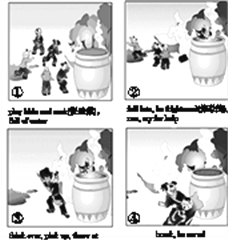
假如你是李梅。你的美国笔友Tom在昨天的email中告诉你最近他对中国文化产生了浓厚的兴趣希望你能给他介绍一些经典故事。请你根据下面所给图画Tom回复一封email,向他讲述这一经典故事并希望知道他对该故事及主人公的看法。

Sima Guang hit the tank()

________________________________________________________________________

________________________________________________________________________

________________________________________________________________________

________________________________________________________________________

________________________________________________________________________

________________________________________________________________________

________________________________________________________________________

________________________________________________________________________

________________________________________________________________________

【答案】Dear Tom,

I'm very happy that you are interested in traditional Chinese stories. Well, let me tell you a famous one with the name “Sima Guang hit the tank”.

Once Sima Guang was playing hide and seek with several children in the backyard. There was a large water tank in the yard. It was full of water. When the kids were playing, one child accidentally fell into the tank. Other children were so frightened that they started to run, crying for help. However, Sima Guang was different. He thought it over and then had an idea. He picked up a big stone and threw it at the tank. “Bang!” The tank broke and the water ran out. The kid was saved.

Do you like the story? What do you think of Sima Guang?

I am looking forward to hearing from you.

Yours sincerely,

Li Mei

【解析】这是一篇图画作文。内容是给Tom回复一封E-mail,向他讲述司马光砸缸的故事,叙述故事时,时态主要为一般过去时态介绍此经典故事。全文可分为三部分来写:第一部分,提出要讲的故事的名称(司马光砸缸);第二部分,具体描写故事的内容(司马光和朋友玩捉迷藏,一个小孩掉进了水缸里,大家都着急的时候他把水缸砸破,把朋友救了出来);第三部分,总结并期待回信。常用到的重点短语:be interested in感兴趣;play hide and seek 玩捉迷藏;be full of 充满;look forward to doing sth.期待做某事。

练习册系列答案
相关题目

【题目】阅读短文,根据短文内容回答问题

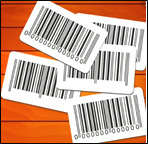
We see them everywhere — on boxes of food, on packages and on CDs. They, of course, are bar codes. The invention of bar codes has changed the way we shop and how companies learn where their products are.

It was two university students from America, Bernard Silver and Norman Woodland, who first got theidea of bar codes. In 1948, they heard that the president of a food company was looking for a way to easily get information about what was being sold to customers. They tried to help by using a code system. They invented a large electronic reader to read the codes. However, computers couldn’t easily record the data that was read.

Then, in the 1960s, David Collins made important developments in bar codes. He developed a system for recognizing train carriages. In order to develop the recognition system for other kinds of businesses, Collins started his own company. In 1969, Collins’s company put a bar code reading system in a car factory, showing that bar codes could be useful.

Shortly after Collins started his company, an American electronic company called RCA also saw the potential (潜力) of bar codes to help businesses. RCA’s

system, which recorded how much of a product was sold, was not perfect. Since bar codes were not common, not all products had them and different companies used different codes. Then, Woodland helped develop the Universal Product Code (UPC), which gave every product a code that included information about the manufacturer and the kind of product being sold. This made bar codes much more practical.

In addition to shops, hospitals use bar codes to recognize patients by giving them cards with bar codes on them. Libraries use bar codes to record which books have been lent, and airports use them to find out where bags are going. Bar codes have made life much easier and simpler.

1What changed the way we shop?

2Who first got the idea of bar codes?

3Why did Collins start his own company?

4What do hospitals use bar codes to do?

5What is the passage mainly about?

违法和不良信息举报电话:027-86699610 举报邮箱:58377363@163.com

精英家教网