题目内容
13.自从到了这个学校,他一直落后其他人.Hehas been behind others since he came to this school.
分析 has been behind others.
解答 答案:has been behind others.结合since he came to this school可知动作发生在过去,持续了一段时间,故用现在完成时have/has+过去分词,be behind sb落后某人,主语he,故has,be的过去分词been,故答案是has been behind others.
点评 现在完成时有两种用法1.过去发生的某一动作对现在造成的影响或结果或到现在为止已经发生或完成的动作.2.表示过去发生的、持续到现在的动作或状态.

练习册系列答案
 同步练习强化拓展系列答案
相关题目
4.-Do you like HAS?-Yes,I do.I saw HAS ______ several times last week.( )
| A. | to play | B. | played | C. | plays | D. | play |
1.Jane often helps her mum wash the _______ in the kitchen after dinner.( )
| A. | wound | B. | dishes | C. | clothes | D. | vegetables |
18.---Can I have __________ pieces of bread?---Sorry,there's __________ left.( )
| A. | two more; else nothing | B. | another two; nothing else | ||
| C. | another two;else nothing | D. | more two;nothing else |
5.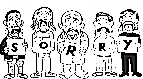 Few words are spoken more often every day on the streets of Britain than"I'm sorry".This sentence has become (21)C common that it has had a lot of meanings.
Sorry means to apologize (道歉).It's (22)A to understand.We learn it both as a mother language speaker and as a (23)D.
But in Britain,it has another meaning.It is a cultural expression.
(24)B this situation:a man walks down the street,looking down at his phone.A woman is walking in the opposite direction,towards the man.She sees him,(25)C she can't get out of the way in time.The man walks (26)B the woman.Who should say sorry?Naturally,the man should say sorry,because he isn't looking at (27)A he is going.Yet in Britain,it is common for both to apologize.
It is (28)C that British people,like most people,do not enjoy conflict (冲突).So to calm (使镇定) the situation soon,British people will apologize to (29)C.
Sometimes it may sound funny to hear"sorry".In Britain,sorry doesn't always mean (30)D what you think.Some of my friends say it at restaurants,as they ask the waiter,"Sorry,but can I order another drink?"It is not to apologize,but just to express that we need the waiter.
Few words are spoken more often every day on the streets of Britain than"I'm sorry".This sentence has become (21)C common that it has had a lot of meanings.Sorry means to apologize (道歉).It's (22)A to understand.We learn it both as a mother language speaker and as a (23)D.
But in Britain,it has another meaning.It is a cultural expression.
(24)B this situation:a man walks down the street,looking down at his phone.A woman is walking in the opposite direction,towards the man.She sees him,(25)C she can't get out of the way in time.The man walks (26)B the woman.Who should say sorry?Naturally,the man should say sorry,because he isn't looking at (27)A he is going.Yet in Britain,it is common for both to apologize.
It is (28)C that British people,like most people,do not enjoy conflict (冲突).So to calm (使镇定) the situation soon,British people will apologize to (29)C.
Sometimes it may sound funny to hear"sorry".In Britain,sorry doesn't always mean (30)D what you think.Some of my friends say it at restaurants,as they ask the waiter,"Sorry,but can I order another drink?"It is not to apologize,but just to express that we need the waiter.
| 21.A.very | B.such | C.so | D.too |
| 22.A.easy | B.difficult | C.different | D.interesting |
| 23.A.neighbor | B.customer | C.writer | D.foreigner |
| 24.A.Explain | B.Imagine | C.Say | D.Expect |
| 25.A.as | B.so | C.but | D.or |
| 26.A.behind | B.into | C.around | D.beside |
| 27.A.where | B.when | C.why | D.how |
| 28.A.taught | B.tested | C.known | D.told |
| 29.A.another | B.any other | C.each other | D.others |
| 30.A.finally | B.recently | C.especially | D.exactly. |