题目内容
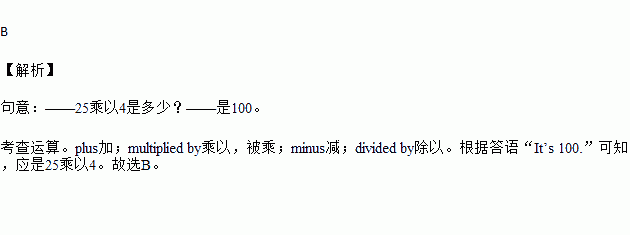
— How much is 25 ______ 4? —It’s 100.
A.plus B.multiplied by C.minus D.divided by
Linda is __________ years old. Today is her __________ birthday.
A.twelve;twelve B.twelve;twelfth C.twelfth;twelfth D.twelfth;twelve
Because of the convenience of online shopping, we ___________buy books without having to leave the comfort of our homes.
A.can B.should C.must D.need
Which of the following underlined parts is different in pronunciation from the others?
A.deal B.death C.peace D.meaning
— Don’t eat too many sweets. It’s bad for your teeth.
— ______.
A.It doesn’t matter. B.That’s all right. C.Of course not. D.Thanks. I’ll take your advice.
This pair of trousers is too tight for me. May I try ______ pair?
A.other B.others C.another D.the others
Answer the questions (根据短文内容回答问题)
No one is quite sure when people first worked with dogs, but one thing is certain---dogs and people have been working side by side for thousands of years. Dogs can do a lot of jobs, and their coolest job is: police dog!
A brief history of police dogs
European police forces(军队) were used as early as the 18th century. During World War I, countries like Germany began to train and use dogs. After World War III, K-9 (一个著名的警犬编号) programs began in London and other cities across Europe. In the 1970s, the program entered the U. S. Today, police dogs are a very important part of police forces.
What can police dogs do?
Dogs come in different shapes and sizes, and not every kinds of dogs is used for police work. Most police dogs used around the world are German Shepherds(德国牧羊犬). Police forces use them to track criminals(寻找犯人线索), sniff out(嗅) drugs, search buildings , and do the jobs that policemen can’t do.
1.How long have dogs and people been working side by side?
2.Was Germany or England the first country to train and use dogs?
3.Which dogs do most people use for police dogs?
4.What jobs can police dogs do? ( List at least two things)
5.How do you like police dogs? Why?
Amy and Frank went to the concert, but__________ of them enjoyed the performance.
A.both B.all C.neither D.none
— I always feel nervous when my teachers ask me to answer the questions in class.
— I am, too.
A.tired B.excited C.worried

 快乐5加2金卷系列答案快乐5加2金卷系列答案