题目内容
A. B. C.
What does your face say?
How many different emotions do you think you can communicate to people with your face? Do you have the same facial expressions as people from different cultures?
New research suggests that there are only four basic facial expressions of emotion.However, how these expressions are understood might depend on where you are from.
Research by scientists from the University of Glasgow has challenged the traditional view of how the face expresses emotions. Until now, it was widely believed that six basic emotions — happiness, sadness, fear, anger, surprise and disgust (厌恶), were expressed and recognized across different cultures. However, the University of Glasgow’s work now suggests that the human face only has four basic expressions of emotion. This is because some pairs of emotions are impossible to distinguish, especially when they are first expressing on the face. Fear and surprise, for example,both share wide-open eyes. The facial expressions for anger and disgust also look the
same.
So if our faces are only able to express four basic emotions, how do we communicate more complex (复杂的) feelings? The study found that the way expressions are explained is different in different cultures. Lead researcher Dr Rachael Jack was studying this because “facial expressions were considered to be general”, she explains. However, while looking at how people from the East and West look at different parts of the face during facial expression recognition, they found that although there are some common characteristics across cultures, the six basic facial expressions of emotion are not recognized by everyone.
“We said we don’t know what a disgust face looks like in China, so the best way to go about that is to make all combinations (组合) of facial movements and show to Chinese researchers and ask them to choose the ones they think are disgust faces.”
With the software they developed, they discovered that in the early stages of signaling emotion, fear and surprise, and anger and disgust, were often confused. Jack explains that these facial expressions have developed both from biology and social evolution(进化).
What interests people about the cross-cultural aspect of the research? “This work leads to understanding which emotions we share, realizing our differences and calling attention to our multicultural experiences.” This research could advise new ways of social communication that improve cross-cultural interactions.
1.What is the main purpose of the first paragraph?
A. To show interest in different cultures.
B. To express the worries about emotions.
C. To lead in the topic of facial expressions.
D. To give an example of facial expressions.
2.The word “distinguish” in Paragraph 3 probably means ______.
A. express B. explain C. differentiate D. develop
3.According to the passage, Dr Rachael agrees that ______.
A. facial expressions are easy to understand in Japan
B. the way expressions are understood is different in China
C. new ways of social communication can improve movements
D. it’s difficult to understand all the facial expressions of emotion
4.What can we learn from the passage?
A. We can express our emotions in four different ways.
B. Facial expressions of emotion can be discovered easily.
C. Facial expressions of emotion are from different countries.
D. Facial expressions are explained differently in different cultures.
When you watch TV programs about wild animals, it is surprising to see how an antelope can run away from a lion. In the wilderness, everyone has his own way to protect himself. Even plants have their own ways of fighting off enemies.
Over millions of years of evolution, plants have developed their own defence system(防御系统). Chemicals are wildly used for survival(生存). By making their leaves, flowers, roots and fruits distasteful or poisonous(有毒的) to enemies, plants can fight back.
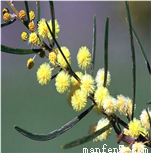
One such plant is the Golden Wattle tree. The British scientist David Cameron has found when an animal eats the tree’s leaves, the amount of poison increases in the other leaves. “It’s like the damaged leaves telephoning the others telling them to fight together against the enemy, ” he said.
The tree also sends defence messages to neighboring plants by giving out a special smell. Golden Wattle trees in the surrounding 45 meters will get the message and produce more poison within 10 minutes. Now, if an enemy eats too many of the trees’ leaves, it will die.
Every species of plant or tree is good at the production of a particular set of chemicals. A herbivore that can safely eat the leaves of one tree may be poisoned by its neighbor.
In this way, plants have developed not only individual defence system, but also shared it with others. This makes it impossible for a single animal to destroy even a small area of forest.
1.From the first 2 paragraphs,we can learn that________
A. plants can do nothing against their enemies.
B. Chemicals are quite useful for plants to survive.
C. An antelope can always run away from a strong lion.
D. Leaves,roots,flowers and fruits of plants are poisonous.
2.If animals eat one Golden Wattle tree’s leaves,the tree can________
A. kill the animals with special smell.
B. tell other trees to come to protect it.
C. warn other trees against the animals on the phone.
D. send defence messages to the neighboring plants.
3.The word “herbivore” in the 5th paragraph probably means animals which ____.
A. produce poison
B. live on small animals
C. like to eat rabbits
D. feed on plants or grass
4.The last paragraph of the passsage suggests that this kind of defence system is_____
A. bad for animals
B. good for forests
C. helpful to some animals
D. harmful to forests.
5.The passage is mainly about______
A. the example of protecting forests
B. the balance between animals and plants
C. the ways of plants fighting against enemies
D. the relationship between lions and antelopes
---Excuse me. Is there a _______ near here? I am a little hungry now.
---Yes. There’s one on Main Street.
A. library B. bookstore C. restroom D. restaurant
听下面一段对话,回答以下小题。
What does jane's gesture mean?
A. She can't hear anything.
B. She feels bored and sleepy.
C. She disagrees with what she is hearing.
Ten-year-old Johnny was one of the laziest boys in his class. His homework was always____and it was usually wrong. He only did half the number of math problems____the other children did and in his compositions he____half the number of words. And usually the words were____spelled because he was too lazy to use a____
One day his class went on a bus trip. The___ did not want to take Johnny with them. But there was no one to look after Johnny at the school so she had to take____"Now, children," the teacher said, "On our bus trip we will____old buildings, some beautiful countryside, and many other things. I want you to write about____nteresting you see on the trip. "The bus trip____. The children looked out of the windows at all the interesting things.
They took notes____their notebooks. The teacher was very____with them. Then she saw Johnny____on the floor of the bus and went up to him.
"Are you____?" she asked him.
"No." he said.
"Then____are you lying on the floor?"
"If I can't see anything," he said, "I can't write about it, can I?"
1.A. late B. early C. good D. fine
2.A. that B. who C. what D. whom|
3.A. learned B. made C. wrote D. read
4.A. badly B. well C. correctly D. nicely
5.A. radio B. pen C. library D. dictionary
6.A. driver B. mother C. father D. teacher
7.A. him B. himself C. his D. he
8.A. hear B. listen to C. see D. feel
9.A. nothing B. something C. nobody D. everybody
10.A. ended B. began C. finished D. closed
11.A. over B. by C. in D. at
12.A. angry B. pleased C. sad D. careful
13.A. standing B. sitting C. eating D. lying
14.A. busy B. sick C. happy D. glad
15.A. where B. what C. how D. why
阅读下面短文,完成 55 至 60 题。
The Chongyang Festival falls on the ninth day of the ninth lunar month and is also called the Double Ninth Festival. As both the month and the day are nine, it got this name. To celebrate the day,
people usually climb mountains and enjoy chrysanthemum (菊花), so the festival is also known as
the Height Ascending (登高) Festival or the Chrysanthemum Festival. In China, nine has the similar
pronunciation with the word “forever”, meaning long life. So the Chinese government set the day as the Seniors’ Day.
The festival has a history of over 2000 years. During the Warring States Period, there was the Chongyang Festival. But it was only celebrated in the imperial palace. From the Han Dynasty, it began to be popular among the common people. The name of the Chongyang Festival first appeared in the Three Kingdoms Period. During the Jin Dynasty, there were customs of enjoying chrysanthemum and drinking wines on the day. It was not (A) officially set as a festival until the Tang Dynasty. Since then, all the people have spent the festival with kinds of activities. In the Ming and Qing Dynasties, people in the imperial palace all ate flower cakes to celebrate. The emperor climbed the mountain on the day as well. In 1989, the Chinese government set the day as the Seniors’ Day.
As September has the clear sky and fresh air, it is a very good time to climb the mountain. There will be a happy sense of excitement by climbing the mountain in this season. Also, it is good for health. Since the Western Han Dynasty, it has been the custom of climbing on the Chongyang Festival.
On the day, enjoying chrysanthemum is very popular as the flower means long life. Drinking chrysanthemum is regarded as a way to prevent disasters and bad things. Inserting Zhuyu and
sticking chrysanthemum are also traditions to avoid the bad as (B) they have special smells which can repel (驱逐) insects and keep out the cold.
Eating Chongyang cakes is another tradition on the festival. There is no fixed way of the cake but
the one with nine layers (层) with two sheep on it is the best. Two sheep means Chongyang. Nine
layers show people could do well in everything.
1.回答问题。How many other names does the Chongyang Festival have?
__________________________________________________________
2.根据短文内容,猜测(A)处划线单词officially的意思。将字母代号填写在答题卡上。
A. 办公室 B. 官方 C. 民间
3.用英语列举人们在重阳节登山的两个原因。
① _______________
②_______________
4.从文中找出(B)处划线单词they所指代的内容。
__________________________________________________________________________
5.从文中找出与 “The best cake has nine layers and two sheep on the top though there are different cakes” 意思相同或相近的句子。
6.根据短文内容填空。每空不超过3个单词。)
There have been many traditions and customs on the Chongyang Festival. People show respect for the seniors, ①______________________________________, ②_____________________ , ③__________________________________________, insert Zhuyu and enjoy chrysanthemum.
(题文)Jack is happy. Ms. Wang, an excellent teacher, teaches ________ math this term.
A. he B. him C. himself D. his
Science museum
(The Science of Survival, IMAX&SIMEX)
The Science Museum has something for everyone. Entry to the museum is free. Offer applies to IMAX 3D Cinema, SIMEX and The Science of Survival exhibition only.
IMAX £7.50
SIMEX £4.00
The Science of Survival £6.00
Opening Times: Daily 10: 00-18: 00 Visit Time: 2 hours
National Gallery
Opening Times:
Daily 10am-7pm Wednesday until 9 pm
Admission:
£8 adults. £4 students, under 12s free
Tickets:
Available daily from 10 am
Telephone: 020 7747 2885
Visituswww.nationalgallery.com
ZSL London Z
There are over 12, 000 amazing animals for you to see. These are just a few things which make a visit to ZSL London Zoo a great day.
Ticket Price: £ 17.00
Opening Times: Daily 10: 00-17: 30
Visit Time: 4 hours
1.How much does the ticket to ZSL London Zoo cost?
A. £8.00.
B. £17.50.
C. £17.00.
D. £7.50.
2.Where is the Science of Survival exhibition held?
A. At the National gallery
B. At the Science Museum
C. At ZSL London zoo
D. At IMAX 3D Cinema
3.How long is the National Gallery open on Wednesday?
A. 4 hours
B. 8 hours
C. 7 hours
D. 11 hours
 B.
B.  C.
C. 

 夺冠训练单元期末冲刺100分系列答案
 新思维小冠军100分作业本系列答案
 名师指导一卷通系列答案 B. C. 夺冠训练单元期末冲刺100分系列答案新思维小冠军100分作业本系列答案名师指导一卷通系列答案
 When you watch TV programs about wild animals, it is surprising to see how an antelope can run away from a lion. In the wilderness, everyone has his own way to protect himself. Even plants have their own ways of fighting off enemies.