题目内容
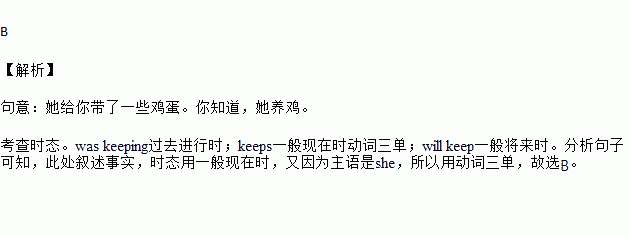
She's brought you some eggs. As you know, she ______________chickens.
A.was keeping B.keeps C.will keep

 新思维假期作业寒假吉林大学出版社系列答案
完成表格。阅读下面短文,完成题后的表格。
The Cost of Thinking
Though humans have many differences,they share several typical characteristics(特征),such as large brains and the ability to walk upright on two legs.
The first human characteristic is humans' large brains. Mammals(哺乳动物)weighing sixty kilos have an average(平均)brain size of 200 cm'. Modern man has a brain averaging 1,200~1,400 cm3. The larger,the better?Unluckily,that is not the case.
The bigger our brain is,the more energy is needed. It's not easy to carry around,especially when boxed inside a large skull(颅骨). It's even harder to provide energy. In modern man,the brain is about 2-3% of total body weight but it needs 25%of the body's energy when the body is at rest. But the brains of apes(类人猿)require only 8% of rest-time energy. How did early humans pay for their large brains?Firstly,they spent more time in search of food. Secondly,their muscles(肌肉)grew smaller and weaker.
Another human characteristic is that we walk upright. Standing up,it's easier to find food or enemies. In addition,their arms that are unnecessary for moving around are freed for other purposes,like throwing stones or showing body languages. As a result,humans can perform very different tasks with their hands.
Yet walking upright has its downsides. The bones(骨头)have to support a large skull. That causes backaches and painful necks. A large brain makes many advantages. It seems that these have made humans the most powerful animal on earth. But humans enjoyed all of these advantages for a full 2 million years during which they were weak,small and not important.
Title: The Cost of Thinking | |||
Two typical human characteristics | Have large human brains | Advantages | Be1.than any other animal on earth. |
Downsides | The bigger our brain is, the more energy is needed. Early humans paid for their large brains in2.: spend more time in search of food; their muscles grow smaller and weaker. | ||
3. | Advantages | It's easier to find food or enemies. Their arms throw stones and show body languages The result:.4.with their hands. | |
Downsides | The hones have to support a large skull. 5.: Have backaches and painful necks |
