题目内容
--- May I _______ your English
--- Chinese dictionary?
--- Sorry, I have _______ it at home
- A.borrow; left
- B.borrow; forgotten
- C.lend; left
A
试题分析:borrow借入;leave留下,离开;forget忘记;lend借出。句意:我可以借你的英汉词典吗?——抱歉,我把它丢在家里了。结合语境可知前文指的是借入,下文含有丢下的意思,故选A。
考点:动词辨析
点评:该题型是属于基础题型,是必考内容。英语动词同汉语一样具有一词多义,一词多性的特点。解答此类问题首先要理解每个单词的基本含义,并注意交叉含义间的区别,了解其特殊用法及习惯搭配等特点,然后结合语境选择正确答案。
试题分析:borrow借入;leave留下,离开;forget忘记;lend借出。句意:我可以借你的英汉词典吗?——抱歉,我把它丢在家里了。结合语境可知前文指的是借入,下文含有丢下的意思,故选A。
考点:动词辨析
点评:该题型是属于基础题型,是必考内容。英语动词同汉语一样具有一词多义,一词多性的特点。解答此类问题首先要理解每个单词的基本含义,并注意交叉含义间的区别,了解其特殊用法及习惯搭配等特点,然后结合语境选择正确答案。

练习册系列答案
 阅读快车系列答案
相关题目
May I have a talk with you, sir? I've got important to tell you.
| A.nothing | B.anything | C.something | D.everything |
请根据下面图片和对话内容,选择最佳答案。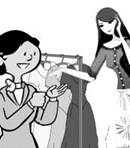
| On Sale T-shirts 88 yuan 65 yuan Dresses 185 yuan 158 yuan Pants 90 yuan 70 yuan Skirts 60 yuan 56 yuan |
Kailey: Yes, please. This dress looks very nice. How much is it?
Saleswoman: It’s only 158 yuan.
Kailey: Really? Is it on sale?
Saleswoman: Yes, it’s usually 185 yuan, but only 158 yuan on Sundays.
Kailey: Great. I’ll buy two dresses for my cousins. They like this kind of dresses.
Saleswoman: What color do they like?
Kailey: Red.
Saleswoman: Oh, I’m sorry. We don’t have any red ones. How about the blue ones?
Kailey: All right. I’ll take them.
Saleswoman: Thanks.
【小题1】 Two T-shirts are on Monday.
| A.130 yuan. | B.176 yuan. |
| C.120 yuan. | D.112 yuan. |
| A.减价销售 | B.正常营业 | C.高价回收 | D.非卖品 |
| A.white pants | B.green shirts |
| C.blue dresses | D.T-shirts |
| A.T-shirts | B.dresses | C.pants | D.skirts |
| A.They are at home now. |
| B.The T-shirt is only 56 yuan. |
| C.Kailey’s cousins like red. |
| D.The skirts are 60 yuan on Sunday |
A: Good morning, Madam. 1
B: Yes, please. I’m afraid I left my handbag in a taxi this morning.
A: 2
B: About 50, 000 dollars.
A: 3
B: Yes, my ID card, I think.
A: What’s your name?
B: Betty White.
A:Just a moment. 4
B:Yes, it’s mine. Thank you so much.
A: 5 The taxi driver found it and brought it here.
B:Oh, what a kind person he is! I want to meet him and thank him.
| A. Nice to see you. B. Anything else? C. You’re welcome. D. Excuse me. E. Is this your handbag? F. What’s in your handbag? G. May I help you? |