题目内容
In the future, life will be much better. Maybe there will be vision phones (可视电话)in every family. People can have a medical examination without a doctor or nurse in the room. If people want to do some shopping, they do not need to leave their homes. And what about education(教育)?
There will be more educational programs on the radio or on TV, even on the Internet. So many children who live in faraway (遥远的) villages don’t need to go to school every day. They can study at home. Each family will have a robot. Robots will help people with their housework.
Maybe some people will go to the moon for a holiday and some people can live under the sea in hot summer.
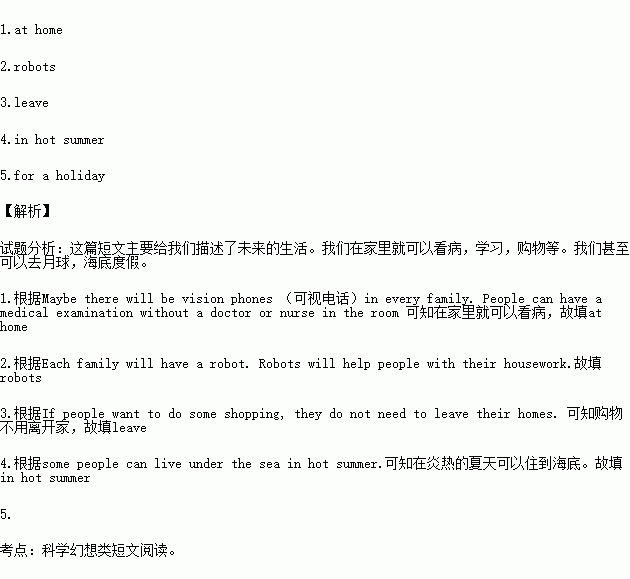
1.If you are ill, you can see the doctor _________ in the future.
2.In the future, _______ can help people do the housework.
3.If people want to do some shopping, they do not need to their homes.
4.Some people can live under the sea __________.
5.People can go to the moon ________.

 第1卷单元月考期中期末系列答案
补全对话(每题1分,共5题,5分。)
A: Hey, Gina. Do you want some ice cream?
B : No, thanks. 1.
A: Really? Where are you going?
B: I'm going to play baseball. Do you want to come?
A: Sorry, I can't. 2.
B : Well, come later then. We're playing all afternoon.
A: 3. But I'm not very good at baseball.
B : Don't worry about that. 4. You can just watch.
Come on, it'll be fun.
A: Well, OK. 5.
B: OK. See you!
A.It sounds nice. B.See you later. C.I need to study. D.I'm going out. E.I don't think so. F.You don't have to play. G.You can do that again. |
书面表达。(15分)
Tom 最近遇到了难题,他给某医学杂志的专栏作者Jenny 写了一封信,以寻求帮助。
Dear Jenny, I was a very good student before, but these days I can’t follow my teachers at school. I’m very worried about my lessons. I’m always under too much pressure(压力). Now I can’t sleep well at night. I don’t know what I should do. Can you help me? Thanks a lot. Yours, Tom |
根据信件内容及下列所给提示,帮Jenny 给Tom 写一封回信。
词数要求:80词左右。
提示:
1.向老师和父母求助,让他们在学习上给予帮助;
2.尽量放松,不要考虑太多;
3.睡前做些运动;
4.在床上听一些轻音乐。
Dear Tom,
___________________________________________________________________________________
___________________________________________________________________________________
___________________________________________________________________________________
Yours, Jenny
口语运用:根据对话内容,从方框中选出能填入空白处的最佳选项,补全对话。(10分)
A: Hi, Lily! Did you go to the concert last night?
B: Yes, 1.
A: 2.
B: It's moving. Many famous singers sang at the concert. 3.
A: What does it mean?
B: 4. You know many children in the world don't have enough food.
A: 5.
B: I think people all over the world should help them.
A: That's right!
A. That’s true. B. How did you like it? C. I went there with my parents. D. It was called “saving the children”. E. The concert was held for collecting money for poor children |