网址:http://m.1010jiajiao.com/timu_id_2360146[举报]
From the first day he entered my junior-high classroom, Willard P. Franklin lived in his own , shutting out his classmates and me, his teacher. I tried to build a relationship with him but he showed no interest. Even a “Good Morning Willar” received only a grunt(咕哝) that couldn’t be . Willard was a loner(孤独的人) who seemed to have no hope or need to break silence. Shortly after the Thanksgiving holiday, we received the news of the annual(每年的) Christmas collection of money for the less people in our school district.
“Christmas is a season of ,” I told my students. “There are a few students in the school who might not have a happy holiday season. donating our Christmas collection, you will help buy food, clothing and toys for these needy people. We start the collection tomorrow.” When I called for the donations the next day, I discovered that everyone had forgotten, except Willard P. Franklin. The boy dug deep into his pants pockets he walked up to my desk. Carefully, he two coins into the small box.
“I don’t need milk for lunch,” he said . For a moment, just a moment, he smiled . Then he turned and walked back to his desk.
That night, after school, I took our to the school principal. I couldn’t sharing the incident(事件) that had taken place.
“I may be wrong, but I believe Willard might be getting ready to become a part of the world around him,” I told the principal.
“Yes, I believe it is for him to get out of his own world,” he nodded. “And I think we can do something to have him a bit of his world with us. I just received a of the poor families in our school who most need help through the Christmas collection. Here, take a look at it.”
As I read, I discovered Willard P. Franklin and his family were the top names on the list.
| 小题1: |
|
| 小题2: |
|
| 小题3: |
|
| 小题4: |
|
| 小题5: |
|
| 小题6: |
|
| 小题7: |
|
| 小题8: |
|
| 小题9: |
|
| 小题10: |
|
| 小题11: |
|
| 小题12: |
|
| 小题13: |
|
| 小题14: |
|
| 小题15: |
|
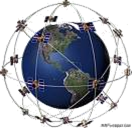
Imagine the situation. You are driving along a desert or on a mountain. You have no idea where you are. You passed the last house two hours ago. Then your car breaks down. It is night and it is cold. You have no mobile phone. What do you do? Well, next time take a GPS with you. This invention may be able to help you. It is a device(装置) which uses satellites (卫星) to find the user’s position(位置). It can find your position to within 20 metres. A GPS cannot start your car, but at least you will know where you are.
GPS, which means Global Positioning System, is a small radio receiver. It looks like a mobile phone. You can hold it in your hand, or put in your pocket. It is sometimes put into a watch or a telephone. We also find GPS devices in cars, planes, or boats. Some of these devices have electronic maps, so you know where you are. For example, in a city they can tell you the name of the street.
There are three parts to the Global Positioning System. The first part is the receiver. You can hold it in your hand, or have it fixed into your car, plane, etc. The second part is a group of satellites orbiting the Earth. The receiver contacts at least four of the satellites and calculates(计算) its position. The third part of the system is a network of ground stations. They are all over the world. They control the satellites and make sure they are working well.
Some people think that in the future the GPS will be as common as the mobile. They are becoming cheaper and more and more accurate(精确的). There are also new uses for the GPS. Perhaps they will become like watches. Everyone will have one and you will never be lost again.
【小题1】According to the passage, with the help of the GPS, people __________.
| A.can’t be lost in a new city |
| B.can’t find their way in different countries |
| C.can learn about the culture of an unknown place |
| D.can spend the least time getting to another place |
| A.there are three parts to the GPS |
| B.a GPS can’t be put into a watch |
| C.a GPS can help you start your car |
| D.the GPS are becoming more and more expensive |
| A.Receivers | B.GPS devices | C.Satellites | D.Ground stations |
| A.the history of the GPS | B.the introduction of the GPS |
| C.the shape of the GPS | D.the three parts of the GPS |
| A.All GPS devices have electronic maps. |
| B.People in many countries will use the GPS for free. |
| C.The receiver of the GPS contacts at least five of the satellites. |
| D.The GPS will become more and more common in everyday life. |

Imagine the situation. You are driving along a desert or on a mountain. You have no idea where you are. You passed the last house two hours ago. Then your car breaks down. It is night and it is cold. You have no mobile phone. What do you do? Well, next time take a GPS with you. This invention may be able to help you. It is a device (装置) which uses satellites (卫星) to find the user’s position (位置). It can find your position to within 20 metres. A GPS cannot start your car, but at least you will know where you are.
GPS, which means Global Positioning System, is a small radio receiver. It looks like a mobile phone. It is sometimes put into a watch or a telephone. We also find GPS devices in cars, planes, or boats. Some of these devices have electronic maps, so you know where you are. For example, in a city they can tell you the name of the street.
There are three parts to the Global Positioning System. The first part is the receiver. You can hold it in your hand, or have it fixed into your car, plane, etc. The second part is a group of satellites orbiting(环绕…运行) the Earth. The receiver contacts at least four of the satellites and calculates its position. The third part of the system is a network of ground stations. They are all over the world. They control the satellites and make sure they are working well.
Some people think that in the future the GPS will be as common as the mobile. They are becoming cheaper and more and more accurate. Also there will be new uses for the GPS. Perhaps they will become like watches. Everyone will have one and you will never be lost anywhere.
1.GPS can help you find your position, can’t it?
2.What does a GPS look like?
3.How many things are mentioned that GPS devices can be put into?
4.Why do some people think GPS devices will be popular in the future?
5.What is the use of ground stations?
6.What is the author’s purpose of writing this passage?
查看习题详情和答案>>
Imagine the situation. You are driving in a village or on a mountain. You have no idea where you are. You passed the last house two hours ago. Then your car doesn’t work. It is night and it is cold. You have no mobile phone. What do you do? Well, next time take a GPS with you. This invention may be able to help you. It is used for finding your position(位置) with the help of satellites (卫星). A GPS can’t start your car, but at least you will know where you are.
? GPS, which means Global Positioning System(全球定位系统), is a small radio receiver. It looks like a mobile phone. You can hold it in your hand, or put in your pocket. It is sometimes put into a watch or a telephone. We also find a GPS in cars, planes, or boats. Some of them have electronic maps, so you know where you are. For example, in a city they can tell you the name of the street.
? There are three parts to GPS. The first part is the receiver. You can hold it in your hand, or have it fixed into your car, plane, etc. The second part is a group of satellites going around the Earth. The receiver communicates with at least four of the satellites and calculates its position. The third part of the system is a network of ground stations all over the world. They control (控制) the satellites and make sure they are working well.
? Some people think that in the future the GPS will be as common as the mobile. They are becoming better and cheaper. There are also new uses for the GPS. Perhaps they will become like watches. Everyone will have one and you will never be lost again.
1.According to the passage, with the help of the GPS, people __________.
A. can’t be lost in a new city
B. can’t find their way in different countries
C. can learn about the culture of an unknown place
D. can spend the least time getting to another place
2.We can learn from the passage that ____________.
A. there are three parts to the GPS
B. a GPS can’t be put into a watch
C. a GPS can help you start your car
D. the GPS are becoming more and more expensive
3.The underlined word “They ” in paragraph 3 means “____________”.
A. Receivers?????? B. GPS???????? C. Satellites?????? D. Ground stations
4.What can we infer(推断) from the passage?
A. All GPS devices have electronic maps.
B. People in many countries will use the GPS for free.
C. The receiver of the GPS communicates with at least five of the satellites.
D. The GPS will become more and more common in everyday life.
查看习题详情和答案>>
Imagine the situation. You are driving a car along a desert or on a mountain. You have no idea you are. You passed the last house two hours ago. Then your breaks down. It is night and it is cold. You have no mobile phone. What do you do? Well, next time take a with you. This invention may be able to help you. It is a device(装置) which uses satellites to find the user’s position(位置). It can find your position to within 20 metres. A GPS cannot start your car, but at least you will where you are.
GPS, which means Global Positioning System, is a small receiver. It looks like a mobile phone. You can hold it in your hand, or put in your pocket. It is sometimes put into a watch or a . We also find GPS devices in cars, planes, or boats. Some of these devices have electronic , so you know where you are. For example, in a city they can tell you the name of the .

There are parts to the Global Positioning System. The first part is the . You can either hold it in your hand have it fixed into your car, plane, etc. The second part is a group of satellites orbiting the Earth. The receiver contacts at least four of the satellites and calculates(计算) its position. The third part of the system is a network of ground stations. They are all over the world. They the satellites and make sure they are working well.
Some people think that in the future the GPS will be
as as the mobile. They are
becoming and more and more accurate(精确的). The re
are also new uses for the GPS. Perhaps they will become like .
Everyone will have one and you will never be lost again.
re
are also new uses for the GPS. Perhaps they will become like .
Everyone will have one and you will never be lost again.
1.A.where B. what C. who D. how
2.A.ship B. car C. train D. plane
3.A.watch B. ring C. clock D.GPS
4.A.advise B. know C. represent D. speak
5.A.radio B. TV C. robot D. machine
6.A.room B. office C. road D. mobile phone
7.A.parts B. maps C. video D. music
8.A.studio B. teenager C. bus D. street
9.A. five B. four C. three D. two
10.A. sender B. receiver C. Internet D. system
11.A.and B. then C. but D. or
12.A.control B. achieve C. allow D. imagine
13.A.expensive B. special C. new D. common
14.A. cheaper B. easier C. more expensive D. bigger
15.A.computers B. robots C. satellites D. watches
查看习题详情和答案>>