题目内容
An earthquake may happen at any time. It’s best for us to know what to do, where to safe and who to contact during the earthquake. The following information will help you.
Remember: Prepare your personal earthquake bag. Collect these items and keep them somewhere near you. Water, food, medicine, mobile, phone, torch(手电筒),personal washing things, blanket, money.
Remember: Drop, Hide, Hold and contact. Drop to the floor and protect your head and neck with your arms. Hide yourself beside something like a table, a bed and so on. Hold the furniture so that you won’t move away during the earthquake. Contact family friends to tell them where you are.
Remember: Never do these things. Stand to the close to the buildings stand under the trees or signs because it’s better for you to stand in an open space. Go too close to the power lines(电线) because you may be badly hurt by electricity.
根据材料内容选择最佳答案,并将其标号填入题前括号内。
【小题1】What does the under line word “contact” mean in the passage?
| A.求救 | B.联络 | C.接触 | D.帮助 |
| A.on the table | B.behind the door |
| C.on the floor | D.beside the furniture |
| A.close to a building. | B.beside power lines. |
| C.under a tree | D.in an open space. |
| A.three | B.two | C.four | D.five |
| A.The Personal Earthquake Bag. |
| B.The reasons of the Earthquake. |
| C.Different Kinds of Earthquakes. |
| D.It’s Better to be Safe than Sorry. |
【小题1】B
【小题2】C
【小题3】D
【小题4】A
【小题5】D
解析试题分析:这篇短文中作者对发生地震的时候,我们该怎么办给我们提出了一些建议,有了这些建议,我们就可以在发生地震的时候,不用那么慌张,最大可能的来拯救自己。
【小题1】词义猜测题。根据文意和划线单词所在的句子An earthquake may happen at any time. It’s best for us to know what to do, where to safe and who to contact during the earthquake可知,地震随时都可能发生,所以我们最后要知道要做什么,哪里是安全的,在地震中和谁联络。contact 联络,指在发生地震的时候,应该找谁求助。故选B。
【小题2】细节理解题。根据短文第三段中Drop to the floor and protect your head and neck with your arms.可知,地震发生时,我们应该跳到地面,用胳膊护住我们的头和脖子。由此可知选C。
【小题3】细节理解题。根据短文的最后一段中Never do these things. Stand to the close to the buildings stand under the trees or signs because it’s better for you to stand in an open space.可知,作者建议不要站在靠近建筑物、树或标志牌的地方,因为地震的时候,这些东西都有可能倒塌,因此我们最好站在一个开阔的地方。故选D。
【小题4】细节理解题。这篇短文中作者对发生地震的时候,我们该怎么办给我们提出了一些建议,从短文的第二段开始到最后一段,每一段都有一个中心,每一段的开头Remember后都是一个具体的建议。因此一共是三个。故选A。
【小题5】主旨大意题。这篇短文中作者对发生地震的时候,我们该怎么办给我们提出了一些建议,有了这些建议,我们就可以在发生地震的时候,不用那么慌张,最大可能的来拯救自己。所以安全总比出事后说抱歉要更好。故选D。
考点:科普类短文阅读。

Plants are very important living things. Life could not go on if there were no plants. This is because plants can make food from air, water and sunlight.
Animals and man cannot make food from air, water and sunlight. They get their food by eating plants and other animals. If you look carefully at plants around you, you will find there are two kinds of plants: flowering plants and non-flowering plants.
Flowering plants can make seeds(种子). The seeds are guarded by the fruits. Some fruits have one seed, some have two, three or four, and some have many. But a few fruits have no seeds at all. An example of a fruit without seeds is the banana fruit. Most non-flowering plants do not grow from seeds. They grow from spores(胚芽). Spores are very small. Some spores are so small and light that they can float(漂浮) in the air. We may say that spores are quite the same as seeds. When these spores are all on wet and sandy places, they usually grow into plants.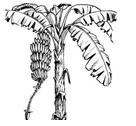
【小题1】The main idea of the first paragraph is that _____________.
| A.plants are important for life |
| B.plants cannot grow without air |
| C.there are many plants in the world. |
| D.we can not live without water. |
| A.four | B.three | C.two | D.one |
| A.offered | B.protected |
| C.produced | D.saved |
| A.All the plants grow from seeds. |
| B.No flowering plants grow from seeds. |
| C.Only non-flowering plants grow from seeds. |
| D.A few of non-flowering plants grow from seeds. |
Japanese students work very hard but many are unhappy. They have heavy pressures from their parents. Most students are always told by their parents to study harder and harder so that they can have a wonderful life when they grow up .Though this may be a good idea for those very bright students, it can have terrible results for many students who aren’t gifted (有天赋的)enough. Many of them have tried very hard at study but fail in the exams and make their parents lose heart. Some students feel that they are hated by everyone else and they don’t want to go to school any longer .They become dropouts.
It is surprising that though most Japanese are worried about their children, they do not help them in any way .Many parents feel that they are not able to help their children and that it is the teachers’ work to help their children .To make matters worse, a lot of parents send their children to those schools opening in the evening and on weekends. They only help the students to pass the exams and never teach them the very real sense of the world.
Many Japanese schools usually has rules about everything from the student’ clothes to things in their school bags. Child psychologists(心理学家)now think that such strict rules are harmful to the feeling of the students. Almost 40% of the students said that no one had taught them how to get on with others , how to tell right from wrong and how to show love and care for others, even for their parents.
根据材料内容选择最佳答案,将其标号填入题前括号内。
【小题1】 Japanese students have heavy pressures from .
| A.themselves | B.Japan |
| C.their parents | D.their classmates |
| A.a wonderful life | B.their parents |
| C.study | D.themselves |
| A.脱离传统社会的人 | B.文明的社会人 |
| C.逃学的人 | D.偏激的人 |
| A.few | B.a few |
| C.a lot of | D.lot of |
| A.40% | B.50% | C.70% | D.60% |
Almost every Chinese person can recite the two lines of the famous poem, “Every grain on the plate comes from hard work(谁知盘中餐,粒粒皆辛苦).” But sadly, many of us don’t actually get the real meaning of these lines: Don’t waste food.
A CCTV program, News One Plus One, reported that the food Chinese people throw away every year is enough to feed 200million people for a year.
Do we have too much food? Of course not. According to the UN World Food Program, there were 925 million hungry people around the world in 2010, especially in developing countries. Six million children die of hunger every year.
Chinese people are well known for being hospitable(好客的) and generous. Many even feel that they lose face if their guests have eaten all the food on the table.
Luckily, a number of people have realized the importance of saving food. Last November, Li Hong, a waitress in a restaurant in Nanjing, got fired because she took some leftover food home for her son. Many people stood by her side and criticized(批评) the waste of food.
What should we do in our daily lives to waste less food? Here are some tips:
1. Do not order too much in a restaurant. Only order as much as you want to eat. If you cannot eat all the food you ordered, take the rest of it home.
2. Don’t be too picky(挑剔的) about food. Some food may not taste great, but your body needs it.
3. Keep an eye on what food you have at home. Don’t buy too much, especially for vegetables and fruit.【小题1】How many people were hungry in the world in 2010 according to the UN World Food Program?
| A.200 million. | B.Six million. |
| C.925 million. | D.625 million. |
【小题2】What does the writer want to show us through Li Hong’s story?| A.Many Chinese restaurants waste a large amount of food. |
| B.Many Chinese people are kind-hearted and ready to help the weak. |
| C.Chinese people feel that they lose face if their guests eat all the food. |
| D.Many Chinese people don’t agree with the behavior of wasting food. |
【小题3】The underlined word “leftover” means in Chinese.| A.过期的 | B.剩余的 | C.腐烂的 | D.难吃的 |
【小题4】According to the passage, we shouldn’t waste food because .| A.food comes from very hard work |
| B.six million children die of hunger every day |
| C.there is enough food to feed all the people |
| D.Chinese are hospitable and generous |
【小题5】Which of the following is a good way to save food?| A.Ordering more than you need at a restaurant. |
| B.Taking home restaurant leftovers. |
| C.Not knowing what you already have at home when shopping. |
| D.Not eating the food you don’t like even if it’s healthy. |
Many companies use guards and expensive alarm systems to protect their property(财产). Soon a new kind of protection will be used—robots. Engineers have been working on the first mobile robots for businesses. The robots will guard factories, warehouses(仓库)and museums at night.
The mobile robots will move around slowly on wheels. They will be able to detect(察觉,发现) people through walls and pick up sounds, such as breaking glass. They can be fixed with loud sirens to frighten thieves, or radios to signal police or guards.
To protect a building, a robot will have to move around without knocking into the walls. Information about the building will have to be stored in the robot’s small, built-in computer. A floor map could be programmed into the computer’s memory, for example.
A mobile robot will not be able to do everything. Unlike human guards, it will not be able to climb stairs, open doors, or move along rough ground. It won’t be able to tell the difference between friends and enemies. Because of that, people will have to be prevented from entering the area it moves.
One kind of mobile robot will be able to “sense” whether a chair or a box has been moved and go around it. This robot will also judge size well enough so that it won’t send an alarm if a cat crosses the room. And if someone tries to steal this robot, it will sound a loud, painful siren. The three-foot-tall robot is hard to be stolen anyway. It weighs about 200 pounds.
U.S. companies pay almost $10 billion a year to protect their property with alarm systems and human guards. Mobile robots may be cheaper.
【小题1】Why is the new kind of robots called mobile robots? Because they can _______________.
| A.guard factories, warehouses and museums |
| B.send loud, painful sirens when it is stolen |
| C.sense moving objects and signal police |
| D.move around and do the programmed work |
| A.From a human guard. | B.From a built-in computer. |
| C.From another robot. | D.From radio signals. |
| A.New Guards. | B.Science and Technology. |
| C.Alarm Systems. | D.Engineers and Robots. |
| Channel (频道) | Time | Name of show | Kind of show |
| | 7:00 | News | News |
| 8:30 | Good Friend Contest | Game show | |
| 9:20 | Chinese Mother | Documentary Special | |
| 12:00 | Tokyo Love Story | Soap Opera | |
| BTV | 7:40 | China Sports | Sports Show |
| 9:20 | Happy Family | Sitcom | |
| 10:40 | Face to Face | Talk Show | |
| CTV | 9:30 | China Music | Music |
| 13:40 | Romantic Dream | Fashion Show | |
| 22:40 | Football Magazine | Sports Show |
| A.10:00 | B.9:20 | C.13:30 | D.22:00 |
| A.Sitcom | B.Sports Show |
| C.Soap Opera | D.Music |
| A.Face To Face and Romantic Dream |
| B.Happy Family and China Music |
| C.Chinese Mother and Football Magazine. |
| D.Chinese Mother and Happy Family |
| A.Romantic Dream | B.News |
| C.Face to Face | D.China Sports. |
| A.ATV | B.BTV | C.CTV | D.CCTV |
补全对话(共5分,每小题1分)从方框中选择 句子完成对话,
A: Hi, Kathy ! Do you have a plan for tomorrow ?
B: Not yet . 【小题1】__
A: I plan to go to the book store. Would you like to go with me ?
B: Fine . 【小题2】__.
A: Well, I want to buy some story books.
B: Great. What kind of books do you like ?
A: 【小题3】 . What about you ?
B: I’d like to read stories like Gone with the Wind.
A: I know that book. 【小题4】
B: You are right . Have you read any books by young writers born in the 1980s?
A: Oh, I like reading their writings on the Internet.
B: Haha ! 【小题5】 .
A: That’s right .
| A.I plan to watch TV. |
| B.It’s a good way to save money. |
| C.What kind of books are you going to buy? |
| D.What are you going to do ? |
F. It’s really a great book in America .
G: It’s quite boring .
— What do you do?
— _______
| A.I’m fine, thanks. | B.I’m a student. |
| C.I read books. | D.I’m Zhao Ming. |