网址:http://m.1010jiajiao.com/timu_id_872661[举报]
| |||||||||||||||||||||||||||||||||||||||||||||||||||||||||||||||||||||||||||||||||||||||||||||||||||||||||||||||||||||||||||||||||||||||||||||||
Students these days often have a lot of worries. Sometimes they have problems with their schoolwork, and sometimes with their friends. Some people think the worst thing is to do nothing. Laura Mills, a teenager from Washington, agrees. "Problems and worries are normal in life," says Laura. "But I think talking to someone helps a lot. If we don't talk to someone, we'll certainly feel worse. "
Laura once lost her purse, and worried for days. She was afraid to tell her parents about it. She even walked three miles to school each day because she didn't have any money. She just kept thinking. "If I tell my parents, they'll be angry! But in the end, she talked to her parents and they were really understanding. Her dad said he sometimes made careless mistakes himself. They got her a new purse and asked her to be more careful. "I will always remember to share my problems in the future!" Laura says.
Robert Hunt advises students about common problems. He feels the same way as Laura. "It is best not to avoid our problems. We should always try to solve them. He thinks that you can first find someone to talk to. This person doesn't need to be an expert (专家) like himself. Students often forget that their parents have more experience than them, and are always there to help them.
In English, we say that sharing a problem is like cutting it in half. So you're halfway to solving a problem if you talk to someone about it!
【小题1】Which of the following can be put in the blank in Paragraph One?
| A.What can they do about this? |
| B.Where do the problems come from? |
| C.When did they have these problems? |
| D.Why do they have so many problems? |
| A.answer a question | B.give an example |
| C.introduce his friend | D.share his experience |
| A.Laura's teacher | B.the writer of the passage |
| C.a person with a problem | D.an expert on students' problems |
| A.Few children are careful with their money. |
| B.Parents are more experienced than children. |
| C.Talking to someone helps to solve problems. |
| D.Students often have a lot of worries at school. |
One day, I happened to meet an Englishman on the road, and soon we began to talk. As I was talking about how I was studying English, the foreigner seemed to be surprised. Gently shaking his head,shrugging his shoulders, he said,“You don’t say!” “You don’t say!” I was puzzled. I thought , perhaps this is not a right topic. “Well, I’d better change the topic.” So I said to him. “Well, shall we talk about the Great Wall? By the way, have you ever been there?” “Certainly, everyone back home will laugh at me if I leave China without seeing it. It was wonderful.” He was deep in thought when I began to talk like a tourist guide. “The Great Wall is one of the wonders in the world. We are very proud of it.” Soon I was interrupted (打断) again by his words: “You don’t say!” I couldn’t help asking, “Why do you ask me not to talk about it?” “Well, I didn’t ask you to do so,” he answered, greatly surprised. I said, “Didn’t you say ‘you don’t say’?” Hearing this, the Englishman laughed to tears. He began to explain, “ ‘You don’t say’ actually means ‘really!’ It is an expression of surprise. Perhaps you don’t pay attention to English idioms.” I realized I had made a fool of myself. Since then I have been more careful with idiomatic expressions. Remember: what the English teachers said is always right to us students.
小题1:A year ago, I paid no attention to English idioms because .
| A.I had no interest in them |
| B.English idioms were very difficult |
| C.I did not realize the importance of them |
| D.my teacher didn’t tell us the importance of them |
| A.I had talked too much |
| B.I had to stop talking |
| C.he was not interested in the topic |
| D.he was only interested in the Great Wall |
| A.interesting | B.important | C.terrible | D.unlucky |
| A.The Englishman wanted me to act as his guide. |
| B.The Englishman left China without seeing the Great Wall. |
| C.The Englishman wanted to see the Great Wall after I talked about it. |
| D.The Englishman visited the Great Wall and thought it worth visiting. |
| A.I felt very silly |
| B.the Englishman became a real fool |
| C.I became more carefully in everything |
| D.I thought the Englishman had made me a fool |
My English teacher is very strict with us. Several days ago, when we were in class, Tom asked me a question. But my English teacher thought we were speaking in class. She asked us to stand at the back of the classroom for a few minutes. This made me unfair. After that, I feel nervous in her class, so I don’t like her class. However, I really want to learn English well. What should I do?
Yours,
Mike
Dear Mike,
I am sorry you are having difficulty with your English class. Every teacher wants his or her students to study hard. So I think you should have a talk with your English teacher and tell her what you were doing with Tom that day. If she knows your worries, maybe she will help you with your English. And she will be pleased to hear you want to learn English well. Of course, you should know that what your teacher did was good for you. When you are not trying as hard as you can, she has to stop it and try to help you. Wish you have a better life!
Yours,
Editor
小题1:What’s wrong with Mike?
| A.He doesn’t like learning English. |
| B.He meets trouble with his English teacher. |
| C.He doesn’t know how to get on well with his English teacher. |
| D.He doesn’t like English any longer. |
| A.he doesn’t like his English teacher |
| B.he can’t speak in class |
| C.his English teacher punished(惩罚) him |
| D.his English is poor |
| A.she didn’t like him |
| B.she didn’t think Mike was learning English hard at that time |
| C.Mike was bad at English |
| D.Mike was making much noise |
| A.be even angrier |
| B.ask him to stand for some time once again |
| C.be pleased |
| D.say sorry to him |
| A.Mike dislikes English classes, but he wants to learn English well. |
| B.Mike wants the editor to tell his English teacher the truth. |
| C.The editor gave Mike some advice, but it didn’t work. |
| D.The teacher hates Mike much more than before. |
First, take a day to enjoy your school. You won’t fit in at school if you don’t know the school. Ask for a school map. Try to get to know every corner of your new school. A good school handhook can be of great help. But to make it easy, ask the people near you where something is—tell people that you are new when you need help.
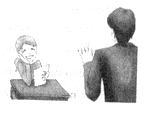
Be nice to everyone. Be nice to everyone, the young or the old, because they might just be your next teacher or friend.
Get to know your teachers and pay attention in class. Teachers always pay attention to(关注) new students, Talk to them and find out more about them. Never test their limits(底线)—don’t go too far, or you may end up getting into trouhle(麻烦)
You need to make friends. Talk to different people. Be yourself and don’t lie. This is YOUR school now, take a chance(机会) on being who you weren’t at your old school. Join a few clubs or sports teams and make more friends in this way.
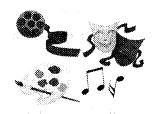
Be yourself and be polite. Don’t worry too much about what people think of you. Be true, be yourself, and be nice to everyone, no matter how mean(unfriendly) they may seem at first. It’s often the “girl/boy that I did’t like at my new school” that ends up being my friend after a little while. But then again, don’t be afraid to stand up for yourself if it’s very clear that you should.
Work hard to fit in while still being yourself. The first few weeks are always hard, but you’ll soon get used to it.
小题1:It is very easy to find places in your new school hy ____________.
| A.looking at a map | B.asking penple for help |
| C.reading a handbook | D. walking around the school |
| A.try to stand up all the time |
| B.be friendly to the mean persons |
| C.always do things by yourself |
| D.not change your idea if it’s right |
| A.how to fit in when at a new school |
| B.how to make friends at a new school |
| C.how to enjoy the beauty of the school |
| D.how to be yourself at a new school |