Martha’s Vineyard has long been considered a favorite quiet of the Northeast. The Vineyard is rich in history, breathtaking beaches, and beautiful scenery. It is well known for its unique lighthouses – you’ll enjoy the variety and the history of each lighthouse, among the most photographed structures on the Vineyard. When the former First Family, the Clintons, chose to vacation on the island several years ago, it became a more popular tourist attraction.

Martha’s Vineyard got its name from its discoverer, Bartholomew Gosnold, who gave it the name of his wife Martha and was in memory of the thick growth of wild trees on the land.

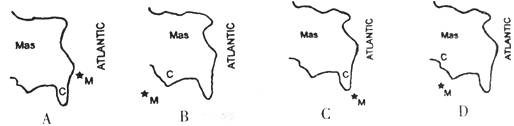
The island of Martha’s Vineyard lies south of Cape Cod off the southeastern coast of Massachusetts,United States. It is nearly 20 miles long and runs from 2 to 10 miles in width. There are wide, hard beaches on the southern side. The north is hilly, but in the south and eastern parts there are wide areas of open land covered with wild flowers.

The island was discovered early in the 17th century. The Indians were quiet and friendly, and the new-comers fished for a living, making a lot of money from whaling (捕鲸). With the decline (衰落) of whaling and sailing ships, Martha’s Vineyard was almost forgotten until about 60 years ago when people began to buy the old houses of the whaling captains and the small buildings of the fishermen near the beaches. Now people go there year after year for their summer holidays.

1.What is Martha’s Vineyard famous for?

       A.Lighthouses.                                              B.A long history.

       C.Friendly Indians.                                        D.Fishing industry.

2.Which of the following maps tells where Martha’s Vineyard is?

 (Mas = Massachusetts;C = Cape Cod;M = Martha's Vineyard)

3.Which of the following is NOT mentioned in the passage?

       A.How the island got its name.                       B.The population of the island.

       C.The scenery of the island.                           D.When the island was discovered.

4.When you visit Martha’s Vineyard,           

      A.you can see a lot of hills in the eastern parts

       B.you can enjoy the sunshine on the beach on the northern side

       C.you can live in the fishermen’s old houses in the hills

       D.you can see different kinds of lighthouses and learn about the history

  How Much to Tip

You’re out to dinner. The food is delicious and the service is fine. You decide to leave a big fat tip. Why? The answer may not be as simple as you think.

Tipping, psychologists (心理学家) have found, is not just about service. Instead, studies have shown that tipping can be affected by psychological reactions to a series of different factors(因素) from the waiter’s choice of words, to how they carry themselves while taking orders, to the bill’s total. Even how much waiters remind customers of themselves can determine how much change they pocket by the end of the night.

“Studies before have shown that mimicry (模仿) brings into positive feelings for the mimicker,” wrote Rick van Baaren, a social psychology professor. “These studies show that people who are being mimicked become more generous toward the person who mimics them.”

So Rick van Baaren divided 59 waiters into two groups. He requested that half serve with a phrase such as, “Coming up!” Those in the other half were instructed to repeat the orders and preferences back to the customers. Rick van Baaren then compared their take-home. The results were clear — it pays to mimic your customer. The copycat waiters earned almost double the amount of tips to the other group.

Leonard Green and Joel Myerson, psychologists at Washington University in St. Louis, found the generosity of a tipper may be limited by his bill. After research on the 1,000 tips left for waiters, cab drivers, hair stylists, they found tip percentages in these three areas dropped as customers’ bills went up. In fact, tip percentages appear to plateau (达到稳定水平) when bills topped $100 and a bill for $200 made the worker gain no bigger percentage tip than a bill for $100.

“That’s also a point of tipping,” Green says. “You have to give a little extra to the cab driver for being there to pick you up and something to the waiter for being there to serve you. If they weren’t there, you’d never get any service. So part of the idea of a tip is for just being there.”

1.How many factors affecting the customers’ tipping are mentioned in the passage?

       A.2.                   B.1.                 C.3.                D.4.

2.These studies show that _________.

       A.tipping can be affected by physical reactions to many different waiter’s factors

       B.people who are being mimicked usually tip less to the person who mimics them

       C.the mimic waiters can get almost twice as much money as the other group

       D.mimicry makes the mimicker feel bad

3.According to the passage, which of the following will be likely to show the right change of the tip percentages?

4.We know from the passage that the writer seems to __________.

       A.oppose Mr Green’s idea about tipping

       B.think part of Mr Green’s explanation is reasonable

       C.give his generous tip to waiters very often

       D.support the opinions of Mr Green and Rick van Baaren about tipping

 0  35222  35230  35236  35240  35246  35248  35252  35258  35260  35266  35272  35276  35278  35282  35288  35290  35296  35300  35302  35306  35308  35312  35314  35316  35317  35318  35320  35321  35322  35324  35326  35330  35332  35336  35338  35342  35348  35350  35356  35360  35362  35366  35372  35378  35380  35386  35390  35392  35398  35402  35408  35416  151629 
违法和不良信息举报电话:027-86699610 举报邮箱:58377363@163.com

精英家教网