题目内容
A group of graduates got together to visit their old university professor.
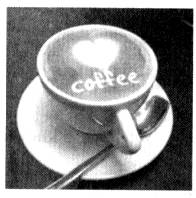
The conversation soon turned into complaints about 26 in work and life. To offer his guests coffee, the 27 went to the kitchen and returned with a large pot of coffee and a variety of 28 — porcelain, plastic, glass, crystal, some 29 , some expensive, some delicate — telling them to help themselves to the 30 .
When all the students 31 a cup of coffee in hand, the professor said, "If you have 32 , all the nice-looking expensive cups have been taken up, 33 the plain and cheap ones. While it is 34 for you to want only the best for yourselves, that is the 35 of your problems and stress. "
"Be assured that the cup itself adds no 36 to the coffee. In most cases it is just more expensive and in some cases even 37 what we drink. "
"What all of you really want is coffee, 38 the cup, but you 39 went for the best cups … And then you began 40 each other's cups. "
"Now consider 41 : Life is the coffee; the jobs, money and position in society are the cups. They are just tools to hold and contain 42 , and the type of cup we have does not determine, nor 43 the quality of life we live. Sometimes, by concentrating only on the cup, we 44 to enjoy the coffee. Fully appreciate the coffee, not the cups! Don't let the cups 45 you ... enjoy the coffee instead. "
1.A. stress B. progress C. condition D. pride
2.A. advisor B. professor C. monitor D. graduate
3.A. glasses B. bowls C. trays D. cups
4.A. plain-looking B. beautiful C. modern D. nice-looking
5.A. pot B. sugar C. milk D. coffee
6.A. made B. had C. cooked D. served
7.A. talked B. discussed C. noticed D. decided
8.A. leaving behind B. falling about
C. leaving about D. falling behind
9.A. strange B. wonderful C. normal D. important
10.A. source B. purpose C. doubt D. result
11.A. price B. quality C. sweet D. color
12.A. proves B. tastes C. hides D. steals
13.A. more than B. less than C. other than D. rather than
14.A. consciously B. wisely C. shyly D. carelessly
15.A. showing B. eyeing C. exchanging D. praising
16.A. it B. that C. this D. one
17.A. jobs B. money C. position D. life
18.A. change B. increase C. discover D. lower
19.A. try B. manage C. fail D. plan
20.A. envy B. drive C. support D. assess
1.A
2.B
3.D
4.A
5.D
6.B
7.C
8.A
9.C
10.A
11.B
12.C
13.D
14.A
15.B
16.C
17.D
18.A
19.C
20.B
【解析】
1.考查名词。谈话一会儿就变成了各自对工作和生活压力的抱怨。stress与complaints相对应。
2.考查名词。“在用咖啡招待这些客人时,教授去厨房端来一大壶咖啡。” “客人”指的是学生,教授是主人。
3.考查名词。结合下文a cup of coffee,此处应是喝咖啡的杯子,与前面的a large pot of coffee相对应。 “并拿出各式各样的咖啡杯——陶瓷的、塑料的、玻璃的、水晶的,有看上去普通的、有价值不菲的、有做工精细的——让他们自己倒咖啡喝。”
4.考查形容词。此处陈述“杯子”的特点,与expensive和 delicate对应。
5.考查名词。结合下文a cup of coffee,教授拿来是咖啡,随意喝自然是“咖啡”。
6.考查动词。“当所有学生手中都端了一杯咖啡后”。have sth in hand手里拿着……。
7.考查动词。“如果你们注意一下,就会发现所有好看的昂贵的杯子都被挑走了,剩下leave的只是那些普通的和便宜的。”
8.考查动词短语。leave behind的意思是“留下、遗留”。
9.考查形容词。“每个人都只想拥有最好的,这很正常,但这也是你们的问题和压力的根源所在。”
10.考查名词。source (河的)源头;水源;根源;来源。
11.考查名词。“可以肯定的是,杯子本身与咖啡质量毫无关系。”
12.考查动词。“在很多时候,杯子让咖啡更昂贵,某些时候,甚至让我们看不清我们要喝的是什么。”hide把……藏起来,隐藏。
13.考查than短语。“其实你们真正想要的是咖啡,而不是杯子”。rather than而不是。
14.考查副词。“但你们却又都下意识地consciously去挑选最好的杯子,并观察别人拿到的杯子。”
15.考查动词。此处eye是动词,意思是“看;注视;审视”。
16.考查代词。“现在设想一下:”this用来指代下文要提到的内容。
17.考查名词。“他们只是维持生活life的工具而已”
18.考查动词。他们不能决定也不能改变生活的质量
19.考查动词。有时候,我们在过于关注杯子的同时却忘记了去品味咖啡。fail to do sth不能做某事。
20.考查动词。不要成为杯子的奴隶;要好好品味杯中的咖啡。 drive迫使;逼迫。

A few days ago we – that’s me and the husband – took a cab to the station. Chat with the driver fell to the wrong of cyclists, and the misunderstanding of the road rules. So far as the rules of the road go, there seems to be one basic principle: when you are driving a car you hate bikes, when you are riding a bike you hate cars (and I guess walkers hate everyone).
There is an obvious difference of viewpoint built in here. It wasn’t until I started to drive a car (almost 20years after I had first rode a bike) that I actually realized that you could not see a cyclist at night without lights. In fact I now want to shout at late night cyclists without lights(like motortists once did at me): “You’ll get killed, sunshine, I can’t see you.”
The problem is that cyclists do ride headlong into danger. It's not just not having lights. It’s biking on pavements (and so threatening to injure a load of innocent walkers in the process) and biking down one-way streets the wrong way.
I admit that I do bike the wrong way down a one-way street sometimes. My feeble(软弱无力) defense is that I try always to do it as if I know I was doing wrong. That is slowly, with an apologetic look on the face, and ready to get off at any minute. I can’t bear the guys(一伙人) (usually, but not always it is guys) who do it as if they owned the place, and at high speed.
So cyclists are not entirely innocent. But they are among the disadvantaged groups, because the bottom line is that a car or a lorry can kill a cyclist and not the other way around.
1.When did the writer realize the danger for late night cyclists without lights?
A. Not until she became a driver herself.
B. Not until she had driven a car for 20 years.
C. After she was shouted at by a motorist.
D. After she was once knocked down by a group of guys.
2.When the writer biked the wrong way down a one way street, she felt_________.
A. angry B. guilty C. innocent D. proud
3.Which group is most likely to face danger according to the writer?
A. walkers B. passers-by C. cyclists D. motorists
4.What can we learn about the writer?
A. She often took a cab with her husband.
B. She has been a motorist for over 20 years.
C. She used to ride a bike without lights at night.
D. She often biked the wrong way down a one way street.