题目内容

(1)The country needs a ________government.They have had four Prime Ministers in one year.

(2)He crashed into the back of a ________vehicle.

(3)The ________noise gave me a headache.

(4)There was a ________line of cars stretching for miles.

[  ]

A.continuous
B.constant
C.stationary
D.stable
答案:D;C;B;A
解析:

  stable稳定的;稳固的。

  stationary不动的。

  constant不断的。

  continuous连续的;不间断的。句意为“车龙绵延数英里”。


练习册系列答案
相关题目
  College and university graduations in the United States are arriving earlier each year as the average length of school year gets shorter.

    The school year has fallen by nearly six weeks, from 197 days in 1964 to 156days in 1994,   1   the National Association of Scholars.   2  , most American kindergarten, elementary (初等的) and high school students are   3  to spend 180 days a year in their schools. The   4  of the average class period also has   5   , from more than 57minutes to less than 54,the Association reports.

    “The   6  has to be that students are simply   7  less,” said the director of the Association. “If you count the actual    8  of contact hours, you'll find they are   9   four years in college getting an education that would have taken about    10  years in 1964.”

The universities argue (认为) that they are simply teaching more  11   “The traditional idea that learning   12  in the classroom and   13  reading and writing   14  based on seat time is out of date,” said a spokesman for the American Council on Education. “  15  than attending lectures, students now   16  their professors on their computers or use other types of   17  technology, allowing for a shorter school year,” he said. It is very   18  .that, in many schools, they are going to spend   19  time   20  than they used to.

1. A. according to        B. by the accordance of     C. following         D. followed

2. A. By comparison        B. In particular           C. Strangely enough  D. As a result

3. A. intended           B. required            C. requested       D. inquired

4. A. long                 B. length            C. time           D. period

5. A. fallen             B. declined            C. oppressed       D. lowered

6. A. reason          B. cause             C. conclusion          D. condition

7. A. playing             B. learning            C. working       D. paying

8. A. number       B. times            C. need            D. arrangement

9. A. spending          B. given            C. living        D. asked

10. A. five            B. two             C. three          D. six

11. A. quickly           B. thoroughly             C. wisely           D. efficiently

12. A. came           B. took place            C. started         D. appeared

13. A. through            B. across             C. by the way of     D. with

14. A. questions          B. books             C. assignments       D. texts

15. A. Rather          B. More            C. Less          D. Easier

16. A. chat with         B. argue with           C. speak           D. tell

17. A. knowledge         B. information           C. message          D. intelligence

18. A. possibly         B. probably            C. lovely          D. likely

19. A. less           B. little             C. more           D. much more

20. A. at home        B. in the laboratory          C. in the classroom  D. on computer


James’s New Bicycle
James shook his money box again. Nothing! He carefully __1__ the coins that lay on the bed.
$24.52 was all that he had. The bicycle he wanted was at least $90! __2__ on earth was he going to get the __3__ of the money?
He knew that his friends all had bicycles. It was __4__ to hang around with people when you were the only one without wheels. He thought about what he could do. There was no __5__ asking his parents, for he knew they had no money to __6__.
There was only one way to get the money, and that was to __7__ it. He would have to find a job. __8__ who would hire him and what could he do? He decided to ask Mr. Clay for advice, who usually had __9__ on most things.
“Well, you can start right here,” said Mr. Clay. “My windows need cleaning and my car needs washing.”
That was the __10__ of James’s odd-job business. For three months he worked every day after finishing his homework. He was amazed by the __11__ of jobs that people found for him to do. He took dogs and babies for walks, cleared out cupboards, and mended books. He lost count of the __12__ of cars he washed and windows he cleaned, but the __13__ increased and he knew that he would soon have __14__ for the bicycle he longed for.
The day __15__ came when James counted his money and found $94.32. He __16__ no time and went down to the shop to pick up the bicycle he wanted. He rode __17__ home, looking forward to showing his new bicycle to his friends. It had been hard __18__ for the money, but James knew that he valued his bicycle far more __19__ he had bought it with his own money. He had __20__ what he thought was impossible, and that was worth even than the bicycle.

【小题1】
A.cleanedB.coveredC.countedD.checked
【小题2】
A.HowB.WhyC.WhoD.What
【小题3】
A.amountB.partC.sumD.rest
【小题4】
A.braveB.hardC.smartD.unfair
【小题5】
A.pointB.reasonC.resultD.right
【小题6】
A.splitB.spendC.spareD.save
【小题7】
A.borrowB.earnC.raiseD.collect
【小题8】
A.OrB.SoC.ForD.But
【小题9】
A.decisionsB.experienceC.opinionsD.knowledge
【小题10】
A.beginningB.introductionC.requirementD.opening
【小题11】
A.similarityB.qualityC.suitabilityD.variety
【小题12】
A.brandB.numberC.sizeD.type
【小题13】
A.effortB.pressureC.moneyD.trouble
【小题14】
A.allB.enoughC.muchD.some
【小题15】
A.finallyB.instantlyC.normallyD.regularly
【小题16】
A.gaveB.leftC.tookD.wasted
【小题17】
A.patientlyB.proudlyC.silentlyD.tiredly
【小题18】
A.applyingB.askingC.lookingD.working
【小题19】
A.sinceB.ifC.thanD.though
【小题20】
A.deservedB.benefitedC.achievedD.learned

It is time for students to sell such things as chocolate bars and greeting cards to raise money for their school, class or club. It is inevitable that they will knock on your door and you will easily hand over your cash for overpriced items that you really do not want. That is okay, though, because there are many reasons why children should be allowed to raise money for their schools and clubs.

Fundraising(募集资金) is a great way to help children learn social skills. It is not easy to go up to a complete stranger and ask him for his money. They have to nicely ask for help, show the interested buyer what they have to offer and explain how it will help them in school. If someone refuses to buy an item, that child has to take the failure in stride(不特别费力地), and that is a learning lesson as well.

Students can learn how to deal with money by fundraising. Of course, it might seem safer for us to take charge of our children’s earnings from their fundraising before it is turned into the school. However, by making them keep track of it, count it, and make sure everyone pays the right amount, they are learning an important lesson. Dealing with money is important to know about when they are older.

Fundraising helps improve their schools. It is the children’s school. They have to learn there and grow there. Why not let them help in making it a better place?

Fundraising allows for more life experiences for the child. The raised money is used towards things like parties, trips, or for the music club to go to see a Broadway play. The children receive the rewards for their hard work at raising the money. Without fundraising, these field trips and special school memories would be missed.

In a word, fundraising helps children a lot in many ways.

1.The underlined word “inevitable” in the first paragraph means “_______”.

A. 不可能的         B. 不恰当的         C. 不可避免的      D. 不现实的

2.One of the important indications that children are grown up is that __________.

A. children can deal with money        

B. children learn to care for others

C. children make a date with friends of the other sex      

D. children like to make up

3.The author thinks that fundraising _______.

A. adds to the family’s burden              B. wastes the learning time

C. helps to develop the children’s character D. builds up the children’s bodies

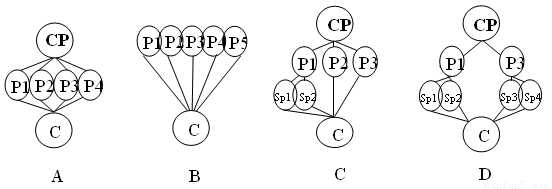
4.Which of the following shows the structure of the passage?

   CP: Central point   P: Point      Sp: Sub-point(次要点)     C: Conclusion


Parents are often amazed at how fast their child grows and develops. New research has determined that the ability to quantify may develop much sooner than most parents realize.

Kristy vanMarle, professor of the University of Missouri, has determined that contrary to what previous studies have shown, infants(婴儿)are able to quantify substances(物质)—like sand or water—as early as 10 months. As long as the difference between the two substances is large enough, infants will choose the larger amount, especially when it comes to food.

With the assistance of her team researchers, vanMarle tested the quantifying skills of babies by presenting them with two cups: one containing a small amount of food, and one containing a larger amount. Consistently, the babies chose the larger amount.

“Several studies throughout the last 15 years have shown that infants are very good at telling how many objects they see; however, infants don’t seem to count things like water or sand,” vanMarle said. “What we’re saying is that they can quantify substances; it’s just much harder. The infants can see how much food goes into each cup and compare that in their memories. They decide which amount is larger, and they almost always select the larger one.”

“This information further refutes(驳斥)the long-held idea that babies “know nothing of the world,” vanMarle said.

“Since psychologists have begun studying infants with sensitive measures, we’ve discovered a lot of early abilities. I think for parents, it should be exciting to know that there’s somebody in there that has some fundamental and basic knowledge of the world, and that knowledge is guiding their development,” vanMarle said.

In the future, vanMarle says this kind of study could be linked to a child’s progress in math-related skills, although programs marketed to increase those abilities, such as “Baby Einstein,” still have mixed reviews when it comes to academic study.

1.The quantifying ability refers to the ability to     .

A. get much knowledge of the world

B. identify the quantity of something

C. choose between different substances

D. obtain math-related skills

2.Babies choose the larger amount of food     .

A.  on personal preference                  B. by saying numbers 

C.  with the help of parents                D. through their natural abilities

3.We can learn from the text that     .

A. people used to think the world is known to babies

B. scholars disagree on baby-training programs

C. little research has been done on infants

D. some parents don’t care about their kids


It is time for students to sell such things as chocolate bars and greeting cards to raise money for their school, class or club.It is inevitable that they will knock on your door and you will easily hand over your cash for overpriced items that you really do not want.That is okay, though, because there are many reasons why children should be allowed to raise money for their schools and clubs.

Fundraising is a great way to help children learn social skills.It is not easy to go up to a complete stranger and ask him for his money.They have to nicely ask for help, show the interested buyer what they have to offer and explain how it will help them in school.If someone refuses to buy an item, that child has to take the failure in stride(不特别费力地), and that is a learning lesson as well.

Students can learn how to deal with money by fundraising.Of course, it might seem safer for us to take charge of our children’s earnings from their fundraising before it is turned into the school.However, by making them keep track of it, count it, and make sure everyone pays the right amount, they are learning an important lesson.Dealing with more Fundraising helps improve their schools.It is the children’s school.They have to learn there and grow there.Why not let them help in making it a better place?

Fundraising allows for more life experiences for the child.The raised money is used towards things like parties, trips, or for the music club to go to see a Broadway play.The children receive the rewards for their hard work at raising the money.Without fundraising, these field trips and special school memories would be missed.

In a word, fundraising helps children a lot in many ways.

1.The underlined word “inevitable” in the first paragraph means “_______”.

A.unlikely    B.improper     C.unavoidable       D.unrealistic

2.One of the important indications that children are grown up is that __________.

A.children learn to care for others    

B.children can deal with money     

C.children like to make up     

D.children make a date with friends of the other sex

3.The author thinks that fundraising _______.

 A.adds to the family’s burden           

B.wastes the learning time

C.builds up the children’s bodies

D.helps to develop the children’s character  

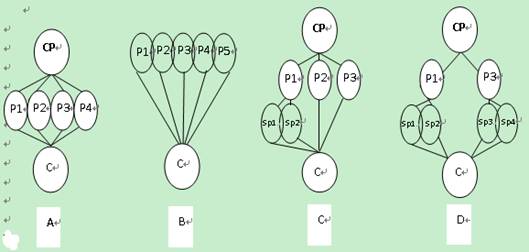
4.Which of the following shows the structure of the passage?

   CP: Central point   P: Point      Sp: Sub-point     C: Conclusion


违法和不良信息举报电话:027-86699610 举报邮箱:58377363@163.com

精英家教网