It's not a new phenomenon, but have you noticed how many nouns are being used as verbs? We all use them, often without noticing what we're doing.

    I was arranging to meet someone for dinner last week, and I said “I’ll pencil it in my diary”, and my friend said “You can ink it in”, meaning that it was a firm arrangement not a tentative one!

Many of these new verbs are linked to new technology. An obvious example is the word fax, which is a shortening of facsimile originally, an exact copy of a book or document. We all got used to sending and receiving faxes, and then soon started talking about faxing something and promising we'd fax it immediately. So, nouns turn into verbs in two easy stages. Then along came email, and we were soon all emailing each other madly. How did we do without it? I can hardly imagine life without my daily emails.

Email reminds me, of course, of my computer and its software, which has produced another couple of new verbs. On my computer I can bookmark those pages from the World Wide Web that I think I'll want to look at again, thus saving all the effort of remembering their addresses and calling them up from scratch. I can do the same thing on my PC, but there I don't bookmark; I favorite—coming from “favorite pages”, so the verb is derived from an adjective not a noun. I wasn’t really sure whether people said this,but someone told me recently that they had favorited a site I was looking for and so they could easily give me its address.

In the late 1980s I noticed that lots of my friends had acquired pagers, and kept saying things like “I’ll page you as soon as I know what time we’re meeting”. They couldn't say it to me, though; 1 refused to have one. So my children bought me a mobile phone, now known simply as a mobile and I had to learn yet more new verbs. I can message someone, that is, I can leave a message (either spoken or written)for them on their phone.Or I can text them, write a few words suggesting when and where to meet, for example. How long will it be before I can mobile them, that is, phone them using my mobile? I haven’t heard that verb yet, but I’m sure I will soon. Perhaps I’ll start using it myself!  

“I’ll pencil it in my diary” in the second paragraph probably means          .

    A. it was a firm arrangement            B. it was an uncertain arrangement

    C. the arrangement should be written as a diary     D. he prefers a pencil to a pen

A website address can be easily found if it has been_____.

    A. emailed                   B. messaged                 C. favorited                D. texted

Which of the following has not been used as a verb, yet?

    A. message                   B. page                     C. email                            D. mobile

The best title for this passage is____.

A. New Verbs from Old Nouns    B. The Development of the English language

    C. New Technology and New words    D. Technology and Language.


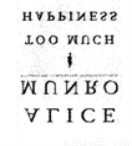
Too Much Happiness was written by Alice Munrowinner of the 2013 Nobel Prize in Literatureone of our greatest contemporary writers of fiction and the owner of the Man Booker Price for FictionHer stories have appeared in The New YorkerThe Atlantic Monthlyand other publicationsand her collections have been translated into thirteen languages

? The main character is Sophia Kovalevskya great Russian mathematicianwriter and advocator拥护者)of womens rights in the late nineteenth century. After visiting her lover Maxsim Kovalevsky in Rivierashe travels in Europeending up in Swedenwhere she teaches at the only university in Europe willing to employ a female mathematicianThe book writes about her journey from Riviera to Sweden

??? The story tells the typical struggle of an intellectual(知识分子)woman to achieve success and happinessHoweverwhen she is going to dieSophia saystoo much happiness”.I think its irony(讽*11的).As reading the storyshe has too many mental problems·Firstas a woman mathematicianshe was born in a wrong time She was married to Vladimir Kovalevsky without lovecalleda white marriage”.She explained thatno a young Russian woman who was unmarried could leave the country.”She satisfied her marriage to seek her career

??? Furthermorewhen she sees a man look like Maxsim in the stationshe says to herself,“of courseit would not be Maxsimwhat could he be doing in Paris?”She doesnt want to face the fact because she doesnt want to lose her hopeShe believes they will marry in springAnd in her letter to Julia she says:“it is to be happiness after allhappiness after allHappiness.”She is cheating herself. In factthe man does not want to marry herand the happiness she expected doesnt take place at all

??? Finally, I conclude that the end must be a tragedy(悲剧).From the very first pages the atmosphere is gloomy黯淡的)and threatening.One of us will die this year.”“Because we have gone walking in a graveyard(墓地)on the first day of the New Year.Some pages further,“a black cat across their pathall reflect it will be a bad endingNot because she had some problems with her lungbut because her life does not bring her happinessand because of these disharmony things that happen in her life

1.We can infer from the passage that__·

ASophia was born in a wrong time and was mentally ill

Bwomen were not fairly treated in Europe in Sophias time

CSophia loved travelling around Europe to meet `different people

Dunmarried women were forbidden to learn mathematics at that time

2.The underlined phrasethe factin Paragraph 4 most probably refers to the fact that

Aher husband refuses to divorce Bshe cant teach in university

Cshe falls in love with Maxsim DMaxsim doesnt want to marry her

3.Why does the author name this book Too Much Happiness

AIt is used to suggest that the story must be a comedy

BIts a phrase repeatedly used by Sophia herself to her friend

CIts used in an ironic way to show that Sophia isnt happy at all

DIts to show Sophia is very happy to achieve success in her career

4.What can we conclude from Sophias experience

AIts hard for an educated woman to achieve success in Europe at that time

BRussian women were not allowed to go abroad without a white marriage

CMarried women could travel freely across Europe in the late nineteenth century

DSeeing a black cat across the path would bring people to death in the end

5.In a newspaperthis passage is most probably in the section of____

A. Entertainment B. Travel CCareer D. Culture


Are the lives of city kids the same as those in villages? In lots of ways, they are very different. But what are those differences?

      Hu Peng from Wuhan and four of his friends decided to find out. Earlier this month, they went to live for a week in Caidian, a village near Wuhan. Hu and his Junior l classmates went door to door in Caidian and asked kids lots of questions. They want to learn more about village kids' everyday lives, so they asked questions like this: Do your parents teach you how to do the housework? How much money do you usually spend on dinner? What would you do if a thief came into your house? They also asked 150 city kids the same questions.

      On April 12, the team gave a report to their class. They told about many differences between children's lives in cities and those of children in villages. The biggest difference is about independence. Hu's team found that 60 percent of city kids can't do much housework, but 90 percent of village kids can care for themselves.

      City kids told Hu they care about schoolwork a lot, and they have no time for washing clothes or making their beds. Village kids said they help their parents a lot : cooking, cleaning the houses and feeding pigs. Hu's team  also found that village kids have less pocket money. Many have never used computers. They like playing in rivers or on mountains. Some don't even like to make new friends.

      Hu and his friends said their trip gave them more self- confidence (自信) because they have done something by themselves. But it also worried them a bit because they found they still have a lot to learn. "When we grow up, our parents can't take care of us," Hu said. "We have to learn to take care of ourselves. "  Shen Guanquan, one of Hu's friends said, "When people learn to care for themselves, they learn to do lots of difficult things. "

1.How many city kids went to learn about village kids' everyday lives?

      A. Three.         B. Four.      C. Five.       D. Six.

2.Their report showed that most city kids __.

     A. help their parents a lot         B. have less pocket money

     C. can take care of themselves     D. still have a lot to learn

3.The underlined word "it" in the last paragraph means __.

     A. their trip      B. their report    C. a  village kid    D. a city kid

4. Hu Peng and his friends finished their report by __. 

     A. visiting schools in the village

     B. questioning village and city kids from door to door  

C. watching village and city kids' everyday lives

     D. questioning village and city kids' parents


I was arranging to meet someone for dinner last week, and I said “I’ll pencil it in my diary”, and my friend said “You can ink it in”, meaning that it was a firm arrangement not a tentative one!
Many of these new verbs are linked to new technology. An obvious example is the word fax, which is a shortening of facsimile originally, an exact copy of a book or document. We all got used to sending and receiving faxes, and then soon started talking about faxing something and promising we'd fax it immediately. So, nouns turn into verbs in two easy stages. Then along came email, and we were soon all emailing each other madly. How did we do without it? I can hardly imagine life without my daily emails.
Email reminds me, of course, of my computer and its software, which has produced another couple of new verbs. On my computer I can bookmark those pages from the World Wide Web that I think I'll want to look at again, thus saving all the effort of remembering their addresses and calling them up from scratch. I can do the same thing on my PC, but there I don't bookmark; I favorite—coming from “favorite pages”, so the verb is derived from an adjective not a noun. I wasn’t really sure whether people said this,but someone told me recently that they had favorited a site I was looking for and so they could easily give me its address.
In the late 1980s I noticed that lots of my friends had acquired pagers, and kept saying things like “I’ll page you as soon as I know what time we’re meeting”. They couldn't say it to me, though; 1 refused to have one. So my children bought me a mobile phone, now known simply as a mobile and I had to learn yet more new verbs. I can message someone, that is, I can leave a message (either spoken or written)for them on their phone.Or I can text them, write a few words suggesting when and where to meet, for example. How long will it be before I can mobile them, that is, phone them using my mobile? I haven’t heard that verb yet, but I’m sure I will soon. Perhaps I’ll start using it myself!

  1. 1.

    “I’ll pencil it in my diary” in the second paragraph probably means          .

    1. A.
      it was a firm arrangement
    2. B.
      it was an uncertain arrangement
    3. C.
      the arrangement should be written as a diary
    4. D.
      he prefers a pencil to a pen
  2. 2.

    A website address can be easily found if it has been_____.

    1. A.
      emailed
    2. B.
      messaged
    3. C.
      favorited
    4. D.
      texted
  3. 3.

    Which of the following has not been used as a verb, yet?

    1. A.
      message
    2. B.
      page
    3. C.
      email
    4. D.
      mobile
  4. 4.

    The best title for this passage is____.

    1. A.
      New Verbs from Old Nouns
    2. B.
      The Development of the English language
    3. C.
      New Technology and New words
    4. D.
      Technology and Language.

It's not a new phenomenon, but have you noticed how many nouns are being used as verbs? We all use them, often without noticing what we're doing.
I was arranging to meet someone for dinner last week, and I said “I’ll pencil it in my diary”, and my friend said “You can ink it in”, meaning that it was a firm arrangement not a tentative one!
Many of these new verbs are linked to new technology. An obvious example is the word fax, which is a shortening of facsimile originally, an exact copy of a book or document. We all got used to sending and receiving faxes, and then soon started talking about faxing something and promising we'd fax it immediately. So, nouns turn into verbs in two easy stages. Then along came email, and we were soon all emailing each other madly. How did we do without it? I can hardly imagine life without my daily emails.
Email reminds me, of course, of my computer and its software, which has produced another couple of new verbs. On my computer I can bookmark those pages from the World Wide Web that I think I'll want to look at again, thus saving all the effort of remembering their addresses and calling them up from scratch. I can do the same thing on my PC, but there I don't bookmark; I favorite—coming from “favorite pages”, so the verb is derived from an adjective not a noun. I wasn’t really sure whether people said this,but someone told me recently that they had favorited a site I was looking for and so they could easily give me its address.
In the late 1980s I noticed that lots of my friends had acquired pagers, and kept saying things like “I’ll page you as soon as I know what time we’re meeting”. They couldn't say it to me, though; 1 refused to have one. So my children bought me a mobile phone, now known simply as a mobile and I had to learn yet more new verbs. I can message someone, that is, I can leave a message (either spoken or written)for them on their phone.Or I can text them, write a few words suggesting when and where to meet, for example. How long will it be before I can mobile them, that is, phone them using my mobile? I haven’t heard that verb yet, but I’m sure I will soon. Perhaps I’ll start using it myself!  

  1. 1.

    “I’ll pencil it in my diary” in the second paragraph probably means        

    1. A.
      it was a firm arrangement       
    2. B.
      it was an uncertain arrangement
    3. C.
      the arrangement should be written as a diary
    4. D.
      he prefers a pencil to a pen
  2. 2.

    A website address can be easily found if it has been_____

    1. A.
      emailed
    2. B.
      messaged
    3. C.
      favorited
    4. D.
      texted
  3. 3.

    Which of the following has not been used as a verb, yet?

    1. A.
      message
    2. B.
      page
    3. C.
      email
    4. D.
      mobile
  4. 4.

    The best title for this passage is____.

    1. A.
      New Verbs from Old Nouns
    2. B.
      The Development of the English language
    3. C.
      New Technology and New words
    4. D.
      Technology and Language

违法和不良信息举报电话:027-86699610 举报邮箱:58377363@163.com

精英家教网