题目内容
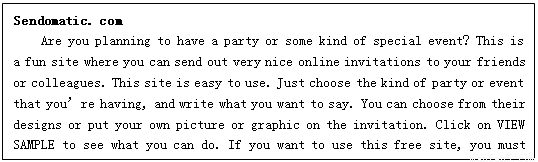
15. He is better than _______ I last visited him.
A. when B. that C. how D. which
A
解析:
15. 选A。than 后省略了 he was,假若补充完整,全句即为 He is better than he was when I last visited him。

 小学教材全测系列答案
 小学数学口算题卡脱口而出系列答案
 优秀生应用题卡口算天天练系列答案
 浙江之星课时优化作业系列答案
My mother, Marisol Torres, came with her family to Australia in the early 1960s. Then my parents’ marriage ended and Mum began the study of precious stones. Her interest in opals (猫眼石) took her to the New South Wales remote town of Lightning Ridge. There were no luxuries (奢华的享受), but she was closer to nature and had a chance to find black opals and make some money.
My mother was beautiful with dark hair and brown eyes, but she was also quiet and shy. Early in the Ridge years, she kept to herself, but later, she started going to the neighbourhood centre to make friends.
It was her dream to mine, but her get-rich-quick thinking was unrealistic. She was cheated and she was never very successful. But she kept a sense of humour and a charming smile.
Then, just as friendships began to blossom, she was diagnosed with cancer and had to return south for treatment. She had the intention of cooking Spanish food as special treat for her Ridge friends, but died too soon. In her honour, my aunt, Marisa, and I fulfilled her desire when we visited the Ridge in March last year.
People who mine the Ridge come from a cross section of society, from lawyers to travels. Looks don’t mean much: it can be hard to tell who is millionaire and who is poor. Opals attracted Sebastian and Hanna Deisenberger to Lightning Ridge. They planned a two-year stay, but became permanent residents.
Then there’s Neil Schellnegger, 45, who moved to the area with his parents when he was a child. He lives with his son, Luke. Luke is a shy 19-year-old boy who enjoys helping his dad. They haven’t had much luck over the past couple of years, but their passion for opals conquers disappointment. They love the peaceful lifestyle.
Danny Hatcher, 38, is a second-generation miner and president of the Lightning Ridge Miners’ Association. He is an optimistic man, driven by the desire to find the perfect opal. “It’s magic,” he explains. “Once you start opal mining you don’t want to do anything else… There is always the potential for finding a million dollars. Nothing beats it.”
It’s a place where dreams --- spiritual or material --- can be fulfilled; a place, for one last bet in life.
【小题1】What made the author’s mother go to Lightning Ridge?
| A.The luxurious life there. | B.Her new marriage there. |
| C.Her interest in opals. | D.Her passion for nature. . |
| A.treating her mother’s Ridge friends with Spanish food |
| B.writing a biography about her whole life |
| C.decorating her house in Lightning Ridge |
| D.finding a lot of black opals in Lightning Ridge |
| A.the rich and the poor can be distinguished by their looks |
| B.Luke is a successful miner, just like his father |
| C.Sebastian is planning to leave Lightning Ridge |
| D.Danny Hatcher’s parents were miners in Lightning Ridge |
| A.there are precious stones and life is peaceful |
| B.there are people from all walks of life |
| C.there are rich people who can help poor people |
| D.there is a lot of gold hidden in the ground |
| A.To show the magic power of opal mining. |
| B.To tell people it isn’t always hard to mine opals. |
| C.To warn people not to take up this kind of job. |
| D.To persuade people to look for more resources for the country. |
Have you ever considered all the English expressions that include words about clothes? Let’s see if I can name a few proverbs “off the cuff” since I haven’t prepared for it.
|
English expressions with “pants” |
|
People wear pants to cover the lower part of their bodies. We sometimes say that people who are restless or nervous have “ants in their pants.” They might also “fly by the seat of their pants” -- they use their natural sense to do something instead of their learned knowledge. Sometimes, people may “get caught with their pants down” -- they are found doing something they should not be doing. And, in every family, one person takes control. Sometimes a wife tells her husband what to do. Then we say “she wears the pants in the family.” |
|
When people want to say something about money |
|
Pants usually have pockets to hold things. Money that is likely to be spent quickly can “burn a hole in your pocket.” Sometimes you need a belt to hold up your pants. If you have less money than usual, you may have to “tighten your belt” -- you may have to live on less money and spend your money carefully. But once you have succeeded in budgeting your money, you will have that skill “under your belt.” I always praise people who can save their money and not spend too much. I really “take my hat off to them.” Yet, when it comes to my own money, I spend it “at the drop of a hat” -- immediately, without waiting. And sadly, you cannot “pull money out of a hat” -- you cannot get money by inventing or imagining it. |
|
English expressions with “shoes” |
|
Boots are a heavy or strong kind of shoes. People who are “too big for their boots” think they are more important than they really are. I dislike such people. I really do. You can bet your boots on that! Yet, truly important people are hard to replace. Rarely can you “fill their shoes” -- or replace them with someone equally effective. |
|
English expressions with “shirt” |
|
My father is an important person. He runs a big company. He wears a suit and tie and a shirt with sleeves that cover his arms. Some people who do not know him well think he is too firm and severe. They think he is a real “stuffed shirt.” But I know that my father “wears his heart on his sleeve” -- he shows his feelings openly. And, he knows how to “keep his shirt on” -- he stays calm and never gets angry or too excited. |
1.. What is this passage mainly about?
A. How to say English correctly and properly.
B. Why English expressions include words about clothes.
C. Which words can be used to describe my father.
D. What people mean when they use some proverbs.
2.. Which of the following proverbs are not related to money?
A. tighten one’s belt B. burn a hole in one’s pocket
C. get caught with their pants down D. take one’s hat off to them
3.. Tim often considers himself the most important person in the world, which is far from the truth. We may say __________.
A. he is “too big for their boots”. B. he “bet his boots on that”.
C. he “fill their shoes”. D. he “wears his heart on his sleeve”.
4. If you want to praise somebody for his calmness when facing danger, you may say__________.
A. “You really fill your shoes.”
B. “Awesome! You wear your heart on your sleeve!”
C. “Amazing! How can you keep your shirt on at that time!”
D. “Cool! You are truly a stuffed shirt”.
Have you ever considered all the English expressions that include words about clothes? Let’s see if I can name a few proverbs “off the cuff” since I haven’t prepared for it.
|
English expressions with “pants” |
|
People wear pants to cover the lower part of their bodies. We sometimes say that people who are restless or nervous have “ants in their pants.” They might also “fly by the seat of their pants” -- they use their natural sense to do something instead of their learned knowledge. Sometimes, people may “get caught with their pants down” -- they are found doing something they should not be doing. And, in every family, one person takes control. Sometimes a wife tells her husband what to do. Then we say “she wears the pants in the family.” |
|
When people want to say something about money |
|
Pants usually have pockets to hold things. Money that is likely to be spent quickly can “burn a hole in your pocket.” Sometimes you need a belt to hold up your pants. If you have less money than usual, you may have to “tighten your belt” -- you may have to live on less money and spend your money carefully. But once you have succeeded in budgeting your money, you will have that skill “under your belt.” I always praise people who can save their money and not spend too much. I really “take my hat off to them.” Yet, when it comes to my own money, I spend it “at the drop of a hat” — immediately, without waiting. And sadly, you cannot “pull money out of a hat” —you cannot get money by inventing or imagining it. |
|
English expressions with “shoes” |
|
Boots are a heavy or strong kind of shoes. People who are “too big for their boots” think they are more important than they really are. I dislike such people. I really do. You can bet your boots on that! Yet, truly important people are hard to replace. Rarely can you “fill their shoes” -- or replace them with someone equally effective. |
|
English expressions with “shirt” |
|
My father is an important person. He runs a big company. He wears a suit and tie and a shirt with sleeves that cover his arms. Some people who do not know him well think he is too firm and severe. They think he is a real “stuffed shirt.” But I know that my father “wears his heart on his sleeve” —he shows his feelings openly. And, he knows how to “keep his shirt on”—he stays calm and never gets angry or too excited. |
1.What is this passage mainly about?
A. Which words can be used to describe my father.
B. Why English expressions include words about clothes.
C. What people mean when they use some proverbs.
D. How to say English correctly and properly.
2.Which of the following proverbs are not related to money?
A. tighten one’s belt B. take one’s hat off to them
C. burn a hole in one’s pocket D. get caught with their pants down
3.Tim often considers himself the most important person in the world, which is far from the truth .We may say ______.
A. he “wears his heart on his sleeve ”. B. he “bet his boots on that ”.
C. he is “too big for their boots”. D. he “ fill their shoes”.
4.If you want to praise somebody for his calmness when facing danger, you may say______.
A. “Amazing! How can you keep your shirt on at that time!”
B. “You really fill your shoes”
C. “Awesome ! You wear your heart on your sleeve!”
D. “Cool! You are truly a stuffed shirt”.