题目内容
阅读填词。认真阅读下面短文,并根据所读内容在文章后表格中的空格里填入最恰当的单词。
(注意:每空格填1个单词,不得用文章中的单词。)
(注意:每空格填1个单词,不得用文章中的单词。)
Make the benefits most,
reduce the drawbacks (缺点) least
Hosting the Olympics successfully is, perhaps, the greatest glory for a city. However, before turning the
dream into reality, the benefits and drawbacks of hosting the Olympics should be considered carefully.
Hosting the Olympics surely would bring about much gain to a city. Boom (繁荣) of the local economy,
more jobs, and the possibrlity ofmore income all sound very attractive to the govemment. At the same time,
better infrastructure (基础设施), cleaner environment, enjoying the wonderful game with hundreds of sports
elites (精英)and entertainment stars, and the chance of contacting people from all over the world also seem
exciting to the citizens. Besides, the hosting will certainly promote the patriotic (爱国的) emotion and pride,
as well as the moral behavior in local people. In most cases, hosting the Olympics is well supported by both
the pubiic and the central government.
But this is not the entire view of the pretty picture. If we look from another angle, the Olympic hosting
might bring about some side-effects to a city.
First, the environmental impacts, including the increasing exhaust (排气) smoke of cars, more pressure
on water resources, huge amount of wasted leaflets and other materials used for public activities, are most
probably neglected. In order to broaden the streets, some trees may have to be cut. Near the construction
site, the tiny dust may float in the air for a long time. Reduction of farmland may be caused by the need of
setting up new sports centre or accommodation facilities. These environmental consequences (后果) can be
especially serious in a resource-limited and thickly-populated city in a third-world country. Second, if we talk
about the economic benefit, it should not be forgotten that a quick increase may lead to bubble (泡沫) growth,
which may easily crash. If not well managed and organized, the big event may not be so profitable, and the
new facilities may be forever empty after the games. Yes, there have been cases that host cities ended up with
enormous debts.
No one stops eating merely because too much food might hurt his stomach and make him ill. Since we
have bid for it,what we can do is to make the benefits most and reduce the drawbacks least.
reduce the drawbacks (缺点) least
Hosting the Olympics successfully is, perhaps, the greatest glory for a city. However, before turning the
dream into reality, the benefits and drawbacks of hosting the Olympics should be considered carefully.
Hosting the Olympics surely would bring about much gain to a city. Boom (繁荣) of the local economy,
more jobs, and the possibrlity ofmore income all sound very attractive to the govemment. At the same time,
better infrastructure (基础设施), cleaner environment, enjoying the wonderful game with hundreds of sports
elites (精英)and entertainment stars, and the chance of contacting people from all over the world also seem
exciting to the citizens. Besides, the hosting will certainly promote the patriotic (爱国的) emotion and pride,
as well as the moral behavior in local people. In most cases, hosting the Olympics is well supported by both
the pubiic and the central government.
But this is not the entire view of the pretty picture. If we look from another angle, the Olympic hosting
might bring about some side-effects to a city.
First, the environmental impacts, including the increasing exhaust (排气) smoke of cars, more pressure
on water resources, huge amount of wasted leaflets and other materials used for public activities, are most
probably neglected. In order to broaden the streets, some trees may have to be cut. Near the construction
site, the tiny dust may float in the air for a long time. Reduction of farmland may be caused by the need of
setting up new sports centre or accommodation facilities. These environmental consequences (后果) can be
especially serious in a resource-limited and thickly-populated city in a third-world country. Second, if we talk
about the economic benefit, it should not be forgotten that a quick increase may lead to bubble (泡沫) growth,
which may easily crash. If not well managed and organized, the big event may not be so profitable, and the
new facilities may be forever empty after the games. Yes, there have been cases that host cities ended up with
enormous debts.
No one stops eating merely because too much food might hurt his stomach and make him ill. Since we
have bid for it,what we can do is to make the benefits most and reduce the drawbacks least.
Title: Make the benefits most, reduce the drawbacks least

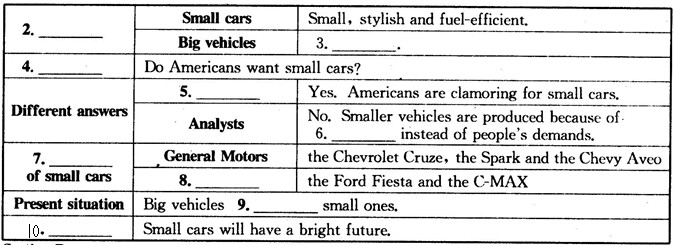
1______ 2______ 3______ 4______ 5______ 6______ 7______ 8______ 9______ 10______

1______ 2______ 3______ 4______ 5______ 6______ 7______ 8______ 9______ 10______
1. sides/faces 2. hosted/held 3. brought 4. advantages 5. improved
6. touch/contact 7. proud 8. pollution/problems 9. deserted/useless 10. possible/hidden
6. touch/contact 7. proud 8. pollution/problems 9. deserted/useless 10. possible/hidden

练习册系列答案
相关题目
| 阅读理解。 | |
| New Zealand | |
|
|
What can you see? Mountains, volcanoes, rivers, lakes, waterfalls, forests, beaches. Both islands are mountainous. In fact, only 30% of New Zealand is flat. |
| Who can you meet? Most people live on North Island. Eighty-five percent of New Zealanders are white men, whose great grandfathers came from Europe.Ten percent are Maoris. The Maoris came to New Zealand from the Polynesian islands probably around the tenth century. Europeans started to arrive in New Zealand about 200 years ago as farmers and traders. |
The Maoris When the Maoris first arrived in New Zealand, they lived in villages and were excellent fishermen, hunters and farmers. About 50 years ago many Maoris started to live and work in large cities and took jobs in government, industries, medicine and education. They are proud of their culture and are determined to keep many of the customs which are part of their way of life. |
| 1. Which of the following is a fact about New Zealand? | |
| A. Maoris make up 20% of the population. B. There are four million white people. C. It’s about 1600 km south of the Equator. D. Nearly 1/3 of the country is plains. | |
| 2. When did the white people begin to live in New Zealand? | |
| A. 1000 years ago. B. 200 years ago. C. 85 years ago. D. 50 years ago. | |
| 3. What do the Maoris value most in life? | |
| A. Living in small villages. B. Developing farming skills. C. Keeping their own culture. D. Taking up government jobs. | |