题目内容

Beijing Times reported the regulation, _____, would take effect on Jan.1, 2012.


  1. A.
    if passing
  2. B.
    if passed
  3. C.
    if it passed
  4. D.
    if it being passed
B
考查省略结构。if passed =" if" it was passed,如果被通过,选B。
练习册系列答案
相关题目

第二节 信息匹配 (共5小题;每小题2分,满分10分)

请阅读下列应用文及相关信息,并按照要求匹配信息。

以下是演讲会的资料:

A. Are you interested in “Dream of the Red Mansion” (Hong Lou Meng)? Listen to a lecture on this classical novel.

   Venue: National Museum of Chinese Modern Literature (Beijing)

   Time: 9:30 am     Price: free      Tel: 010-84615522

B. “Jiaguwen” is among the oldest pictographic characters in the world. How much do you know about it? Get all the answers at this free lecture.

   Venue: Dongcheng District Library (Beijing)

   Time: 9:00 am     Price: free      Tel: 010-64013356

C. Former United Nations interpreter Professor Wang Ruojin speaks about her experiences at the UN and shares her understanding of the cultural differences between East and West.

   Venue: National Library of China (Beijing)       Time: 1:30 pm—4:00 pm

   Price: free       Tel: 010-68488047

D. Qi Baishi, one of China’s greatest modern painters, was also a poet, calligrapher (书法家) and seal-cutter (刻印家). Can you appreciate his works? Then come to spend the time with us.

   Venue: Beijing Art Academy       Time: 9:00 am—11:00 am

   Price: 10 yuan          Tel: 010-65023390

E. It is the year of the Tiger, and you can see “Fu” everywhere. But what is “Fu” and where does it come from? Why do people hang “Fu” character upside down on the door? Get all the answers from this free lecture.

   Venue: Capital Library (Beijing)       Time: 2:00 pm

   Price: free              Tel: 010-67358114

F. About 160 cultural relics from Guangdong, Macao and Hong Kong are on display to April 15th. Meanwhile experts will talk about the important roles these three cities have played in the past two thousand years of Sino-Western exchanges.

   Venue: Beijing Art Museum         Time: 2:00 pm—5:00 pm

   Price: 20 yuan, students 10 yuan      Tel: 010-83659337

以下是想去听演讲的人员的基本信息,请匹配适合他们的演讲内容:

56. Alice is now studying in Beijing University, and she is especially interested in Chinese writing. In her spare time she enjoys drawing, writing poems and is fond of sharing her pieces with her classmates.

57. Simon comes from Egypt. He is now studying in Beijing Art Academy. He shows great interest in Chinese ancient characters. Now he wants to know much about it.

58. Lora and Peter, visiting professors from Australia, are both crazy about Chinese traditional culture. At weekends they like to call on Chinese families to learn about Chinese festivals as well as their history.

59. Edward is a senior student in Beijing Foreign Language University. He likes traveling very much and has made up his mind to work as an interpreter for some joint-venture enterprises (公司).

60. Steve and Mark are both studying in the Chinese Department of China’s Renmin University. They want to do some research on Chinese ancient literature.
阅读下列材料及相关信息,从所给的六个选项(A、B、C、D、E、F)中,选出符合各小题要求的最佳选项。选项中有一项是多余选项。以下是演讲会的资料:

A
Are you interested in “Dream of the Red Mansion”(Hong Lou Men)? Listen to a lecture on this classical novel.
Venue: National Museum of Chinese Modern Literature (Beijing)
Time: 9:30 A.m.
Price: free
Tel: 010 – 84615522
B
“Jiaguwen” is among the oldest pictographic characters in the world.How much do you know about it? Get all the answers at this free lecture.
Venue: Dongcheng District Library (Beijing)
Time: 9:00 A.m.
Price: free
Tel: 010 – 64013356
C
Former United Nations interpreter Professor Wang Ruojin speaks about her experiences at the UN and shares her understanding of the cultural differences between East and West.
Venue: National Library of China (Beijing)
Time: 1:30 p.m. – 4:00 p. m.
Price: free
Tel: 010 – 68488047
D
Qi Baishi, one of China’s greatest modern painters, was also a poet, calligrapher(书法家) and seal-cutter(刻印者). Can you appreciate his works? Then come to spend the time with us.
Venue: Beijing Art Academy
Time: 9:00 A.m. – 11:00 A.m.
Price: 10 yuan
Tel: 010 - 65023390
E
It is the year of the Dog, and you can see “Fu” everywhere. But how much do you know about dogs – man’s best friend? What is “Fu” and where does it come from? Why do people hang “Fu” character upside down on the door? Get all the answers from this free lecture.
Venue: Capital Library (Beijing)
Time: 2:00 p. m.
Price: free
Tel: 010 - 67358114
F
About 160 cultural relics from Guangdong, Macao and Hong Kong are on display to April 15th. Meanwhile experts will talk about the important roles these three cities have played in the past two thousand years of Sino–Western exchanges.
Venue: Beijing Art Museum
Time: 2:00 p. m. – 5:00 p. m.
Price: 20 yuan, students 10 yuan
Tel: 010 - 83659337
 
以下是想去听演讲的人员的基本信息,请匹配适合他们的演讲内容。
1. Alice is now studying in Beijing University, and she is especially interested in Chinese writing. In her spare time she enjoys drawing, writing poems and is fond of sharing her pieces with her classmates.
2. Simon comes from Egypt. He is now studying in Beijing Art Academy. He shows great interest in Chinese ancient characters. Now he wants to know much about it.
3. Lora and Peter, visiting professors from Australia, are both crazy about Chinese traditional culture. At weekends they like to call on Chinese families to learn about Chinese festivals as well as their history.
4. Edward is a senior student in Beijing Foreign Language University. He likes traveling very much and has made up his mind to work as an interpreter for some joint–venture enterprises (合资企业).
5. Steve and Mark are both studying in the Chinese Department of China’s Renmin University. They want to do some research on Chinese ancient literature.

请阅读下列应用文及相关信息,并按照要求匹配信息。请在答题卡上将对应题号的相应选项字母涂黑。以下是演讲会的资料:

A

   Are you interested in “Dream of the Red Mansion”(Hong Lou Meng)? Listen to a lecture on this classical novel.

Venue: National Museum of Chinese Modern Literature (Beijing)

Time: 9:30 A.m.

Price: free

Tel: 010 – 84615522         B

  “Jiaguwen” is among the oldest pictographic characters in the world.How much do you know about it? Get all the answers at this free lecture.

Venue: Dongcheng District Library (Beijing)

Time: 9:00 a.m.

Price: free

Tel: 010 – 64013356

C

   Former United Nations interpreter Professor Wang Ruojin speaks about her experiences at the UN and shares her understanding of the cultural differences between East and West.

Venue: National Library of China (Beijing)

Time: 1:30 p.m. — 4:00 p. m.

Price: free

Tel: 010 – 68488047         D

   Qi Baishi, one of China’s greatest modern painters, was also a poet, calligrapher(书法家) and seal-cutter(刻印者). Can you appreciate his works? Then come to spend the time with us.

Venue: Beijing Art Academy

Time: 9:00 A.m. – 11:00 A.m.

Price: 10 Yuan

Tel: 010 - 65023390

E

   It is the year of the Dog, and you can see “Fu” everywhere. But how much do you know about dogs–man’s best friend? What is “Fu” and where does it come from? Why do people hang “Fu” character upside down on the door? Get all the answers from this free lecture.

Venue: Capital Library (Beijing)

Time: 2:00 p. m.

Price: free

Tel: 010 - 67358114 F

   About 160 cultural relics from Guangdong, Macao and Hong Kong are on display to April 15th. Meanwhile experts will talk about the important roles these three cities have played in the past two thousand years of Sino–Western exchanges.

Venue: Beijing Art Museum

Time: 2:00 p. m. – 5:00 p. m.

Price: 20 Yuan, students 10 Yuan

Tel: 010 - 83659337

以下是想去听演讲的人员的基本信息,请匹配适合他们的演讲内容。

1.Alice is now studying in Beijing University, and she is especially interested in Chinese writing. In her spare time she enjoys drawing, writing poems and is fond of sharing her pieces with her classmates.

2.Simon comes from Egypt. He is now studying in Beijing Art Academy. He shows great interest in Chinese ancient characters. Now he wants to know much about it.

3.Lora and Peter, visiting professors from Australia, are both crazy about Chinese traditional culture. At weekends they like to call on Chinese families to learn about Chinese festivals as well as their history.

4.Edward is a senior student in Beijing Foreign Language University. He likes traveling very much and has made up his mind to work as an interpreter for some joint–venture enterprises (合资企业).

5.Steve and Mark are both studying in the Chinese Department of China’s Renmin University. They want to do some research on Chinese ancient literature.


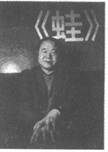
Neatly putting an emphasis on his storytelling skill is how writer Mo Yan began his Nobel Lecture in Literature speech, “Storyteller”, on Friday (Saturday, Beijing time) in Stockholm.

For 40 minutes he talked about his mother’s   36  on him as a person and a writer, his literary inspirations, and how he   37  with the controversy(争论)that followed the announcement of his Nobel victory.

He told his audience that as a boy he told stories to cheer up his mother, and   38  that poverty and loneliness fueled his imagination as a writer after he grew up.   39 , authors such as William Faulkner and Gabriel Garcia Marquez   40  him, he said, especially their bold and unlimited writing style.

“A person should be   41  in daily life, but follow one’s instinct(本能)and take control when it   42  to literary creation.”

He said the soul of   43  all of his works is the boy in Transparent Carrot who has an almost superhuman ability to bear   44 . He added that he also tried to make his hometown of Gaomi in Shandong Province a microcosm(缩影)of China and even the   45 .

His greatest challenge, he said, was writing novels that deal with   46  realities.

“In writing about the dark aspects of society there is a(n)  47  that emotions and anger allow politics to limit literature.”

He said literature must be   48  on real life but go beyond it.

He also mentioned the   49  surrounding his selection as Nobel winner, saying he was showered with many flowers.   50  he was a target for “stone throwers”.

“At first I thought I was the   51  of the controversies, but over time I’ve come to realize that the real target was a person who had   52  to do with me.”

Mo   53  his lecture by saying he was made to feel like an actor in a play with all the attention he was   54 , but he had decided that the best way to communicate his thoughts was to   __55  writing.

1.                A.affection        B.influence       C.occasion  D.position


2.                A.agreed         B.fought          C.dealt D.did


3.                A.added          B.warned         C.reminded D.imagined


4.                A.However       B.Otherwise       C.Therefore D.Besides


5.                A.preserved      B.inspired        C.entertained   D.taught


6.                A.confident       B.certain         C.comfortable   D.modest


7.                A.goes           B.comes          C.turns D.gets


8.                A.nearly          B.hardly          C.scarcely  D.always


9.                A.danger         B.suffering        C.relieving  D.happiness


10.               A.city            B.village          C.world D.province


11.               A.social          B.economical      C.agricultural D.cultural


12.               A.encouragement  B.danger         C.advantage D.event


13.               A.insisted        B.spent          C.based D.passed


14.               A.contradiction    B.contest         C.contrary   D.controversy


15.               A.Meanwhile      B.Otherwise      C.However  D.Instead


16.               A.goal           B.intention       C.target D.purpose


17.               A.somebody      B.anything        C.nothing   D.anybody


18.               A.adopted        B.concluded      C.admitted  D.concerned


19.               A.throwing       B.accepting       C.offering   D.receiving


20.               A.carry on        B.take on         C.bring out  D.put out


New York, the city that never sleeps, fell silent last week—schools were closed; bus and subway services were stopped; flights were canceled, and even the stock market closed for the first time since 1985. All the disorder was caused by one thing, the arrival of hurricane Sandy.

This big storm landed on Oct 29 on the US east coast and brought damaging winds, flooding, blackouts (停电) and heavy snow.

Sandy is one of the largest storms that have ever hit the US, according to the National Oceanic and Atmospheric Administration. By the afternoon of Nov1 (Beijing time), about 140 deaths were caused by the storm as it traveled across the Caribbean islands and into the US.

Unlike most hurricanes that happen during summer, Sandy was strengthened not only by warm ocean water, but also by the cold air coming from the northwest. Sandy’s power grew because of the difference in masses between the warm and wet air and cool and dry air. It became a kind of “super-storm”, the Guardian reported.

The flooding was particularly severe. Scientists said it was because Sandy’s arrival happened together with a full moon, which normally means higher-than-usual tides (潮水).

“The most worrying aspect of Sandy is the high tides,” Rhode Island Governor Lincoln Chafee told Reuters before the storm arrived. “With the full moon on Monday, with Sandy coming up the bay, we’re very concerned about flooding in our low-lying coastal areas.”

Apart from the power of Sandy itself, another reason why her arrival has caused so much damage is that its target area is crowded with big cities such as New York and Philadelphia. These urban areas are home to tens of millions of people. The flood, the snow and the blackout have brought the country’s financial and political centers to a stop. 

“The size of this alone, affecting a heavily populated area, is history making.” Said Jeff Masters, a hurricane specialist.

1.The author mentioned the disorder in New York city at the beginning of the article to _______.

A.remind us of the problems people might face when disaster strikes

B.introduce the disastrous influence of hurricane Sandy

C.criticize the poor management of the city by the New York government

D.prove New York suffered most from hurricane Sandy

2.According to the text, hurricane Sandy _______.

A.only got its power from the warm ocean water

B.grew stronger than other hurricanes because of the full moon

C.led to flooding in many cities around the US

D.brought with it strong winds, high tides, blackouts and heavy snowfall

3.From the article, we learn that areas hurricane Sandy targeted _______.

A.were mostly high land

B.were mostly near the sea

C.were far away from important cities

D.were empty as people were evacuated (疏散)

4.What is the main point of the article?

A.To show how a super-storm comes into being.

B.To explain why hurricane Sandy was so destructive.

C.To show that big cities in the US are easily affected by huge hurricanes.

D.To explore the best ways to avoid loss when a hurricane hits.


违法和不良信息举报电话:027-86699610 举报邮箱:58377363@163.com

精英家教网