题目内容

The traditional distinction between products that satisfy needs and those that satisfy wants is no longer adequate to describe classes of products. In today’s prosperous societies, the distinction has become unclear because so many wants have been turned into needs. A writer, for instance, can work with paper and pencils. These are legal needs for the task. But the work can be done more quickly and efficiently with a word processor. Thus a computer is soon viewed as a need rather than a want.
In the field of marketing, consumer goods are classed according to the way in which they are purchased. The two main classes are convenience goods and shopping goods. Two lesser types are specialty goods and unsought(主动提供的) goods. It must be emphasized that all of these types are based on the way shoppers think about products, not on the nature of the products themselves. What is regarded as a convenience item in France (wine, for example) should be a specialty goods in the United States.
People do not spend a great deal of time shopping for such convenience items as groceries, newspapers, toothpaste, aspirin, and candy. The buying of convenience goods may be done routinely, as some families buy groceries once a week. Such regularly purchased items are called staples. Sometimes convenience products are bought without enough thinking; someone has a sudden desire for an ice cream sundae(圣代) on a hot day. Or they may be purchased as emergency items.
Shopping goods are items for which customers search. They compare prices, quality, and styles, and may visit a number of stores before making a decision. Buying an automobile is often done this way.
Shopping goods fall into two classes; those that are recognized as basically the same and those that are regarded as different. Items that are looked upon as basically the same include such things as home appliances, television sets, and automobiles. Having decided on the model desired, the customer is primarily interested in getting the item at the most favorable price. Items regarded as essentially different include clothing, furniture, and dishes. Quality, style and fashion will either take precedence(优先) over price, or they will not matter at all

  1. 1.

    It can be learned from the first paragraph that ______

    1. A.
      a writer needs a word processor
    2. B.
      needs and wants can’t be separated clearly
    3. C.
      the way to distinguish the products is unimportant
    4. D.
      a computer is a need rather than a want
  2. 2.

    The example of wine is used to illustrate that ______

    1. A.
      goods are classified differently in different countries
    2. B.
      the types of the product lie on the people rather than its nature
    3. C.
      Frenchmen often drink but Americans sometimes do
    4. D.
      one product may belong to many types
  3. 3.

    Staples are items that ______

    1. A.
      are convenient to purchase
    2. B.
      are purchased without enough thinking
    3. C.
      people “want but don’t need”
    4. D.
      people are in constant need of
  4. 4.

    Shopping goods that are considered as basically the same are those that ______

    1. A.
      consumers don’t care where to buy them
    2. B.
      consumers spend much time searching for
    3. C.
      satisfy similar needs of the consumer
    4. D.
      can be found in nearly every shop
BBDC
文章介绍在当今物质繁荣的社会,满足人们需要和需求的商品之间的区别已经变得模糊,购买类商品分为两类:一类是大体上被认为是一致的;一类是被认为不一致的。
1.推理判断题 根据第一段第二句...the distinction has become blurred because so many wants have been turned into needs.可知,第一段主要是阐述"需求和需要不能被清楚地区分开来",故选B
2.推理判断题 第二段说到,It must be emphasized that all of these types ...not on the nature of the products themselves,接下来,就以wine为例加以说明,因此B)"产品类型取决于人,而不是产品的本质"为最佳答案。选B
3.细节题:从第三段的句子:Such regularly purchased items are called staples.可知Samples指的是人们不断的需求的商品,D正确。
4.推理判断题 根据第五段首句及第二句Items that are looked upon as basically the same include...,该句中的item就是指第一句提到的shopping goods,我们可以知道,基本一样的购买类商品就是指人们都可能需要的诸如家具、电视机之类的商品,因此是迎合顾客类似需求的商品",选C
考点:考查社会现象类短文
练习册系列答案
相关题目

Nowadays, a cellphone service is available to everyone, everywhere. Probably thousands of people have already been using it, but I just discovered it, so I'm going to claim it and also name it: Fake Foning.
The technology has been working well for me at the office, but there are infinite(无限的) applications. Virtually in any public space.
Say you work at a big university with lots of talky faculty members buzzing about. Now, say you need to use the restroom. The trip down the hall will take approximately one hour, because a person can't walk into those talky people without getting pulled aside for a question, a bit of gossip, a new read on a certain line of Paradise Lost.
So, a cellphone. Any cellphone. Just pick it up. Don't dial. Just hold that phone to your face and start talking. Walk confidently down the hall engaged in fake conversation, making sure to tailor both the topic and content to the person standing before you whom you are trying to avoid.
For standard colleague avoidance, I suggest fake chatting about fake business:
"Yes, I'm glad you called, because we really need to hammer out the details. What's that? Yes, I read Page 12, but if you look at the bottom of 4, I think you can see the problem begins right there."
Be engaged in your fake fone conversation. Make eye contact with the people passing, nod to them, gesture keen interest in talking to them at a later time, point to your phone, shrug and move on.
Shoppers should consider fake foning anytime they spot a talky neighbor in the produce department pinching (用手捏) unripe peaches. Without your phone at your face, you'd be in for a 20-minute speech on how terrible the world is.
One important caution about fake foning. The other day I was fake foning my way past a colleague, and he was actually following me to get my attention. I knew he wanted to ask about a project I had not yet finished. I was trying to buy myself some time, so I continued fake foning with my doctor. "So I don't need the operation? Oh, doctor, that is the best news."
And then: Brrrrrrng! Brrrrrmg! Brrrrrmg! My phone started ringing, right there while it was planted on my face. My colleague looked at me, and I at him, and naturally I gasped. "What is the matter with this thing?" I said, pulling the phone away to look at it, and then putting it back to my ear.
"Hello? Are you still there?"  Oops

  1. 1.

    According to the passage Fake Foning is _______________________

    1. A.
      a strategy to avoid people
    2. B.
      a device newly produced
    3. C.
      a service provided everywhere
    4. D.
      a skill of communication
  2. 2.

    In the author's opinion, in order to make fake foning look real one has to__________________

    1. A.
      talk about interesting matters
    2. B.
      behave politely to people passing by
    3. C.
      hold the phone while walking
    4. D.
      appear absorbed in conversation
  3. 3.

    What does the last example show?

    1. A.
      One effective way is to fake fone one's doctor
    2. B.
      One has to be careful while fake foning
    3. C.
      Fake foning may not cheat people
    4. D.
      Fake foning is always quite successful
  4. 4.

    After his phone suddenly began ringing, the author___________________

    1. A.
      immediately started talking to the caller
    2. B.
      immediately started talking to his colleague
    3. C.
      put the phone away and stopped talking
    4. D.
      continued with his fake conversation
  5. 5.

    What is the tone of the passage?

    1. A.
      Critical
    2. B.
      Humorous
    3. C.
      Serious
    4. D.
      Unclear

“A very destructive seven-year old child kicked my legs and scratched at my hand,” said one teacher. “I broke up a fight and was kicked,” said another. Many people have heard stories like this. But the situation is more worrying still and it involves parents.
Every child, regardless of the circumstances into which they are born, has the right to achieve their potential, regardless of their parents’ wealth and class. And we recognize that, as a nation, it is a long way to achieve this goal. But rights come with responsibilities and what worries people is that we are in danger of neglecting the latter.
Far too many children are behaving badly at school, even to the point of being violent to staff. This is terrible enough,but it is hard to be surprised since many children are just mirroring the behavior of their parents. Too many are starting school unable to hold a knife and fork, unused to eating at a table,and unable to use the lavatory properly.
We are in danger of becoming a nation of families living separate lives under one roof. The bedroom, once a place to sleep, has become the living space for the young. Spending hours in front of computer screens, on social networking sites or being immersed in computer games, children and young people spend little time with their parents. Parents are unable to monitor just what their children are watching.
Schools cannot right the wrongs of society and teachers cannot become substitute parents. Both parties need to work together. Parents must be helped and given confidence to take back control. They are responsible for setting boundaries for their children’s behavior and sticking to those boundaries when the going gets tough. They are responsible for setting a good example to their children and for devoting that most precious of resources---time---so that children come to school ready and willing to learn

  1. 1.

    What problem do people ignore in the writer’s opinion?

    1. A.
      The school violence
    2. B.
      The pressure of students’ learning
    3. C.
      The right to achieve students’ potential
    4. D.
      Students’ responsibilities
  2. 2.

    The writer’s attitude to the behaviors of parents may be that of        

    1. A.
      dissatisfaction
    2. B.
      sympathy
    3. C.
      understanding
    4. D.
      tolerance
  3. 3.

    The underlined part in Paragraph 4 may mean        

    1. A.
      children don’t live with their parents in the same room
    2. B.
      parents care little about children’s life at home
    3. C.
      children spend little time with their parents at home
    4. D.
      parents attempt to establish a good relationship with their children
  4. 4.

    From the last paragraph,we can infer that      

    1. A.
      school can’t correct the wrongs that society does to teachers
    2. B.
      teachers have no responsibility for playing the role of parents
    3. C.
      parents should spend time with children making them ready to learn
    4. D.
      students are responsible for making themselves known in society
  5. 5.

    What is the main idea of the passage?

    1. A.
      Children’s behavior at school is worrying people
    2. B.
      Parents expect schools to correct their children’s bad habits
    3. C.
      There is no point in parents’teaching children at home
    4. D.
      Don’t blame teachers when it’s parents who are failing

London—coffee protects mice from radiation and could get the same way in humans, according to Indian scientists.
Scientist at India’s Bhabha Atomic Research Center discovered that mice injected with caffeine (咖啡因)remained alive after high doses(剂量)of normally lethal radiation.
Although the study was limited to animals, Kachadillilli George, head of the research team, believes the findings could have implications (something suggested )  for humans .
“It does suggest that coffee might have some beneficial effects in protecting against radiation,” he told New Scientist magazine late last month.
George and his team injected 471 mice with caffeine and left them uncovered to 7.5 grays of gamma radiation(伽玛射线),enough to kill most mice. But 25 days later 70 percent of the mice that had received 80 milligrams(毫克)of caffeine per kilogram of body weight were still alive.
On the contrary all 196 mice that had been left uncovered to the same radiation but had not been given any caffeine died

  1. 1.

    George and his team drew the conclusion from    

    1. A.
      the magazine
    2. B.
      their invention
    3. C.
      the experiment
    4. D.
      their experience
  2. 2.

    From the news, we know     can be protected from radiation

    1. A.
      both mice and humans
    2. B.
      only mice
    3. C.
      only humans
    4. D.
      neither humans nor mice
  3. 3.

    From paragraph 5, we know 30 percent of the mice died 25 days later. The reason was probably that     

    1. A.
      these mice had been given only 80 milligrams of caffeine
    2. B.
      these mice hadn’t been injected with caffeine
    3. C.
      these mice were very big and strong
    4. D.
      these mice hadn’t been given enough caffeine
  4. 4.

    Which is the best title of the article?

    1. A.
      Human and Mice
    2. B.
      New Radiation Defense—Coffee
    3. C.
      Deadly Radiation—Gamma Radiation
    4. D.
      Mice Died of Caffeine
  5. 5.

    In paragraph 2,the underlined word “ lethal ”means   

    1. A.
      causing death
    2. B.
      lively
    3. C.
      exciting
    4. D.
      rich


Virginia is set to begin enforcing the toughest drunken-driving punishment, one that will require thousands of first-time offenders—whether they were highly drunk or slightly over the limit—to install in their cars blood- alcohol testing devices that can lock the ignition. The devices work like this—A driver must blow into a blood alcohol device linked to the car’s ignition. If the result is higher than the legal limit, the car will not start. The device also requires random “rolling retests” once the driver is on the road.
Virginia’s current law requires only repeated offenders or those with a blood alcohol level of 0.15 or higher to have an ignition interlock device in their cars.
The new law, which takes effect in July, will roughly increase the number of people required to use ignition interlock devices four times, and offenders will have to pay about $ 480 for a typical six-month installation.
The measure has caused a debate between groups battling drunken driving and those representing offenders. Such groups as Mother Against Drunken Driving and The Washington Regional Alcohol Program say that Virginia’s 274 alcohol-related road deaths and more than 5,500 injuries in 2010 remained unacceptably high despite years of cracking down on drunken driving. Ignition interlock devices, they say, reduce repeat offenses. But some public defenders and lawyers argue that the devices are too severe a punishment for offenders at the legal blood alcohol limit 0.08, and that the court system will be burdened by more cases going to trial and lower-income drivers will be affected by the fees.
Del. Sal R. Iaquinto, who sponsored the bill, had a simple reply for concerns about the costs of the interlock devises: “How much does a life cost?” “Blowing into a tube for six months, you will remember that,” Iaquinto said, “And you’re not likely to offend again.”

  1. 1.

    The underlined word “ignition” in Paragraph 1probably refers to the part in a car where ___________

    1. A.
      the alarm goes off
    2. B.
      the engine starts
    3. C.
      the door opens
    4. D.
      the car is fueled
  2. 2.

    Who are required to install the blood alcohol devices according to the current law?

    1. A.
      The first time drunken-driving offenders
    2. B.
      The drivers who are not able to pay offence fees
    3. C.
      The repeat drunken-driving offenders
    4. D.
      Drivers whose blood alcohol level is below 0.15
  3. 3.

    The reason why some defenders and lawyers oppose the new law is that ____________

    1. A.
      fewer cases go to trial
    2. B.
      lower-income drivers will not afford to drink again
    3. C.
      interlock devices increase repeat offenses
    4. D.
      the devices are too severe a punishment for offenders
  4. 4.

    The debate aroused by the measure implies that ___________

    1. A.
      prevention is better than cure
    2. B.
      no law is absolutely perfect
    3. C.
      punishment is the key to all
    4. D.
      justice has long arms
  5. 5.

    What is Del. Sal R. Iaquinto’s attitude towards the new law?

    1. A.
      Negative
    2. B.
      Indifferent
    3. C.
      flexible
    4. D.
      workable

After her husband had gone to work, Mrs Richards send her children to school and went upstairs to her bedroom. She was too excited to do any housework that morning.
In the evening she would go to a fancy dress party with her husband. She wanted to dress up as a ghost and as she had made her costume the night before, she was impatient to try it on. Though the costume consisted only of a sheet, it was really splendid. After putting it on, She went downstairs to find out whether it would be comfortable to wear.
Just as Mrs Richards was entering the dining-room, there was a knock on the front door. She knew it must be the baker. She had told him to come straight in if ever she failed to open the door and to leave the bread on the table. Not wanting to frighten the poor man, she quickly hid in the small store-room under the stair. She heard the front door opened and heavy footsteps in the hall. Suddenly the door of the store-room was opened and in came a man. Mrs Richards realized it must be the man from the Electricity Board who had come to read the meter. She tried to explain the situation, saying “It’s only me. ” but it was too late, the man let out a cry and jumped back several paces. When Mrs Richards walked towards him, he fled, losing the door heavily behind him

  1. 1.

    The reason for Mrs Richards’ excitement that day was that______.

    1. A.
      she had sent her children to school
    2. B.
      she was to attend an evening party
    3. C.
      she wouldn’t do any housework that morning
    4. D.
      she had made a special costume the night before
  2. 2.

    Mrs Richards went downstairs with the costume on so as to______.

    1. A.
      made sure that the costume fitted her well
    2. B.
      frighten the person who was knocking on the door
    3. C.
      find out if she had finished the costume
    4. D.
      receive the bread and do some cooking
  3. 3.

    The man who was knocking at the door was______.

    1. A.
      a baker
    2. B.
      a thief
    3. C.
      her husband
    4. D.
      an electricity man
  4. 4.

    What did the man do after he knocked on the front door?

    1. A.
      He entered just as Mrs Richards had told him to
    2. B.
      He did not do anything as Mrs Richards had expected him to
    3. C.
      He stepped directly towards the meter.
    4. D.
      He went straight in so as to find Mrs Richards
  5. 5.

    The man______and that made him cry out and run away

    1. A.
      thought he must have met a ghost
    2. B.
      recognized Mrs Richards
    3. C.
      found out Mrs Richards was walking towards him
    4. D.
      thought that Mrs Richards must have recognized him

Children today are crazy about roller skating(溜冰), for it's easy and fun. After supper on week days, anytime on weekends and especially any day in school holidays, so many roller skaters flow into streets, squares, parks and playgrounds. What a beautiful sight!
But a long time ago, roller skating was a different story. Before 1750, the idea of skating didn't exist. That changed because of a man named Joseph Merlin,whose work was making musical instruments. In his spare time he liked playing the violin. Merlin was a man of ideas and dreams. People called him a dreamer.
One day Merlin received an invitation to attend a fancy dress ball. Very pleased and a little excited, he accepted it. As the day of the party came near, Merlin began to think hard how to make an impressive entrance at the party. A strange idea struck him one day—he would get a lot of attention if he could skate into the room.
He tried different ways to make himself roll. Finally, he decided to put two wheels under each shoe. These were the first roller skates. Very proud of his invention, he couldn't wait for the special day to come, when he would arrive at the party on wheels while playing the violin.
On the night of the party Merlin did as he had planned, rolling into the room playing his violin. Quite astonished,all present cast their eyes over him. Then, unexpectedly, came one problem. Merlin had no way to stop his roller skates. He rolled on and on. Suddenly, he ran into a huge mirror that was hanging on the wall. Down fell the mirror, breaking to pieces. Nobody forgot Merlin's grand entrance for a long time!

  1. 1.

    Merlin was considered a dreamer because he ________

    1. A.
      always dreamed while sleeping
    2. B.
      had very rich imagination
    3. C.
      often gave others surprises
    4. D.
      invented the roller skates
  2. 2.

    Merlin roller skated into the room in order to ________

    1. A.
      arrive at the party on time
    2. B.
      impress the party guests
    3. C.
      test his new roller skates
    4. D.
      make the host satisfied
  3. 3.

    The main point the writer tries to make in the last paragraph is ________

    1. A.
      the party guests laughed at Merlin
    2. B.
      the roller skates needed improving
    3. C.
      Merlin got himself into great trouble
    4. D.
      Merlin succeeded beyond expectation
  4. 4.

    The text is mainly about ________

    1. A.
      an unusual party
    2. B.
      a funny musician
    3. C.
      the origin of roller skating
    4. D.
      the great joy Merlin brought

If you want to teach your children how to say sorry, you must be good at saying it yourself, especially to your own children. But how you say it can be quite tricky.
If you say to your children "I'm sorry I got angry with you, but...", what follows that "but" can make the apology ineffective:"I had a bad day" or "your noise was giving me a headache" leaves the person who has been injured feeling that he should be apologizing for his bad behavior in expecting an apology.
Another means by which peaple appear to apologize without actually doing so is to say "I'm sorry you're upset"; this suggests that you are somehow at fault for allowing yourself to get upset by what the other person has done.
Then there is the general, all-covering apology, which avoids the necessity of identifying a specific act that is particularly hurtful or insulting, and which the person who is apologizing should promise never to do again. Saying "I'm useless as a parent" does not commit a person to any specific improvement.
These pseudo-apologies(假道歉) are used by people who believe saying sorry shows weakness. Parents who wish to teach their children to apologize should see it as a sign of strength, and therefore not take these pseudo-apologies.
But even when presented with examples of real apology, childfen still need help to become aware of the complexities of saying sorry.  A three-year-old might need help in un- derstanding that other children feel pain just as he does, and that hitting a playmate over the head with a heavy toy requires an apology. A six-year-old might need reminding that spoiling other children's expectations can require an apology. A 12-year-old might need to be shown that destroying the biscuit tin without asking permission is acceptable, but that
borrowing a parent's clothes without permission is not

  1. 1.

    If a mother adds "but" to an apology, ________

    1. A.
      the child may find the apology easier to accept
    2. B.
      the child may feel that he owes her an apology
    3. C.
      she promises never to do it again
    4. D.
      she does not realize that the child has been hurt
  2. 2.

    According to the author, saying "I am sorry you are upset" most probably means “_______”

    1. A.
      You have good reason to get upset
    2. B.
      I apologize for hurting your feelings
    3. C.
      I am at fault for making you upset
    4. D.
      I am aware you are upset, but I am not to blame
  3. 3.

    It is not advisable to use the general, all-covering apology because _______

    1. A.
      it is not clear and ineffective
    2. B.
      it is hurtful and insulting
    3. C.
      it may make the other person feel faulty
    4. D.
      it gets one into the habit of making empty promises
  4. 4.

    We learn from the last paragraph that in teaching children to say sorry_______

    1. A.
      the complexities involved should be ignored
    2. B.
      parents need to set them a good example
    3. C.
      their ages should be taken into account
    4. D.
      parents should be patient and tolerant
  5. 5.

    It can be inferred from the passage that apologizing properly is________

    1. A.
      a sign of social,progress
    2. B.
      not as simple as it seems
    3. C.
      not necessary among family members
    4. D.
      a social issue calling for immediate attention

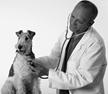
I suppose that having been brought up in the countryside and close  to animals,it wasn’t remarkable(不平常的)when I decided  to become a vet(兽医).Luckily I was also good at all the necessary science subjects. So after the college entrance examination I found myself at a veterinary college,training to look after animals in all kinds of situations. I hoped that I would be able to work in the research field so that I could find cures for animal diseases.
Much to my surprise,I found public health care was a very important aspect of my course. This is an area of animal medicine where a vet’s work has many things in common with the work of a doctor of human diseases. I particularly liked it because I recognized that the study of animal diseases can help human medicine. As we know,many infectious diseases come from animals—including SARS and bird flu.
Some of the infections have only been understood after carefully analytical work in labs by animal doctors. They helped identify the animal source for diseases such as SARS. They were also the first to identify various kinds of viruses. Sometimes vets are also able to suggest a cure for human illnesses. When I found this out I was determined to make public health medicine my chosen career.
After graduation,I applied for a job in public health. Soon I found myself concerned with the problem of bird flu. This is  an illness that attacks birds,but humans can catch the disease  if they are in close contact with infected birds. Though the job  is dangerous,it makes me proud that vets and other animal  disease researchers are in the front line helping to fight these  unknown human diseases

  1. 1.

    The writer wanted to become a vet mainly because______

    1. A.
      he did well in all necessary subjects
    2. B.
      he wanted to help animals
    3. C.
      he was close to animals in his early life
    4. D.
      he wanted to find cures for human diseases
  2. 2.

    What made the writer particularly like the course of public health care was that________

    1. A.
      it was both important and interesting
    2. B.
      it could help him connect many human diseases with animals
    3. C.
      it made a vet’s work very much like a doctor’s
    4. D.
      it could help human medicine by studying animal diseases
  3. 3.

    What can be followed if this passage continues?

    1. A.
      The writer’s happy family life
    2. B.
      How the writer did research work in studying bird flu
    3. C.
      How the writer dealt with the relationship with other workmates
    4. D.
      What difficulty the writer met in the research work
  4. 4.

    Which of the following is implied in the passage?

    1. A.
      Animals with infectious diseases should be killed
    2. B.
      Keeping animals is dangerous to humans
    3. C.
      Dangerous as a vet’s job is,it is significant to the human race
    4. D.
      Animal researchers work in the same way as human doctors
  5. 5.

    Which of the following statements is NOT true?

    1. A.
      Being a vet is helpful to both animals and humans
    2. B.
      Vets can cure both animals and humans
    3. C.
      Vets helped identify animal resources for SARS
    4. D.
      Both SARS and bird flu are infectious diseases coming from animals

违法和不良信息举报电话:027-86699610 举报邮箱:58377363@163.com

精英家教网