题目内容
【题目】Directions: Fill in each blank with a proper word chosen from the box. Each word can be used only once. Note that there is one word more than you need.

Bill Drayton believes we’re in the middle of a necessary but painful historical transition. For millenniums most people’s lives had a certain 【1】. You went to school to learn a trade or a skill-baking, farming or accounting. Then you could go into the workforce and make a good living repeating the same skill over the course of your career.
But these days machines can do pretty much anything that’s 【2】. The new world requires a different sort of person. Drayton calls this new sort of personal changemaker.
Changemakers are people who can see the patterns around them, identify the problems in any situation, figure out ways to solve the problems in any situation, figure out ways to solve the problem, organize fluid teams, lead collective action and then 【3】 adapt as situations change.
For example, Ashoka fellow Andrés Gallardo is a Mexican who lived in a high crime neighborhood. He created an app, called Haus, that allows people to 【4】 with their neighbors. The app has a panic button that 【5】 everybody in the neighborhood when a crime is happening. It allows neighbors to organize, chat, share crime statistics and work together.
To form and lead this community of communities, Gallardo had to possess what Drayton calls “cognitive empathy-based living for the good of all.” Congnitive empathy is the ability to perceive how people are feeling in 【6】 circumstances. “For the good of all” is the capacity to build teams.
It doesn’t matter if you are working in the cafeteria or the inspection line of a plant, companies will now only hire people who can 【7】 problems and organize responses.
Millions of people already live with the mind-set. But a lot of people still inhabit the world of following rules and repetitive skills. They hear society telling them: We don’t need you. We don’t need your kids, either.” Of course, those people go into reactionary mode and strike back.
The central 【8】 of our time, Drayton says, is to make everyone a changemaker. In an earlier era, he says, society realized it needed universal 【9】. Today, schools have to develop the curriculums and assessments to make the changemaking mentality universal. They have to understand this is their criteria for success.
Ashoka has studied social movements to find out how this kind of 【10】 shift can be promoted. It turns out that successful movements take similar steps.
【答案】
【1】D
【2】A
【3】B
【4】H
【5】C
【6】I
【7】E
【8】G
【9】K
【10】F
【解析】
本文属于议论文,现在机器几乎可以做任何事情。新世界需要不同类型的人。德雷顿称这种新类型的人是变革者。
【1】考查名词。句意:几千年以来,大多数人的生活都有一个特定的模式。根据后一句You went to school to learn a trade or a skill-baking, farming or accounting. Then you could go into the workforce and make a good living repeating the same skill over the course of your career.可知,去学校学商业或者学习一门技术,然后利用这门技术来过上幸福生活,故可以推出大部分的生活都有一定的模式,故选pattern(模式),故选D。
【2】考查形容词。句意:但是如今机器可以作所有重复性的事情。根据后文可知,现代社会需要的是能够解决问题,组建一个流畅的团队,因而可以得出,机器可以取代人类做重复性的事情,故用repetitive(重复性的),故选A。。
【3】考查副词。句意:变革者就是那些能够看清自己周围的模式,识别存在的问题,找到解决问题的办法,组建一个流利的团队,领导集体性行动,以及不断适应不断改变的环境。根据本句adapt as situations change可知,变革者需要不断适应环境,故用continually,故选B。
【4】考查动词。句意:他制作了一个软件叫Haus,能够把邻居组成一个网络。根据后文It allows neighbors to organize, chat, share crime statistics and work together可知,这个软件可以把邻居联系在一起,故用network(组建网络),故选H。
【5】考查动词。句意:这个软件有一个紧急按钮,当有犯罪行为发生的时候,按了按钮之后就能够及时提醒邻居。分析句子可知,本句讲述app的作用,故用alerts(警示), 故选C。
【6】考查形容词。句意:认知移情就是理解人们在不断进化的环境中感受的能力。分析文章可知,本文讲述随着时代的发展,我们需要的人才和能力也是不同的,因而选evolving(进化的),故选I。
【7】考查动词。句意:如果你现在在自助餐厅或者电站的检测线上工作,没关系,因为这些公司以后只会雇佣那些能够发现问题和解决问题的人。根据文章The new world requires a different sort of person. Drayton calls this new sort of personal changemaker.可知,现在社会需要的是能够发现和解决问题的人,故用locate(定位),故选E。
【8】考查名词。句意:Drayton说,我们这个时代最主要的挑战就是让每个人都成为变革者。根据后文Today, schools have to develop the curriculums and assessments to make the changemaking mentality universal. They have to understand this is their criteria for success.可知,学校需要做出改变来培养变革者,这也是很大的挑战,故选G。
【9】考查名词。句意:他说,在早期时代,社会意识到大家都必需要具备读写能力。根据后文Today, schools have to develop the curriculums and assessments to make the changemaking mentality universal.可知,学校必须做出改变,故选literacy(读写能力),故选K。
【10】考查形容词。句意:Ashoka研究了社会变革来找出怎样才能促进这种精神转变。根据前文可知,本文主要讲述人们意识的改变,故用mental,故选F。

 名校课堂系列答案
【题目】
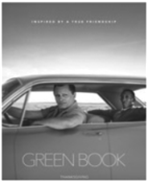
Green Book—a touching story of friendship against all odds Need a warm break from cold Oscar films? Try “Green Book”, a film that leaves you feeling good instead of like a disaster victim. The lighthearted drama, about a road trip by two men—one white, one black—is absolutely optimistic. | |
| The movie, set in 1962, is based on the true story of two New Yorkers. Tony Lip is a bodyguard from Italy, where he’s famed for his ability to silence fights. Don Shirley, a black pianist, asked him to be his driver on a performance tour to the Deep South of America, where racism was most serious then. Lip is fine behind the wheel, but what’s more useful to his passenger is his talent for ending conflicts with his fists. Cities such as Birmingham, Ala., and Macon, were dangerous during the era of the early 60s. The book of the film’s title is “The Negro Motorist Green-Book”, which helped black travelers find safe accommodations. |
In the film, the ups and downs of their journey are told with the changing settings. They start out in Pittsburgh and Cleveland, in nice hotel rooms and at fascinating parties. It’s when they reach Louisville, Ky., that the first “Colored Only” hotel sign appears, and the attitudes turn hateful, even for the Italian. Anyway, a partnership is born during the trip: Shirley tickles the keys while Lip strikes the thugs(暴徒). The loving screenplay of “Green Book”—written by Lip’s son, Nick Vallelonga, and directed by Peter Farrelly — doesn’t shy away from Lip’s casual racism. Yet for all his kindness toward Shirley, Lip had a long way to go when it came to tolerance. “Green Book” could be accused by some critics of the story not being true. But the actors’ honest chemistry takes Farrelly’s movie to the next level. This small tale of American goodness deserves your full attention. | |
【1】What was “Green Book” originally in the 1960s?
A. A documentary recording the life of the blacks.
B. A guidebook for African-American road trippers.
C. A book teaching the blacks to to be tolerant.
D. A story about a black and a white on a tour.
【2】What does “tickles the keys” suggest about Shirley in Para 3?
A. He performs in his tour.
B. He helps Lip to give the thugs a beat.
C. He gets used to Lip’s behaviors.
D. He drives the car.
【3】Who does the author think highly of in the end?
A. The author of the film.B. Green Book in the 1960s.
C. The critics.D. The film actors.