How to beat a bad mood

Having one of those days or weeks when everything seems to annoy you? Even if you do nothing about it, your bad mood will probably go awary after some time. But with a little effort, you can forget it much faster, often within a day or two.

??Walk it off

Exercise is the most popular bad-mood buster.A person who’s in a bad mood has low energy and high tension.Taking a fast ten-minute walk, or taking some quick exercise can do wonders towards changing that bad mood.

??Tune it out

Listening to your favorite music for a while can also make tensions go away quickly, because music starts associations with past positive experiences we’ve had.

??Give yourself a pep talk

Stop and listen to what's on your mind.Bad moods are often started by too many negative thoughts.Write them all down on paper; the pessimistic(悲观的)messages you’ve been giving yourself and then give optimistic answers.

??Reduce your stress

Relaxation techniques are wonderful mood-lifters.These include deep breathing,stretching and visualizing(想象), all of which sound complicated but aren't.One easy way to visualize;

close your eyes and picture a favorite place, such as the beach..Another simple way to distress is to make a to-do list.One reason for being in a bad mood is feeling you have mo options(选择权).

By taking control over certain areas,You realize you're not helpless.You can make change in your mood and life.

??Avoid thing that won’t improve your mood

TV may not help much: You need to increase your energy level and stimulate your mind—something that the tv show “neighbors” won’t do. And before you reach for that piece of cake and coffee, think about how mood and food are linked. Sugar and caffeine contribute to depressed moods. The better choice? Research shows that carbohydrates, such as potatoes and pasta,produce a calming effect in people who have a desire for them.

5.We learn from the text that it might help rid us of a bad mood _______.

       A. to do nothing about it                                   B. to take a long walk on the beach

       C. to do some exercises with light music      D. to talk it to neighbours

6.Why it is suggested that you close your eyes and picture the beach?

       A. It is not complicated to do so                 B. It is an area to be easily controlled

       C. It helps beat a bad mood                        D. It brings us a new technique

7.TV may not improve your mood because _______.

       A. it sometimes shows what happens around you

       B. it keeps you stay unmoved

       C. it reminds you of eating and drinking

       D. it produces a calming effect.

8.This text most probably appears in _______.

       A. a book on physical exercises                   B. a doctor’s handbook

       C. a notice                                                D. a magazine

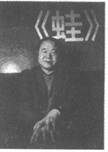
Neatly putting an emphasis on his storytelling skill is how writer Mo Yan began his Nobel Lecture in Literature speech, “Storyteller”, on Friday (Saturday, Beijing time) in Stockholm.

For 40 minutes he talked about his mother’s   36  on him as a person and a writer, his literary inspirations, and how he   37  with the controversy(争论)that followed the announcement of his Nobel victory.

He told his audience that as a boy he told stories to cheer up his mother, and   38  that poverty and loneliness fueled his imagination as a writer after he grew up.   39 , authors such as William Faulkner and Gabriel Garcia Marquez   40  him, he said, especially their bold and unlimited writing style.

“A person should be   41  in daily life, but follow one’s instinct(本能)and take control when it   42  to literary creation.”

He said the soul of   43  all of his works is the boy in Transparent Carrot who has an almost superhuman ability to bear   44 . He added that he also tried to make his hometown of Gaomi in Shandong Province a microcosm(缩影)of China and even the   45 .

His greatest challenge, he said, was writing novels that deal with   46  realities.

“In writing about the dark aspects of society there is a(n)  47  that emotions and anger allow politics to limit literature.”

He said literature must be   48  on real life but go beyond it.

He also mentioned the   49  surrounding his selection as Nobel winner, saying he was showered with many flowers.   50  he was a target for “stone throwers”.

“At first I thought I was the   51  of the controversies, but over time I’ve come to realize that the real target was a person who had   52  to do with me.”

Mo   53  his lecture by saying he was made to feel like an actor in a play with all the attention he was   54 , but he had decided that the best way to communicate his thoughts was to   __55  writing.

1.                A.affection        B.influence       C.occasion  D.position


2.                A.agreed         B.fought          C.dealt D.did


3.                A.added          B.warned         C.reminded D.imagined


4.                A.However       B.Otherwise       C.Therefore D.Besides


5.                A.preserved      B.inspired        C.entertained   D.taught


6.                A.confident       B.certain         C.comfortable   D.modest


7.                A.goes           B.comes          C.turns D.gets


8.                A.nearly          B.hardly          C.scarcely  D.always


9.                A.danger         B.suffering        C.relieving  D.happiness


10.               A.city            B.village          C.world D.province


11.               A.social          B.economical      C.agricultural D.cultural


12.               A.encouragement  B.danger         C.advantage D.event


13.               A.insisted        B.spent          C.based D.passed


14.               A.contradiction    B.contest         C.contrary   D.controversy


15.               A.Meanwhile      B.Otherwise      C.However  D.Instead


16.               A.goal           B.intention       C.target D.purpose


17.               A.somebody      B.anything        C.nothing   D.anybody


18.               A.adopted        B.concluded      C.admitted  D.concerned


19.               A.throwing       B.accepting       C.offering   D.receiving


20.               A.carry on        B.take on         C.bring out  D.put out


B

How does it happen that children learn their mother tongue SO well?When we compare them

With adults learning a foreign language,we often find this interesting fact.A little child without

knowledge or experience often succeeds in a complete mastery of the language.A grown—up person with fully developed mental powers,in most cases,may end up with a faulty and inexact corflllland.What accounts for tllis difference?

Despite other explanations。tlle real answer in my opinion hes partly in the child himself,partly in the  behaviour of the people around him.In the first place,the time of learning the mother tongue  in the most favorable of all,namely,the first years of hfe.A child hears it spoken from morning till night and,what is more important,always in its genuine form,with the right pronunciation,rightIntonation,right use of words and right structure.He drinksin all the words and expressions which come  to him in a hsh.ever—bubbhng spring.There is no resistance:there is perfect assimilation.

Then the child has,as it were,private lessons all the year round,while an adult language—

student has each week a limited number of hours which he generally shares with others.The child

has another advantage:he hears the language in all possible situations,always accompanied by the

right kind of gestures and facial expressions.Here there is nothing unnatural,such as is often found

In  language lessons in schools,when one talks about ice and snow in June or scorching heat in January  And what a child hears is generally what immediately interests him.Again and again,when his attempts at speech a聪successful,his desires are understood and fulfilled.

Finally,though a child’S“teachers”may not have been trained in language teaching,their re-

lations with him are always close and personal.ney take great pains to Inske their lessons easy.

60.’rhe main idea of the passage is——.

A.to tell why the native language is learnt SO well by children

B.to teach children to learn their lllothei"language we

C.to show that children’S teacher should take great p8ins to make their lessons easy

D.to do research into the difference between children and adults

61.What does the underlined phrase“dlq.nks in”in paragraph 2 mean?

A.drinks alcohol    B.has a drink of    C.takes in D.tastes

62.An adult has more difflculties in learning foreign languages well for the reason that_____.

A.children are more indiligent than adults

B.adults pay less attention to learning/anguages than children.

C.children have private lessons all the year around

D.an adult language—student has limited time to share with others

63.Ⅵmo ale the teachers teaching a child to learn his mother language?

A。His parents.    B.His teachers.    C.People around him.D.Himself.


 B

How does it happen that children learn their mother tongue SO well?When we compare them

With adults learning a foreign language,we often find this interesting fact.A little child without

knowledge or experience often succeeds in a complete mastery of the language.A grown—up person with fully developed mental powers,in most cases,may end up with a faulty and inexact corflllland.What accounts for tllis difference?

   Despite other explanations。tlle real answer in my opinion hes partly in the child himself,partly in the  behaviour of the people around him.In the first place,the time of learning the mother tongue  in the most favorable of all,namely,the first years of hfe.A child hears it spoken from morning till night and,what is more important,always in its genuine form,with the right pronunciation,rightIntonation,right use of words and right structure.He drinks in all the words and expressions which come  to him in a hsh.ever—bubbhng spring.There is no resistance:there is perfect assimilation.

  Then the child has,as it were,private lessons all the year round,while an adult language—

student has each week a limited number of hours which he generally shares with others.The child

has another advantage:he hears the language in all possible situations,always accompanied by the

right kind of gestures and facial expressions.Here there is nothing unnatural,such as is often found

In  language lessons in schools,when one talks about ice and snow in June or scorching heat in January  And what a child hears is generally what immediately interests him.Again and again,when his attempts at speech a聪successful,his desires are understood and fulfilled.

  Finally,though a child’S“teachers”may not have been trained in language teaching,their re-

lations with him are always close and personal.ney take great pains to Inske their lessons easy.

60.’rhe main idea of the passage is——.

  A.to tell why the native language is learnt SO well by children

  B.to teach children to learn their lllothei"language we

  C.to show that children’S teacher should take great p8ins to make their lessons easy

  D.to do research into the difference between children and adults

61.What does the underlined phrase“dlq.nks in”in paragraph 2 mean?

  A.drinks alcohol    B.has a drink of    C.takes in D.tastes

62.An adult has more difflculties in learning foreign languages well for the reason that_____.

  A.children are more indiligent than adults

  B.adults pay less attention to learning/anguages than children.

  C.children have private lessons all the year around

  D.an adult language—student has limited time to share with others

 63.Ⅵmo ale the teachers teaching a child to learn his mother language?

  A。His parents.    B.His teachers.    C.People around him.D.Himself.

 B

How does it happen that children learn their mother tongue SO well?When we compare them

With adults learning a foreign language,we often find this interesting fact.A little child without

knowledge or experience often succeeds in a complete mastery of the language.A grown—up person with fully developed mental powers,in most cases,may end up with a faulty and inexact corflllland.What accounts for tllis difference?

   Despite other explanations。tlle real answer in my opinion hes partly in the child himself,partly in the  behaviour of the people around him.In the first place,the time of learning the mother tongue  in the most favorable of all,namely,the first years of hfe.A child hears it spoken from morning till night and,what is more important,always in its genuine form,with the right pronunciation,rightIntonation,right use of words and right structure.He drinks in all the words and expressions which come  to him in a hsh.ever—bubbhng spring.There is no resistance:there is perfect assimilation.

  Then the child has,as it were,private lessons all the year round,while an adult language—

student has each week a limited number of hours which he generally shares with others.The child

has another advantage:he hears the language in all possible situations,always accompanied by the

right kind of gestures and facial expressions.Here there is nothing unnatural,such as is often found

In  language lessons in schools,when one talks about ice and snow in June or scorching heat in January  And what a child hears is generally what immediately interests him.Again and again,when his attempts at speech a聪successful,his desires are understood and fulfilled.

  Finally,though a child’S“teachers”may not have been trained in language teaching,their re-

lations with him are always close and personal.ney take great pains to Inske their lessons easy.

60.’rhe main idea of the passage is——.

  A.to tell why the native language is learnt SO well by children

  B.to teach children to learn their lllothei"language we

  C.to show that children’S teacher should take great p8ins to make their lessons easy

  D.to do research into the difference between children and adults

61.What does the underlined phrase“dlq.nks in”in paragraph 2 mean?

  A.drinks alcohol    B.has a drink of    C.takes in D.tastes

62.An adult has more difflculties in learning foreign languages well for the reason that_____.

  A.children are more indiligent than adults

  B.adults pay less attention to learning/anguages than children.

  C.children have private lessons all the year around

  D.an adult language—student has limited time to share with others

 63.Ⅵmo ale the teachers teaching a child to learn his mother language?

  A。His parents.    B.His teachers.    C.People around him.D.Himself.

违法和不良信息举报电话:027-86699610 举报邮箱:58377363@163.com

精英家教网