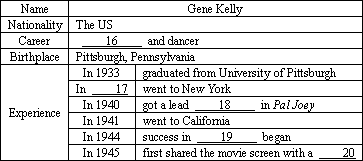
题目内容
第一部分:听力(共两节,满分30分)
第一节(共5小题;每小题1.5分,满分7.5分)
听下面5段对话。每段对话后有一个小题,从题中所给的A、B、C三个选项中选出最佳选项。听完每段对话后,你都有10秒钟的时间来回答有关小题和阅读下一小题。每段对话仅读一遍。
1.When does the rainy season start?
A.December.
B.September.
C.February.
2.What does the woman mean?
A.The lecture is funny.
B.The lecture is useful.
C.She doesn’t like the lecture.
3.Where does the conversation most probably take place?
A.In a bank.
B.In the post office.
C.In a store.
4.What is the man going to do?
A.To drive a car.
B.To take a rest.
C.To drink a juice.
5.What are they talking about?
A.Film.
B.TV.
C.Cinema.
第二节(共15小题;每小题1.5分,满分22.5分)
听下面5段对话或独白。每段对话或独白后有几个小题,从题中所给的A、B、C三个选项中选出最佳选项。听每段对话或独白前,你将有时间阅读各个小题,每小题5秒钟;听完后,各小题将给出5秒钟的作答时间。每段对话或独白读两遍。
听第6段材料,回答第6至第7题。
6.At what time does the man have dinner?
A.At eight
B.At six
C.At six-thirty.
7.What is the man’s hobby?
A.Playing basketball.
B.Sitting in the park.
C.Painting.
听第7段材料,回答第8至第9题。
8.What is the woman trying to do?
A.Register in classes.
B.Get a new phone.
C.Contact her teacher.
9.What does the man suggest?
A.That she should wait until later.
B.That she should register in class.
C.That she should see a teacher.
听第8段材料,回答第10至第12题。
10.Where is Tuskegee located?
A.Canada.
B.Alabama.
C.Washington.
11.What does the woman say about George Washington Garver?
A.That he was a president.
B.That he was a scientist.
C.That he liked peanuts.
12.What quality most clearly describes the man?
A.Angry.
B.Excited.
C.Unknowing.
听第9段材料,回答第13至第16题。
13.What does the woman want to do after class?
A.Go home.
B.Drink coffee.
C.Play the piano.
14.How long has the man been playing the violin?
A.Since he was five.
B.For seven years.
C.Since he was in elementary school.
15.According to the discussion, what does the woman wish she had done?
A.Continued to learn the piano.
B.Learned to play the violin, too.
C.Had coffee before class.
16.What does the man mean in the end?
A.It’s no good playing the piano.
B.It’s good to learn to play from now on.
C.It’s difficult to play the violin.
听第10段材料,回答第17至第20题。
17.Where did the old man and his son take the donkey to?
A.To their field..
B.To the market.
C.To the river.
18.What did the woman advise them to do?
A.To put the son on the donkey.
B.To give the donkey a rest.
C.To ride a donkey together.
19.What happened when they were crossing the bridge?
A.The donkey kicked them.
B.The donkey ran away quickly.
C.The donkey fell into the stream.
20.What lesson do we learn from this story?
A.It’s impossible to please everyone.
B.Be good to animals.
C.Don’t trust too many people.

 开心蛙状元作业系列答案
 课时掌控随堂练习系列答案
 一课一练一本通系列答案