题目内容
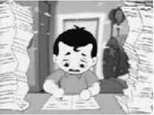
Nowadays, children are much more tired than parents.They have to undergo(承受)a lot of pressure that comes from parents or teachers.
The expectations from the parents are very high.They want us to be a famous writer today, an excellent pianist tomorrow and an experienced managing director the other day.However, we children are in the stage of growing up so how can we meet all those expectations?How could we build Rome in a day?How could we be knowledgeable just in a short period?
But children have no choice.Parents seldom regard children as their friends.They just treat them as their property and put their own needs first.They ignore children’s feelings and wishes but care only for their own wishes or dreams.
Children are very young;they need guidance from their parents.However, parents misunderstand their children.They don’t communicate with their children.Parents always think that spoiling(伤害)children is what they called “understanding”.
Parents only give material things instead of understanding.Children and parents can hardly agree with one another.
We children are the earliest birds in the morning, waiting for school buses with few pedestrians(路人)around.Our parents can watch TV every night, chat with each other every day and go bowling every week.On the contrary, we have to recite our English, do our homework and play the piano day by day.
So who has the hardest life in the society?Who has more pressure?Who needs more understanding?We children need understanding from our parents.
任务导入:Hold a Debate Competition(辩论赛)on the point Who Need More Understanding-Parents or Children.
辩论赛细则
辩论赛程序?(辩论会主席执行)
1.辩论赛开始
2.宣布辩题
3.介绍参赛代表队及所持立场
4.介绍参赛队员
5.介绍规则评委及点评嘉宾
6.辩论赛比赛(辩论过程程序见下)
7.规则评委及点评嘉宾退席评议
8.观众自由提问
9.宣布比赛结果
10.辩论赛结束
答案:
略

完形填空
阅读下列短文,掌握其大意,然后从1-25各题所给的四个选项中,选出一个最佳答案
In the past, American families tended __1__ quite large,and parents __2__ five or __3__ children were common. Over the years the __4__ of the family has decreased(减少). One reason for this is __5__ in the cost of __6__. On the average, children attend schools for more years __7__ they __8__, making them financially dependent __9__ their families longer. Moreover, children nowadays are better __10__ and have __11__ money to spend __12__ entertainment. The parents usually take the responsibility __13__ all the expenses.
Meanwhile, families are __14__ close than they used to be. More and more American mothers work away from home. The break up of the family occurs when the parents divorce(离婚). A lot of children in the U.S. live part of their young __15__ with only one parent. __16__ families usually result in problems for children and parents alike. Children blame themselves when their parents __17__. They __18__ feeling unsettled as they are moved back and forth between parents.
Usually one parent takes the responsibility for raising the children. These single parents must __19__ the children's emotional and psychological needs while also __20__ them financially. This is very demanding and leaves very little time for the parent's own personal interests. Single parents often marry other single parents. In this type of family, unrelated children are forced to __21__ brother or sister relationship.
The situations of many American __22__ today are not good. However, recent signs indicate that things are getting __23__. The divorce rate is declining. The rate of __24__ is rising. Perhaps Americans have learned __25__ important families are.
|
(1) A. to be |
B. to form |
C. to turn |
D. to become |
[ ] |
|
(2) A. had |
B. raising |
C. rising |
D. lost |
[ ] |
|
(3) A. six |
B. less |
C. more |
D. four |
[ ] |
|
(4) A. size |
B. number |
C. amount |
D. change |
[ ] |
|
(5) A. a drop |
B. a decrease |
C. amount |
D. change |
[ ] |
|
(6) A. house |
B. food |
C. clothing |
D. living |
[ ] |
|
(7) A. than |
B. when |
C. as |
D. like |
[ ] |
|
(8) A. do |
B. have |
C. had |
D. used to |
[ ] |
|
(9) A. to |
B. on |
C. for |
D. against |
[ ] |
|
(10) A. dressed |
B. worn |
C. dressing |
D. wearing |
[ ] |
|
(11) A. less |
B. fewer |
C. more |
D. most |
[ ] |
|
(12) A. in |
B. at |
C. on |
D. to |
[ ] |
|
(13) A. for |
B. to |
C. by |
D. into |
[ ] |
|
(14) A. more |
B. little |
C. less |
D. fewer |
[ ] |
|
(15) A. time |
B. childhood |
C. ages |
D. lives |
[ ] |
|
(16) A. Divorced |
B. Broken |
C. Deserted |
D. Remarried |
[ ] |
|
(17) A. separate |
B. quarrel |
C. fight |
D. leave |
[ ] |
|
(18) A. grown up |
B. build up |
C. set up |
D. made up |
[ ] |
|
(19) A. have lest |
B. give |
C. care for |
D. offer |
[ ] |
|
(20) A. supporting |
B. opposing |
C. indicating |
D. showing |
[ ] |
|
(21) A. defend |
B. prove |
C. indicate |
D. develop |
[ ] |
|
(22) A. cities |
B. towns |
C. families |
D. villages |
[ ] |
|
(23) A. better |
B. worse |
C. fewer |
D. newer |
[ ] |
|
(24) A. death |
B. marriage |
C. deserts |
D. children |
[ ] |
|
(25) A. how |
B. what |
C. that |
D. why |
[ ] |
完形填空
Many people see a person who can't read or spell as disabled, but what does disabled really mean? Well, with Andrew Mertzit of Maryland it meant he would not be 1 to attend his school any more. Andrew's 2 is that whenever he is reading, he sees the letters p, d, q and b as a 3 and stick. Since Andrew's teachers couldn't 4 him much, Suzanne, Andrew's mother decided to take 5 in her own hands. She decided to home school Andrew. In ten months, Suzanne, a trained reading specialist tried many different 6 to help Andrew with his disability. She helped Andrew with making letters out of sand, rice and shaving cream. Now, about nine years later Andrew is 7 having some problems with reading, but certainly a lot better than before.
Lately researchers have been finding many different ways to help learning disabled students by 8 things like rice and shaving cream or even to get little computers. Also, nowadays there are schools all over that have programs to help disabled kids, unlike back in 1995 when Andrew had to be 9 schooled by his mother. But to help disabled students it takes about $ 8.12 billion. You probably think that's a lot of money, but if you 10 that in 1996 there were about 2.6 million kids who were disabled, it may not seem all that 11 . Even though a person may have a learning disability at a certain subject, like reading, it does not mean that he or she doesn't have a talent(才能)at something else. For example, 15 years ago when Joey Hollingsworth entered kindergarten, teachers said that Joey was very clever. Once Joey started getting 12 , his grades got lower. Lots of people just thought he was 13 and had discipline(纪律)problems. Many years later he finally was 14 for learning disabilities and found out he really did have a disability.
Still many people believe kids like Joey who can't read or write are lazy. It's hard to understand that 15 a person doesn't look disabled, he can have problems with learning, and it's even harder for the 16 . But now they are getting close to understanding how learning disabilities start. Brain researchers have some new equipment. These machines 17 pictures of the brain while in 18 . They're learning a lot already by examining the brains of the people who have been 19 and who have learning disabilities. It is reported that some of these damaged brain cases are 20
like the picture we see all the time on the learning-disabled cases where we don't know the cause.
|
(1) A.willing |
B.able |
C.ready |
D.happy |
|
(2) A.job |
B.worry |
C.disadvantage |
D.disability |
|
(3) A.picture |
B.flag |
C.square |
D.circle |
|
(4) A.help |
B.tend |
C.teach |
D.treat |
|
(5) A.matters |
B.letters |
C.illness |
D.children |
|
(6) A.ways |
B.schools |
C.hospitals |
D.medicine |
|
(7) A.never |
B.already |
C.still |
D.always |
|
(8) A.drawing |
B.supplying |
C.changing |
D.spelling |
|
(9) A.lonely |
B.separately |
C.joyfully |
D.sadly |
|
(10) A.imagine |
B.consider |
C.suppose |
D.except |
|
(11) A.proper |
B.little |
C.strange |
D.bad |
|
(12) A.higher |
B.stronger |
C.worse |
D.older |
|
(13) A.clever |
B.late |
C.lazy |
D.careless |
|
(14) A.questioned |
B.tested |
C.scolded |
D.punished |
|
(15) A.when |
B.whether |
C.even if |
D.unless |
|
(16) A.parents |
B.teachers |
C.doctors |
D.researchers |
|
(17) A.print |
B.take |
C.have |
D.store |
|
(18) A.moving |
B.reaction |
C.return |
D.action |
|
(19) A.cured |
B.recovered |
C.dead |
D.injured |
|
(20) A.exactly |
B.never |
C.hardly |
D.luckily |
完形填空
Many people see a person who can't read or spell as disabled, but what does disabled really mean? Well, with Andrew Mertzit of Maryland it meant he would not be 1 to attend his school any more. Andrew's 2 is that whenever he is reading, he sees the letters p, d, q and b as a 3 and stick. Since Andrew's teachers couldn't 4 him much, Suzanne, Andrew's mother decided to take 5 in her own hands. She decided to home school Andrew. In ten months, Suzanne, a trained reading specialist tried many different 6 to help Andrew with his disability. She helped Andrew with making letters out of sand, rice and shaving cream. Now, about nine years later Andrew is 7 having some problems with reading, but certainly a lot better than before.
Lately researchers have been finding many different ways to help learning disabled students by 8 things like rice and shaving cream or even to get little computers. Also, nowadays there are schools all over that have programs to help disabled kids, unlike back in 1995 when Andrew had to be 9 schooled by his mother. But to help disabled students it takes about $ 8.12 billion. You probably think that's a lot of money, but if you 10 that in 1996 there were about 2.6 million kids who were disabled, it may not seem all that 11 . Even though a person may have a learning disability at a certain subject, like reading, it does not mean that he or she doesn't have a talent(才能)at something else. For example, 15 years ago when Joey Hollingsworth entered kindergarten, teachers said that Joey was very clever. Once Joey started getting 12 , his grades got lower. Lots of people just thought he was 13 and had discipline(纪律)problems. Many years later he finally was 14 for learning disabilities and found out he really did have a disability.
Still many people believe kids like Joey who can't read or write are lazy. It's hard to understand that 15 a person doesn't look disabled, he can have problems with learning, and it's even harder for the 16 . But now they are getting close to understanding how learning disabilities start. Brain researchers have some new equipment. These machines 17 pictures of the brain while in 18 . They're learning a lot already by examining the brains of the people who have been 19 and who have learning disabilities. It is reported that some of these damaged brain cases are 20
like the picture we see all the time on the learning-disabled cases where we don't know the cause.
|
(1) A.willing |
B.able |
C.ready |
D.happy |
|
(2) A.job |
B.worry |
C.disadvantage |
D.disability |
|
(3) A.picture |
B.flag |
C.square |
D.circle |
|
(4) A.help |
B.tend |
C.teach |
D.treat |
|
(5) A.matters |
B.letters |
C.illness |
D.children |
|
(6) A.ways |
B.schools |
C.hospitals |
D.medicine |
|
(7) A.never |
B.already |
C.still |
D.always |
|
(8) A.drawing |
B.supplying |
C.changing |
D.spelling |
|
(9) A.lonely |
B.separately |
C.joyfully |
D.sadly |
|
(10) A.imagine |
B.consider |
C.suppose |
D.except |
|
(11) A.proper |
B.little |
C.strange |
D.bad |
|
(12) A.higher |
B.stronger |
C.worse |
D.older |
|
(13) A.clever |
B.late |
C.lazy |
D.careless |
|
(14) A.questioned |
B.tested |
C.scolded |
D.punished |
|
(15) A.when |
B.whether |
C.even if |
D.unless |
|
(16) A.parents |
B.teachers |
C.doctors |
D.researchers |
|
(17) A.print |
B.take |
C.have |
D.store |
|
(18) A.moving |
B.reaction |
C.return |
D.action |
|
(19) A.cured |
B.recovered |
C.dead |
D.injured |
|
(20) A.exactly |
B.never |
C.hardly |
D.luckily |