题目内容

完形填空

阅读下面短文,从短文后各题所给的四个选项 (A、B、C和D)中,选出可以填入空白处的最佳选项,并在答题卡上将该项涂黑。

My Air Force room in Florida was empty and quiet—I was alone. My five roommates were gone for their___________ ; I had chosen to ___________ behind in the camp. Being young and far from my home, I felt ___________ . My room was comfortable enough, but I hadn’t ___________ until then what made it so—the presence of others walking, joking or just lying on their ___________ .

I was not able to sleep. In fact, I ___________ being alone sometimes, but tonight was ___________ . Turning over again and again in the darkened room gave no___________ . The last sign of daylight had disappeared, ___________ to my inner depression. ___________ , the Christmas lights on the tall pine trees would only ___________ me of my great misery.

___________ , I heard weak sound of men attempting to sing. Yes, the voices grew louder and came my way. I ___________ still, enjoying the sound.

In the corridor (走廊) outside my ___________ , voices came near enough for ___________ to hear Christmas carols being sung. Suddenly, there, four airmen, identities unknown, were slightly unsteadied by holiday cheer. The first held a Coke bottle with a___________ candle stuck in its top. The others ___________ a dancing line behind him.

Seeing I was in the room, with joyful ___________ in the flickering(摇曳的) light, they sang me several carols, ___________ me a merry Christmas and left as fast as they had arrived.

I slept soundly soon after, burying my face in my pillow, ___________ that someone had cared.

1.A. presents B. fights C. holidays D. weekends

2.A. remain B. sleep C. help D. work

3.A. guilty B. silly C. curious D. lonely

4.A. prepared B. realized C. recovered D. awoken

5.A. toys B. food C. beds D. floors

6.A. imagined B. preferred C. suggested D. began

7.A. different B. busy C. good D. simple

8.A. balance B. effort C. comfort D. progress

9.A. adding ` B. appealing C. leading D. sticking

10.A. Therefore B. Otherwise C. Yet D. Besides

11.A. cure B. remind C. rob D. think

12.A. Suddenly B. Sadly C. Unluckily D. Lately

13.A. stared B. sang C. lay D. observed

14.A. house B. room C. school D. camp

15.A. us B. them C. whom D. me

16.A. lighted B. falling C. burned D. flying

17.A. broke B. crossed C. formed D. drew

18.A. noises B. quarrels C. necks D. faces

19.A. predicted B. promised C. wished D. offered

20.A. grateful B. satisfied C. doubtful D. hopeful
练习册系列答案
相关题目

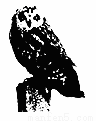
The Owl Count

Annie slept in the front of the seat with her father drove through the darkness. “We’re almost there!” Dad announced cheerfully. “Soon we’ll be observing and counting owls at the state park.” Yawning, Annie nodded and smiled. The time was 4:30 a.m. Looking out into the darkness, Annie remembered learning in school that most owls are active at night, when they hunt for food. During the day they sleep in hard-to-find spots.

“Dad, why do you need to count owls?” she asked. “It’s important for the scientists to have current information about bird populations,” he explained. “We want to know which birds have decreased in number and whether any new kinds of birds are coming into a certain area. You and I will write down the kinds of birds that we see today and keep a record of how many times we see each kind. Then we’ll send out a report to a scientific organization that is collecting about birds from people all over the country.”

Dad pulled into the parking lot of the state park. Then, with flashing in hand, they began their hike into the woods. Annie zipped up her coat and tried to keep from trembling. She had not expected the morning to be so cold. Luckily her gloves were in her pocket.

Suddenly Annie’s father stopped and gestured for her to be still. Obeying, Annie did not take another step. She thought she heard a low crying up head. “That’s certainly a screech owl,” her father whispered. “Let’s get a look at it.” After looking more closely, Annie could see that it was a small owl. Sensing danger, the owl narrowed its eyes and pulled its feathers tightly against its body. Annie carefully wrote down in her notebook that they had seen a screech owl.

Walking a little farther, they came to a tall oak tree. “This looks like a perfect spot to attract owls,” Dad said, “I’m going to play a recording of common call of the barred owl. Maybe we can get one to answer.’ Annie could hardly believe her ear. The recorded call sounded as if the bird were asking, “Who cooks for you?” Moments later Annie thought she heard a return call in the distance. She held her breath and waited. Suddenly a huge bird landed very quietly on a branch above them.

Annie had long forgotten how cold it was. She stood in wonder, shining her flashlight on the bird and studying it carefully. The barred owl was nearly two feet tall. Grey feathers surrounded its dark eyes. The bird did not stay long, but it did not matter. Annie would never forget the image of the powerful barred owl.

1.Why did Annie and her father go to the state park?

A. To take a hike in the woods.

B. To record the call of barred owl.

C. To collect information about birds.

D. To protect the environment for wildlife.

2.In paragraph 4, why did Annie’s father stop her suddenly?

A. He noticed a screech owl.

B. He heard somebody crying.

C. He sensed they were in danger.

D. He reminded her to take down note.

3.How did Annie feel when she saw the barred owl?

A. Bored B. Amazed C. Frightened D. Relaxed

Assistant Professor, Musical Theatre Dance

Wichita State University seeks a full-time, 9-month assistant professor, beginning in August. Applicants are required to have a degree in dance area, teaching experience at a professional or college level, ability to direct and teach stage movement. The salary depends on qualifications and experience.

For complete information, visit http://finearts.wichita.edu.

Full Professor in Theatre and Dance

The Department of Theatre & Dance at the University of California at San Diego (http://www-theatre.uscd.edu) is seeking an experienced theatre artist in lighting design. Applicants must work for us for at least one year. Significant professional experience is required. This position is expected to teach at both graduate and undergraduate levels.

A review of applications will start on June 1st. Application deadline: September 1st.

Technical Director in Performing and Fine Arts

DeSales University’s Performing and Fine Arts Department seeks a highly skilled, professional technical director. The position is a 10-month staff position with the possibility of summer employment with the Pennsylvania Shakespeare Festival. Professional experience is required; MFA is preferred.

Please email materials to john.bell@desales.edu. Screening of applications begins immediately and will continue until the position is filled.

Assistant Director— Media Resources Center

Maryland Institute College of Art is seeking an Assistant Director of Media Resources Center in the Academic Affairs Division.

Qualifications for the position include a degree in Art History or related fields with knowledge of art and design history, library experience, excellent interpersonal and communication skills and familiarity with photoshop and scanning.

A review of applications will begin immediately; job announcements will remain open until the position is filled. Applicants are required to work for us at least 11 months. They can send emails to jobs@mica.edu. The salary differs depending on your experience. Please include your desired salary in your application letter.

1.What ad may an applicant pay close attention to if he/she has 9.5-month free time?

A. Technical Director in Performing and Fine Arts.

B. Assistant Director— Media Resources Center.

C. Assistant Professor, Musical Theatre Dance.

D. Full Professor in Theatre and Dance.

2.Which can you apply to if you have excellent interpersonal and communication skills?

A. Maryland Institute College of Art.

B. The University of California.

C. DeSales University.

D. Wichita State University.

3.What can we learn from the advertisements?

A. All the job announcements will remain open until the positions are filled.

B. All the reviews of applications will begin immediately.

C. All the jobs mentioned above promise a good salary.

D. All the jobs mentioned in the text require experience.

Thirty-two people watched Kitty Genovese being killed right beneath their windows. She was their neighbor. Yet none of the 32 helped her. Not one even called the police. Was this in gunman cruelty? Was it lack of feeling about one’s fellow man?

Not so, say scientists John Barley and Bib Fatane. These men went beyond the headlines to seek the reasons why people didn’t act. They found that a person has to go through two steps before he can help. First he has to notice that is an emergency.

Suppose you see a middle-aged man fall to the side-walk. Is he having a heart attack? Is he in a coma from diabetes(糖尿病)? Or is he about to sleep off a drunk?

Is the smoke coming into the room from a leak in the air conditioning? Is it steam pipes? Or is it really smoke from a fire? It’s not always easy to tell if you are faced with a real emergency.

Second, and more important, the person faced with an emergency must feel personally responsible. He must feel that he must help, or the person won’t get the help he needs.

The researchers found that a lot depends on how many people are around. They had college students in to be tested. Some came alone. Some came with one or two others. And some came in large groups. The receptionist started them off on the tests. Then she went into the next room. A curtain divided the testing room and the room into which she went. Soon the students heard a scream, the noise of file cabinets falling and a cry for help. All of this had been pre-recorded on a tape-recorder.

Eight out of ten of the students taking the test alone acted to help. Of the students in pairs, only two out of ten helped. Of the students in groups, none helped.

In other words, in a group, Americans often fail to act. They feel that others will act. They, themselves, needn’t. They do not feel any direct responsibility.

Are people bothered by situations where people are in trouble? Yes. Scientists found that the people were emotional, they sweated, they had trembling hands. They felt the other person’s trouble. But they did not act. They were in a group. Their actions were shaped by the actions of those they were with.

1. The purpose of this passage is ____________.

A. to explain why people fail to act in emergencies

B. to explain when people will act in emergencies

C. to explain what people will do in emergencies

D. to explain how people feel in emergencies

2.The researchers have conducted an experiment to prove that people will act in emergencies when ____________.

A. they are in pairs B. they are in groups

C. they are alone D. they are with their friends

3. The main reason why people fail to act when they stay together is that ____________.

A. they are afraid of emergencies

B. they are unwilling to get themselves involved

C. others will act if they themselves hesitate

D. they do not have any direct responsibility for those who need help

4.The author suggests that ____________.

A. we shouldn’t blame a person if he fails to act in emergencies

B. a person must feel guilty if he fails to help

C. people should be responsible for themselves in emergencies

D. when you are in trouble, people will help you anyway

违法和不良信息举报电话:027-86699610 举报邮箱:58377363@163.com

精英家教网