题目内容
The legal age for drinking alcohol(酒)in the United States is twenty-one. Underage drinking is a crime but also a common part of college social life. This week in our Foreign Student Series ,we look at alcohol policies at American colleges and universities .These policies differ from school to school, as do enforcement(实施) efforts. But many schools have been moving to strengthen their rules.
The United States has more than 170,000 students in higher education. Each year,1,700 of them aging eighteen to twenty-four die from alcohol-related road crashes and other injuries. More than 600,000 are injured under the influence of alcohol. And almost 700,000 are attacked by another student who has been drinking. These numbers, from a 2007 report, are on a government Website:collegedrinkingprevention.gov.
One behavior that college officials are trying to prevent is binge (无节制的狂热行为)drinking ,having four or five drinks or more in a short period of time. Some researchers have found that students who think binge drinking is normal often overestimate how much other students really drink .A person can die of alcohol poisoning.
At the University of Oklahoma, new policies went into effect after a nineteen-year-old student died in 2004.He had been drinking heavily at a fraternity party.(男大学生联谊会)。
Now alcohol is banned from all fraternity and sorority(女大学生联谊会) houses and university housing. Student organizations can serve alcohol at events but only on Friday and Saturday nights. And they must provide for transportation to and from off-campus parties. Other new requirements include an alcohol education program that first-year students take online.
The policies govern behavior on campus and off. With a first violation, students pay seventy-five dollars and their parents are told. They must also take an alcohol education class. For a second” strike”, they have to pay one hundred and fifty dollars. A third strike means a suspension(暂被停学) for at least one semester.
Since January of 2005,633 students have had a first strike.30 have had a second strike----and has been suspended. An official at Oklahoma tells us the aim is not just to punish but to change behavior and the culture at the university.
In American colleges and universities,______.
A. no students under age 21 drink alcohol
B. many students under age 21 drink alcohol
C. rules about drinking alcohol are almost the same
D. rules about drinking alcohol are different from state to state
Each year in the United States ,about 1,700 young college students aging 18 to 24 die______.
A, from alcohol poisoning
B. from traffic accidents
C. under the influence of alcohol
D. from alcohol-related road crashes and other injuries.
Which of the following statements is TRUE according to the passage?
A. The deaths or injuries of the students are all because they have been drinking.
B. The numbers from collagedrinkingprevention.gov are not accurate at all.
C. The death of a 19-year-old student influenced policies of the University of Oklahoma.
D. No student organizations can offer alcohol at events in the US now.
Which of the following can be the best title of this article?
A. Studying in the US: Rules about Alcohol
B. The Legal Age for Drinking Alcohol in the United States.
C. Policies of Drinking Alcohol in the US Differ From School to School
D. New Policies about Alcohol Drinking At the University of Oklahoma.
【小题1】B【小题2】D【小题3】C【小题4】A

 优等生题库系列答案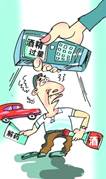
Virginia is set to begin enforcing the toughest drunken-driving punishment, one that will require thousands of first-time offenders—whether they were highly drunk or slightly over the limit—to install in their cars blood- alcohol testing devices that can lock the ignition. The devices work like this—A driver must blow into a blood alcohol device linked to the car’s ignition. If the result is higher than the legal limit, the car will not start. The device also requires random “rolling retests” once the driver is on the road.
Virginia’s current law requires only repeated offenders or those with a blood alcohol level of 0.15 or higher to have an ignition interlock device in their cars.
The new law, which takes effect in July, will roughly increase the number of people required to use ignition interlock devices four times, and offenders will have to pay about $ 480 for a typical six-month installation.
The measure has caused a debate between groups battling drunken driving and those representing offenders. Such groups as Mother Against Drunken Driving and The Washington Regional Alcohol Program say that Virginia’s 274 alcohol-related road deaths and more than 5,500 injuries in 2010 remained unacceptably high despite years of cracking down on drunken driving. Ignition interlock devices, they say, reduce repeat offenses. But some public defenders and lawyers argue that the devices are too severe a punishment for offenders at the legal blood alcohol limit 0.08, and that the court system will be burdened by more cases going to trial and lower-income drivers will be affected by the fees.
Del. Sal R. Iaquinto, who sponsored the bill, had a simple reply for concerns about the costs of the interlock devises: “How much does a life cost?” “Blowing into a tube for six months, you will remember that,” Iaquinto said, “And you’re not likely to offend again.”
【小题1】The underlined word “ignition” in Paragraph 1probably refers to the part in a car where ___________.
| A.the alarm goes off | B.the engine starts | C.the door opens | D.the car is fueled |
| A.The first time drunken-driving offenders. |
| B.The drivers who are not able to pay offence fees. |
| C.The repeat drunken-driving offenders. |
| D.Drivers whose blood alcohol level is below 0.15. |
| A.fewer cases go to trial |
| B.lower-income drivers will not afford to drink again |
| C.interlock devices increase repeat offenses |
| D.the devices are too severe a punishment for offenders |
| A.prevention is better than cure | B.no law is absolutely perfect |
| C.punishment is the key to all | D.justice has long arms |
| A.Negative. | B.Indifferent. | C.flexible. | D.workable. |