题目内容
.
Not ____ he died, he received an award for his selfless service to the old.
A. long before B. before long C. long ago D. shortly before
A

 下面写出该加的词。
 money is become more and more important in our society, and it should not be everything. We should try my best to help others and trust each other. If everyone does this, our society will be better and better.
 Kasey Kaczmarek: When I read “Would my dad love me?” by Martha, I related to how Martha felt about her father. I always wondered if my dad cared about me, or if he even loved me. All the kids would be with their dads and they would ask me where my dad was, and I would tell them that he was out of town. For all you kids who have a dad, tell him how much you love him because there are plenty of kids who would love to have a dad.
Armen Abidian: This article describes everything about me and my life. When I was about 3 years old, my mother and father had a big argument and got divorced. Now I’m 13 years old and I haven’t seen my father for 10 years. Just like Martha, I don’t know what he looks like now, whether or not he’s got married to a different woman, or if he has another child.
Emma Ramirez: When Martha talked about how “most girls have dads who take them to their practices, buy them things and play with them”, I thought I was one of those girls. I never stopped to think about how there are girls who have always dreamed of having those things but don’t have a father. After reading what Martha wrote, I told myself I would always appreciate the days I spend with my dad because I am very lucky to have a dad who does so much for me.
Stephanie Felix: This article reminded me of how much I missed my dad when I was younger. I really relate to this article because I used to always wonder about my dad, but not any more. Life without my father has made me more independent and responsible. By reading this article I remember all of this and I was able to understand what the writer was talking about.
【小题1】The above four passages are most probably_______.
| A.comments on a book about a girl who has no father |
| B.comments on Martha’s opinion about parents’ love |
| C.four people’s thoughts after reading Martha’s article |
| D.letters to Martha to comfort her |
| A.Martha’s father didn’t love her |
| B.Martha didn’t grow up with her dad |
| C.Martha was brought up by her grandparents |
| D.Martha’s parents got divorced when she was 13 |
| A.Not ask other kids where their dads are |
| B.Be kind to those kids who don’t have a dad |
| C.Tell their fathers how much they love them |
| D.Spend as much time with their fathers as possible |
| A.decided to spend more time with her father |
| B.told herself to appreciate all that she had |
| C.realized how badly she behaved in the past |
| D.found how lucky she was to have a dad |
Wilderness
“In wilderness(荒野) is the preservation of the world.” This is a famous saying from a writer regarded as one of the fathers of environmentalism. The frequency with which it is borrowed mirrors a heated debate on environmental protection: whether to place wilderness at the heart of what is to be preserved.
As John Sauven of Greenpeace UK points out, there is a strong appeal in images of the wild, the untouched; more than anything else, they speak of the nature that many people value most dearly. The urge to leave the subject of such images untouched is strong, and the danger exploitation(开发) brings to such landscapes(景观) is real. Some of these wildernesses also perform functions that humans need—the rainforests, for example, store carbon in vast quantities. To Mr.Sauven, these ”ecosystem services” far outweigh the gains from exploitation.
Lee Lane, a visiting fellow at the Hudson Institute, takes the opposing view. He acknowledges that wildernesses do provide useful services, such as water conservation. But that is not, he argues, a reason to avoid all human presence, or indeed commercial and industrial exploitation. There are ever more people on the Earth, and they reasonably and rightfully want to have better lives, rather than merely struggle for survival. While the ways of using resources have improved, there is still a growing need for raw materials, and some wildernesses contain them in abundance. If they can be tapped without reducing the services those wildernesses provide, the argument goes, there is no further reason not to do so. Being untouched is not, in itself, a characteristic worth valuing above all others.
I look forwards to seeing these views taken further, and to their being challenged by the other participants. One challenge that suggests itself to me is that both cases need to take on the question of spiritual value a little more directly. And there is a practical question as to whether wildernesses can be exploited without harm.
This is a topic that calls for not only free expression of feelings, but also the guidance of reason. What position wilderness should enjoy in the preservation of the world obviously deserves much more serious thinking.
【小题1】John Sauven holds that_____.
| A.many people value nature too much |
| B.exploitation of wildernesses is harmful |
| C.wildernesses provide humans with necessities |
| D.the urge to develop the ecosystem services is strong |
| A.The exploitation is necessary for the poor people. |
| B.Wildernesses cannot guarantee better use of raw materials. |
| C.Useful services of wildernesses are not the reason for no exploitation. |
| D.All the characteristics concerning the exploitation should be treated equally. |
| A.Objective. | B.Disapproving. | C.Sceptical. | D.Optimistic. |
A.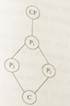 | B. | C. | D. |