题目内容

Proof reading:(10 处错误,每处1 分,满分10 分)
A new countryside will appearance in China a couple of years away. There will be more new farms with a certain basic knowledge of science or technology, laws and management. By then much farming techniques will have been modernized. With the help of scientists, farmers would use the latest technologies to promote agriculture without harm the environment. As a result, the yearly income of the farmers will get raising and the housing conditions will be improved as well. People will enjoy a clean, tidy and an orderly environment. Besides, the government will provide free compulsory(强制的) educate for rural kids and perfect medical care system farmers.

练习册系列答案
相关题目

听力(共两节,满分30分)

第一节(共5小题;每小题1.5分,满分7.5分)

听下面5段对话。每段对话后有一个小题,从题中所给的A、B、C三个选项中选出最佳选项。听完每段对话后,你都有10秒钟的时间来回答有关小题和阅读下一小题。每段对话仅读一遍。

1.Where does the talk probably take place?

A.In a library.

B.In a hospital.

C.In an office.

2.When are Francie and Mike getting married?

A.In July.

B.in June.

C.In May.

3.What are they talking about?

A.A book.

B.An actor.

C.A film.

4.How much will the woman pay for the toy cars?

A.40 yuan.

B.34 yuan.

C.17 yuan.

5.What is the possible relationship between the speakers?

A.Teacher and student.

B.Mother and son.

C.Employer and employee.

第二节(共15小题;每小题1.5分,满分22.5分)

听下面5段对话或独白。每段对话或独白后有几个小题,从题中所给的A、B、C 三个选项中选出最佳选项。听每段对话或独白前,你将有时间阅读各个小题,每小题5秒钟;听完后,各小题将给出5 秒钟的作答时间。每段对话或独白读两遍。

听第6段材料,回答第6至第8题。

6.What did the man plan to do at first?

A.To work in a supermarket.

B.To open his own business.

C.To work in Japan.

7.What's the man's job now?

A.A shop assistant.

B.The owner of a supermarket.

C.A businessman.

8.What do we know about the woman's career?

A.She likes her job.

B.She has a job abroad.

C.She changed her career.

听第7段材料,回答第9至11题。

9.Why does the woman prefer old houses?

A.They are big and cool.

B.They are old.

C.They need lots of repair.

10.How does the man feel about old houses?

A.He agrees with the woman.

B.He disagrees with the woman.

C.He has no idea at all.

11.What is the woman going to do?

A.To buy an old house.

B.To buy a house.

C.Either to buy an old house or build a new one.

听第8段材料,回答第12至14题。

12.Why hadn't the woman seen the man for some time?

A.He had been on vacation.

B.He was catching up on things at home.

C.He had been sick.

13.What do you think flu is?

A.A disease.

B.Something like an apple.

C.A liquid.

14.What can we learn about the woman from the dialogue?

A.She was caring for her mother who had the flu.

B.She was down with the flu a couple of weeks ago.

C.She didn't have the flu.

听第9段材料,回答第15至17题。

15.What course is the woman going to take up at the college?

A.Computing.

B.Basic Programming.

C.Advanced Programming.

16.Which of the following is TRUE according to the conversation?

A.The man is in his second year at the college.

B.The woman wishes to join the table tennis club.

C.There are 550 students at the student center.

17.Which club will the woman probably join in?

A.Tennis Club.

B.Table Tennis Club.

C.Cinema Club.

听第10段材料,回答第18至20题。

18.What is the speaker doing?

A.Broadcasting the news.

B.Having an interview.

C.Giving a speech.

19.How many days a week is The Voice printed?

A.Five.

B.Seven.

C.Four.

20.What is most likely the best reason for working with Campus Daily?

A.To make a lot of money.

B.To learn to proof read

C.To get experience in journalism.

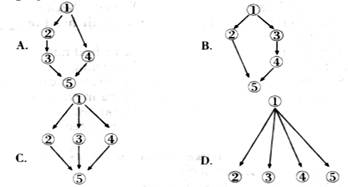
Did you ever wonder who invented products like Liquid Paper, Kevlar or paper bags? Most would think a man invented these items. Guess what? Women invented each of these. What? You don’t believe me? Well, read this:
Liquid Paper was invented by Bette Nesmith Graham in 1951 and originally called Mistake Out. Being a typist, Bette was increasingly irritated with being unable to erase her typing mistakes. The messy business left her hands black and the paper dirty. Bette was good at painting and remembered that an artist paints over mistakes. She applied that same principle to typing mistakes and Liquid Paper was born, making Bette into a self-made millionaire.
Kevlar, yes, the Kevlar of the bullet proof vest(防弹衣)—what police officers and soldiers wear, was invented by Stephanie Kwolek. Stephanie worked for the DuPont Company as a research chemist. She was asked to find a high-performance fiber. Originally, this fiber was intended to be used for car tires (轮胎). However, the fiber she developed in 1964 was amazing and is still used in products such as sailboats, skis, shoes, and yes, bullet proof vests. In 1995 Stephanie was named to the National Inventor’s Hall of Fame.
Margaret Knight invented a machine that revolutionized the making of paper bags. Paper bags had been made like envelopes but Margaret developed a machine that would fold and paste(粘)a flat-bottom paper bag, the very same type we still use today. Margaret’s family was poor and she started working at the age of nine. Her first invention at the age of twelve was a safety tool for a loom(织布机). Later she worked for the Columbia Paper Bag Company. It was there that she worked on improving the making of paper bags. She was issued her patent(专利)in 1870.
So next time you use a new product or an old one, will you wonder who made it? Do some research on the web and answer a few questions like: Who invented it? How was it invented? You may be surprised at some of the stories you uncover.
【小题1】The underlined word “irritated” in Paragraph 2 is the closest in meaning to_________.

A.annoyedB.excitedC.delightedD.nervous
【小题2】What do we know about Margaret?
A.She was a member of the National Inventor’s Hall of Fame.
B.Her first invention was made when she was twenty.
C.Her invention was designed to produce envelopes.
D.She began working when she was very young.
【小题3】which of the following best shows the structure of the passage? (①="paragraph" 1, ②="Paragraph" 2,… ⑤="paragraph" 5)
 
【小题4】What would be the best title for the passage?
A.How inventions were made
B.Amazing inventions by women
C.Women and modern technology
D.You can also be an inventor

If you have questions about developing your study practices,the first place to look is in our Study Guides. However,if you don't find the answers you need here, or you feel the guidance would make more sense in the situation of your own work, then you may find it helpful to talk to an adviser individually.
We offer subject-focused sessions(辅导课) -with friendly professional advisers. These 30-nunute sessions (longer if necessary)are "tailor-made" to your individual needs and completely secret.
What to expect from an individual advice session
Our individual advice sessions are quite informal and tailored to your needs. Your adviser will usually want to talk a bit about how your studies are going generally, and what you would like to discuss. As sessions are quite short, it's useful if you can be prepared by tlunking about this before you arrive. It will be helpful for us if you can bring any marked work that you have, so that we can see what areas of your work markers have commented on.
We aimto help you developyour skills to study more effectively andachievesubject success. So we will not correct work for you, but will help you understand what youneed to know to correct it yourself in the future. Everyone works differently, so we may make a number of suggestions - it will be up to you to try them out and see what worksest for you.
If you'd like to discuss a coursework assignment which you are currently working on,it may be helpful if you can email your work to the adviser you are seeing oefore your meeting (contact details are here), with a note sessions are quite short, you might prefer that develop your work, rather than reading it!
Please note:
Saying what you would like to discuss. Aswe spent the time discussing how you can.  We cannot pravide subject-specific advice. For this,it is best to consult your course    tutor. If you would prefer to talk to someone else, try your personal tutor, or the    Senior Tutor in your department. Your department or school office will be able to advise on who that is.
We do not proof-read work. See our guide to Effective Proof-reading to help you to develop develop your own proof-reading practices.
Study Advisers are not trained to teach English as a Foreign Language. For basic     principles relating to common errors in academic English, please see our guide to       Academic Writing. If you feel you need more detailed help, there are also links on the    Academic Writing pages to more comprehensive websites, including some with  interactive exercises.
If  English is not your first language, the In-sessional English SLrpport Programme    (IESP) provides training courses in academic writing skills, speaking skills, and  pronunciation practice.There is a smll charge for students not paying full overseas fees.
Booking an advice session
Sessions may be booked in advance by calling 0118 378 4242 0r emailing studyadvice@reading.ac.uk. Please include a contact phone number in any messages you  leave.
【小题1】The underlined word "tailor_made" in Paragraph 2 most probably means      .

A.valuableB.suitableC.availableD.acceptable
【小题2】As sessions are time-limited,it is helpful if you can       .
A.predict what suggestion works best for you
B.bring some non-marked work for comments
C.prepare what you'd like to discuss in advance
D.consult with your adviser on your work by phone
【小题3】If a Chinese student plans to take an English pronunciation training course, he/she can see the guide to       .
A.Study GuidesB.Effective Proof-reading
C.Academic WritingD.In-sessional English Support Programme
【小题4】What is the purpose of the passage?
A.To give some professional subject advice.
B.To promote the individual advice sessions.
C.To stress the importance of a friendly adviser.
D.To provide four websites offering study guides.

If you have questions about developing your study practices,the first place to look is in our Study Guides. However,if you don't find the answers you need here, or you feel the guidance would make more sense in the situation of your own work, then you may find it helpful to talk to an adviser individually.

We offer subject-focused sessions(辅导课) -with friendly professional advisers. These 30-nunute sessions (longer if necessary)are "tailor-made" to your individual needs and completely secret.

What to expect from an individual advice session

Our individual advice sessions are quite informal and tailored to your needs. Your adviser will usually want to talk a bit about how your studies are going generally, and what you would like to discuss. As sessions are quite short, it's useful if you can be prepared by tlunking about this before you arrive. It will be helpful for us if you can bring any marked work that you have, so that we can see what areas of your work markers have commented on.

We aimto help you developyour skills to study more effectively andachievesubject success. So we will not correct work for you, but will help you understand what youneed to know to correct it yourself in the future. Everyone works differently, so we may make a number of suggestions - it will be up to you to try them out and see what worksest for you.

If you'd like to discuss a coursework assignment which you are currently working on,it may be helpful if you can email your work to the adviser you are seeing oefore your meeting (contact details are here), with a note sessions are quite short, you might prefer that develop your work, rather than reading it!

Please note:

Saying what you would like to discuss. Aswe spent the time discussing how you can.  We cannot pravide subject-specific advice. For this,it is best to consult your course    tutor. If you would prefer to talk to someone else, try your personal tutor, or the    Senior Tutor in your department. Your department or school office will be able to advise on who that is.

We do not proof-read work. See our guide to Effective Proof-reading to help you to develop develop your own proof-reading practices.

Study Advisers are not trained to teach English as a Foreign Language. For basic     principles relating to common errors in academic English, please see our guide to       Academic Writing. If you feel you need more detailed help, there are also links on the    Academic Writing pages to more comprehensive websites, including some with  interactive exercises.

If  English is not your first language, the In-sessional English SLrpport Programme    (IESP) provides training courses in academic writing skills, speaking skills, and  pronunciation practice.There is a smll charge for students not paying full overseas fees.

Booking an advice session

Sessions may be booked in advance by calling 0118 378 4242 0r emailing studyadvice@reading.ac.uk. Please include a contact phone number in any messages you  leave.

1.The underlined word "tailor_made" in Paragraph 2 most probably means      .

A.valuable          B.suitable           C.available          D.acceptable

2.As sessions are time-limited,it is helpful if you can       .

A.predict what suggestion works best for you

B.bring some non-marked work for comments

C.prepare what you'd like to discuss in advance

D.consult with your adviser on your work by phone

3.If a Chinese student plans to take an English pronunciation training course, he/she can see the guide to       .

A.Study Guides                           B.Effective Proof-reading

C.Academic Writing                       D.In-sessional English Support Programme

4.What is the purpose of the passage?

A.To give some professional subject advice.

B.To promote the individual advice sessions.

C.To stress the importance of a friendly adviser.

D.To provide four websites offering study guides.


If you have questions about developing your study practices,the first place to look is in our Study Guides. However,if you don't find the answers you need here, or you feel the guidance would make more sense in the situation of your own work, then you may find it helpful to talk to an adviser individually.
We offer subject-focused sessions(辅导课) -with friendly professional advisers. These 30-nunute sessions (longer if necessary)are "tailor-made" to your individual needs and completely secret.
What to expect from an individual advice session
Our individual advice sessions are quite informal and tailored to your needs. Your adviser will usually want to talk a bit about how your studies are going generally, and what you would like to discuss. As sessions are quite short, it's useful if you can be prepared by tlunking about this before you arrive. It will be helpful for us if you can bring any marked work that you have, so that we can see what areas of your work markers have commented on.
We aimto help you developyour skills to study more effectively andachievesubject success. So we will not correct work for you, but will help you understand what youneed to know to correct it yourself in the future. Everyone works differently, so we may make a number of suggestions - it will be up to you to try them out and see what worksest for you.
If you'd like to discuss a coursework assignment which you are currently working on,it may be helpful if you can email your work to the adviser you are seeing oefore your meeting (contact details are here), with a note sessions are quite short, you might prefer that develop your work, rather than reading it!
Please note:
Saying what you would like to discuss. Aswe spent the time discussing how you can.  We cannot pravide subject-specific advice. For this,it is best to consult your course    tutor. If you would prefer to talk to someone else, try your personal tutor, or the    Senior Tutor in your department. Your department or school office will be able to advise on who that is.
We do not proof-read work. See our guide to Effective Proof-reading to help you to develop develop your own proof-reading practices.
Study Advisers are not trained to teach English as a Foreign Language. For basic     principles relating to common errors in academic English, please see our guide to       Academic Writing. If you feel you need more detailed help, there are also links on the    Academic Writing pages to more comprehensive websites, including some with  interactive exercises.
If  English is not your first language, the In-sessional English SLrpport Programme    (IESP) provides training courses in academic writing skills, speaking skills, and  pronunciation practice.There is a smll charge for students not paying full overseas fees.
Booking an advice session
Sessions may be booked in advance by calling 0118 378 4242 0r emailing studyadvice@reading.ac.uk. Please include a contact phone number in any messages you  leave

  1. 1.

    The underlined word "tailor_made" in Paragraph 2 most probably means      

    1. A.
      valuable
    2. B.
      suitable
    3. C.
      available
    4. D.
      acceptable
  2. 2.

    As sessions are time-limited,it is helpful if you can______.

    1. A.
      predict what suggestion works best for you
    2. B.
      bring some non-marked work for comments
    3. C.
      prepare what you'd like to discuss in advance
    4. D.
      consult with your adviser on your work by phone
  3. 3.

    If a Chinese student plans to take an English pronunciation training course, he/she can see the guide to       

    1. A.
      Study Guides
    2. B.
      Effective Proof-reading
    3. C.
      Academic Writing
    4. D.
      In-sessional English Support Programme
  4. 4.

    What is the purpose of the passage?

    1. A.
      To give some professional subject advice
    2. B.
      To promote the individual advice sessions
    3. C.
      To stress the importance of a friendly adviser
    4. D.
      To provide four websites offering study guides

违法和不良信息举报电话:027-86699610 举报邮箱:58377363@163.com

精英家教网