题目内容

The old man, for life had been very hard, donated his possessions to poor villages in Anhui.

A. whose B. whom

C. which D. that


B

【解析】

试题分析:考查非限制性定语从句。句意:那位老人把他的财产捐给了安徽的贫困村庄,对他来说,生活是非常艰难的。两个逗号之间是插入语,插入语是一个定语从句,其正常语序应该是life had been very hard for whom,这里把“for whom”提到了前面,不能看到横线后面的life就误选A,故选B。

考点:考查非限制性定语从句


练习册系列答案

相关题目

People talk about energy everywhere. Green energy, for example. Then, energy independence. It has a nice ring to it. Doesn’t it? If you think so, you’re not alone, because energy independence has been the dream of American president for decades, and never more so than in the past few years, when the most recent oil price shock has been partly responsible for kicking off the great recession(经济衰退).

"Energy independence" and its rhetorical(修辞的) companion "energy security" are, however, unreliable concepts that are rarely thought through. What is it that we want independence from, exactly?

Most people would probably say that they want to be independent from imported oil. But there are reasons that we buy all that oil from elsewhere.

The first reason is that we need it to keep our economy running. Yes, there is a trickle(涓涓细流) of biofuel(生物燃料) available, and more may become available, but most biofuels cause economic waste and environmental destruction.

Second, Americans have basically decided that they don’t really want to produce all their own oil. They value the environmental quality they preserve over their oil imports from abroad. Vast areas of the United States are off-limits to oil exploration and production in the name of environmental protection. To what extent are Americans really willing to tolerate the environmental influence of domestic(国内的) energy production in order to cut back imports?

Third, there are benefits to trade. It allows for economic efficiency, and when we buy things from places that have lower production costs than we do, we benefit. And although you don’t read about this much, the United States is also a large exporter of oil products, selling about 2 million barrels of petroleum products per day to about 90 countries.

There is no question that the United States imports a great deal of energy and, in fact, relies on that steady flow to keep its economy stable. When that flow is interrupted, we feel the pain in short supplies and higher prices. At the same time, we get massive economic benefits when we buy the most affordable energy on the world market and when we engage in energy trade around the world.

1.What does the author say about energy independence for America?

A. It sounds very attractive.

B. It ensures national security.

C. It will bring oil prices down.

D. It will protect the environment.

2.Why does America rely heavily on oil imports?

A. It wants to expand its storage of raw oil.

B. Its own oil reserves are quickly running out.

C. Its own oil production falls short of demand.

D. It wants to keep its own environment untouched.

3.What does the author say about oil trade?

A. It improves economic efficiency.

B. It makes for economic recession.

C. It brings benefit only to the sellers.

D. It saves the cost of oil exploration.

4.What is the author’s purpose in writing the passage?

A. To explain the increase of international oil trade.

B. To raise Americans' awareness of the energy crisis.

C. To argue for America’s dependence on oil imports.

D. To stress the importance of energy protection.


Holidaymakers who are bored with baking beaches and overheated hotel rooms head for a big igloo. Swedish businessman Nile Bergqvist is delighted with his new hotel, the world’s first igloo hotel. Built in a small town in Lapland, it has been attracting lots of visitors, but soon the fun will be over.

In two weeks’ time Bergqvist’s ice creation(作品) will be nothing more than a pool of water. “We don’t see it as a big problem,” he says. “We just look forward to replacing it.”"

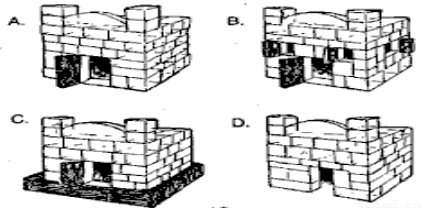
Bergqvist built his first igloo in 1991 for an art exhibition. It was so successful that he designed the present one, which measures roughly 200 square meters. Six workmen spent more than eight weeks piling 1,000 tons of snow onto a wooden base; when the snow froze, the base was removed. “The only wooden thing we have left in the igloo is the front door,” he says.

After their stay, all visitors receive a survival certificate recording their success. With no windows, nowhere to hang clothes and temperatures below 0℃, it may seem more like a survival test than a relaxing hotel break. “It’s great fun,” Bergqvist explains, “as well as a good start in survival training.”

The popularity of the igloo is beyond doubt: it is now attracting tourists from all over the world. At least 800 people have stayed at the igloo this season even though there are only 10 rooms. “You can get a lot of people in,” explains Bergqvist. “The beds are three meters wide by two meters long, and can fit at least four at one time.”

1.Bergqvist designed and built the world’s first igloo hotel because _________.

A. more hotel rooms were needed

B. he wanted to make a name for the small town

C. an art exhibition was about to open

D. he believed people would enjoy trying something new

2.When the writer says “the fun will be over,” he refers to the fact that _________.

A. hotel guests will be frightened at the thought of the hard test

B. holidaymakers will soon get tired of the big igloo

C. Bergqvist’s hotel will soon become a pool of water

D. a bigger igloo will replace the present one

3.When guests leave the igloo hotel they will receive a paper stating that _________.

A. they have visited Lapland

B. they have had great fun sleeping on ice

C. they have had a taste of adventure

D. they have had an ice-snow holiday

4.Which of the four pictures below is the closest to the igloo hotel as described in the text?


违法和不良信息举报电话:027-86699610 举报邮箱:58377363@163.com

精英家教网