题目内容


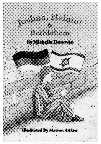
JoshuaHelmutand Bethlehem

Michelle ODonovan ISBN 9781462058679

Life is not easy for nine?year?old Joshua during World War Ⅱ.Because of his family’s Jewish backgroundthey are sent to live in the concentration camps(集中营)Scared and aloneJoshua one day makes friends with a little mouse he calls Bethlehem who becomes his closest friend.


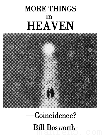
More Things in Heaven

Bill Bosworth

ISBN 9780595433582

In his More Things in HeavenBill Bosworth presents the highlights of his 83 years of lifeincluding his trips to India and the study of the writings of several great spiritual leaders.

More Things in Heaven will appeal to anyone who insists on finding the deepest meaning for their existence based on their own experiences.


Encourage Me

Inspirational Poetry

Gloria Coykendall

ISBN 9781412027854

It is an easy?to?read collection of poems originally written to encourage in faith and to be a cure for chronic depression(长期抑郁)..cure to strengthen identity and purpose.


Creation or Evolution

Michael Ebifegha

ISBN 9781450289023

Were humans createdor did they evolveHow old is the EarthThe debate between science and religion continues to be heated.In Creation or EvolutionMichael Ebifegha examines these two opposed world views within the structure of empirical(实证的)science.


Seeking the Edge

Dr.Joseph LRose

ISBN 9781462031795

Seeking the Edge provides the tools and techniques to find that edge in one’s lifedriving readers to achieve success whether in your current jobfinding a new jobin educationfamilyor even hobbies.

1.Who wrote the story about a little boy and a little mouse?

ABill Bosworth. BMichelle ODonovan.

CDr.Joseph LRose. DGloria Coykendall.

2.The ISBN for the book of poems is________.

A9781462031795 B9781412027854

C9780595433582 D9781462058679

3.What kind of readers will probably like reading More Things in Heaven?

AThose who are searching for the meaning of life.

BThose who are trying to be spiritual leaders.

CThose who study the art of writing.

DThose who like traveling abroad.

4.Which of the following books explores the origin of humans?

ASeeking the Edge.

BCreation or Evolution.

CJoshuaHelmutand Bethlehem.

DMore Things in Heaven.


1.B

2.B

3.A

4.B

【解析】本文是一篇应用文,由几篇海报组成。

1.

2.2】解析:选B。细节理解题。题干中poems是关键词,据此信息查找到Encourage Me!就可找到ISBN 9781412027854,所以选择B项。

3.3】解析:选A。细节理解题。题干中的More Things in Heaven是关键词。据此信息查找到More Things in Heaven,再根据本海报的最后一句“More Things in Heaven will appeal to anyone who insists on finding the deepest meaning for their existence based on their own experiences.”可知答案为A

4.4】解析:选B。细节理解题。题干中的the origin of humans是关键词。根据这个关键词查找相关的海报,就会发现Creation or Evolution涉及人类的起源,故选择B项。

练习册系列答案
相关题目

Cyberspace,data superhighway,multimedia,for those who have seen the future,and the linking of computers,televisions and telephones will change our lives for ever.Yet for all the talks of a forthcoming technological utopia,little attention has been given to the implications of these developments for the poor.As for all the new high technology,the West concerns itself with the “how”,while the question of “for whom” is put aside once again.

Economists are only now realizing the full extent to which the communication revolution has affected the world economy.Information technology allows the extension of trade across geographical and industrial boundaries,and transnational corporations take full advantage of it. Terms of trade and exchange, interest rates and money movements are more important than the production of goods.The electronic economy made by information technology allows the haves to increase their control on global markets — with a destructive impact on the have-nots.

For them the result is unstable. Developing countries which rely on the production of a small range of goods for export are made to feel like small parts in the international economic machine. As “futures” are traded on computer screens, developing countries simply have less and less control of their destinies.

So what are the options of regaining controlOne alternative for developing countries is to buy in the latest computers and telecommunications. Yet this leads to long-term dependency and perhaps permanent constraints on developing countries’ economies.

Communication technology is generally exported from the US, Europe or Japanthe patents, skills and ability remain in the hands of a few industrialized countries. It is also expensive, therefore imported products and services must be bought on credit usually provided by the very countries whose companies stand to gain.

1. From the passage we know that the development of high technology is in the interests of________.

Athe rich countries Bscientific development

Cthe local elitesDthe world economy

2.It can be inferred from the passage that________.

Ainternational trade should be expanded

Bthe interests of the poor countries have not been given enough consideration

Cthe exports of the poor countries should be increased

Dcommunication technology in developing countries should be modernized

3.Why does the author say that the electronic economy may have a destructive impact on developing countries?

ABecause it enables the developed countries to control the international market.

BBecause it destroys the economic balance of the poor countries.

CBecause it violates the national boundaries of the poor countries.

DBecause it inhibits the industrial growth of developing countries.

4.The development of modern communication technology in developing countries may________.

Ahinder their industrial production

Bcause them to lose control of their trade

Cforce them to reduce their share of exports

Dcost them their economic independence

5.The author’s attitude towards the communication revolution is________.

Apositive Bcritical

Cindifferent Dtolerant


Some years agowriting in my diary used to be a usual activity.I would return from school and spend the expected half hour recording the day’s eventsfeelingsand impressions in my little blue diary.I did not really need to express my emotions by way of wordsbut I gained a certain satisfaction from seeing my experiences forever recorded on paper.After allisn’t accumulating memories a way of preserving the past?

When I was thirteen years oldI went on a long journey on foot in a great valleywell?equipped with pensa diaryand a camera.During the tripI was busy recording every incidentname and place I came across.I felt proud to be spending my time productivelydutifully preserving for future generations a detailed description of my travels.On my last night thereI wandered out of my tentdiary in hand.The sky was clear and lit by the glare of the moonand the walls of the valley looked threatening behind their screen of shadows.I automatically took out my pen...

At that pointI understood that nothing I wrote could ever match or replace the few seconds I allowed myself to experience the dramatic beauty of the valley.All I remembered of the previous few days were the dull characterizations I had set down in my diary.

NowI only write in my diary when I need to write down a special thought or feeling.I still love to record ideas and quotations that strike me in booksor observations that are particularly meaningful.I take picturesbut not very oftenonly of objects I find really beautiful.I’m no longer blindly satisfied with having something to remember when I grow old.I realize that life will simply pass me by if I stay behind the camerabusy preserving the present so as to live it in the future.

I don’t want to wake up one day and have nothing but a pile of pictures and notes.Maybe I won’t have as many exact representations of people and placesmaybe I’ll forget certain factsbut at least the experiences will always remain inside me.I don’t live to make memoriesI just liveand the memories form themselves.

1.Before the age of thirteenthe author regarded keeping a diary as a way of________.

Aobserving her school routine

Bexpressing her satisfaction

Cimpressing her classmates

Dpreserving her history

2.What caused a change in the author’s understanding of keeping a diary?

AA dull night on the journey.

BThe beauty of the great valley.

CA striking quotation from a book.

DHer concerns for future generations.

3.What does the author put in her diary now?

ANotes and beautiful pictures.

BSpecial thoughts and feelings.

CDetailed accounts of daily activities.

DDescriptions of unforgettable events.

4.The author comes to realize that to live a meaningful life is________.

Ato experience it

Bto live the present in the future

Cto make memories

Dto give accurate representations of it


The National Gallery

Description

The National Gallery is the British national art museum built on the north side of Trafalgar Square in London.It houses a diverse collection of more than 2,300 examples of European art ranging from 13th?century religious paintings to more modern ones by Renoir and Van Gogh.The older collections of the gallery are reached through the main entrance while the more modern works in the East Wing are most easily reached from Trafalgar Square by a ground floor entrance

Layout

The modern Sainsbury Wing on the western side of the building houses 13th?to 15th?century paintingsand artists include DuccioUccelloVan EyckLippiMantegnaBotticelli and Memling.

The main West Wing houses 16th?century paintingsand artists include Leonardo da VinciCranachMichelangeloRaphaelBruegelBronzinoTitian and Veronese.

The North Wing houses 17th?century paintingsand artists include CaravaggioRubensPoussinVan DyckVeláazquezClaude and Vermeer.

The East Wing houses 18th?to early 20th?century paintingsand artists include CanalettoGoyaTurnerConstableRenoir and Van Gogh.

Opening Hours

The Gallery is open every day from 10am to 6pm (Fridays 10am to 9pm) and is freebut charges apply to some special exhibitions.

Getting There

Nearest underground stationsCharing Cross (2?minute walk)Leicester Square (3?minute walk)Embankment (7?minute walk)and Piccadilly Circus (8?minute walk)

1.In which century’s collection can you see religious paintings?

AThe 13th. BThe 17th.

CThe 18th. DThe 20th.

2.Where are Leonardo da Vinci’s works shown?

AIn the East Wing.

BIn the main West Wing.

CIn the Sainsbury Wing.

DIn the North Wing.

3.Which underground station is closest to the National Gallery?

AEmbankment. BLeicester Square.

CPiccadilly Circus. DCharing Cross.


“People are ruder today because they are rushed and more ‘time poor’ than ever before”says Patsy RoweManners_have_fallen_off_the_radar(雷达)”Due to our strong attraction to electronic equipment it is a wonder more people don’t wake up each morning and greet the singing birds with a complaint(抱怨)about the noise.Here are some examples of rudeness.

Some people prefer to do almost everything over the internet.To themdealing with an actual human is like an evolutionary step backward.It feels very slow because humans don’t work at 4G speeds.When you have dinner with friendsyou will often notice someone paying more attention to his mobile phone.We have programmed ourselves to think that every new message brings life?changing newsso taking calls and checking our texts are more important than talking to the people we are with.What is worsesome people even tend to send anonymous(匿名的) rude messages by email.

Howeverrudeness is never acceptable.Don’t assume it is OK to be rude if the person you’re in touch with won’t recognize you.If you have something awful to sayhave the courage to face the person and say itwrite a letter or email and sign itor forget it.Upsetting people with unsigned messages is cruel and disgusting.

We shouldn’t blame technology for our shortcomings.Technology is here to help usbut we should not allow it to take over our lives.An important step ia acknowledging our shortcomings.People spend a lot of time pointing out bad manners but it would be even more helpful if we’d publicly acknowledge good manners when we see them.

1.What can be inferred from the underlined sentence in Paragraph 1?

APeople can tell good from bad behavior.

BRadar is able to observe human behavior.

CPeople care little about their behavior.

DRadar can be used to predict human behavior.

2.Some people are less willing to deal with humans because________.

Athey are becoming less patient

Bthey are growing too independent

Cthey have to handle many important messages

Dthey have to follow an evolutionary step backward.

3.The author thinks sending unsigned awful messages is________.

Aridiculous      Bdisgusting

Cacceptable Dreasonable

4.What can we learn from the last paragraph?

AWe should applaud good behavior.

BTechnology can never be blamed.

CWe should keep pointing out mistakes.

DTechnology will take over our lives one day.


违法和不良信息举报电话:027-86699610 举报邮箱:58377363@163.com

精英家教网